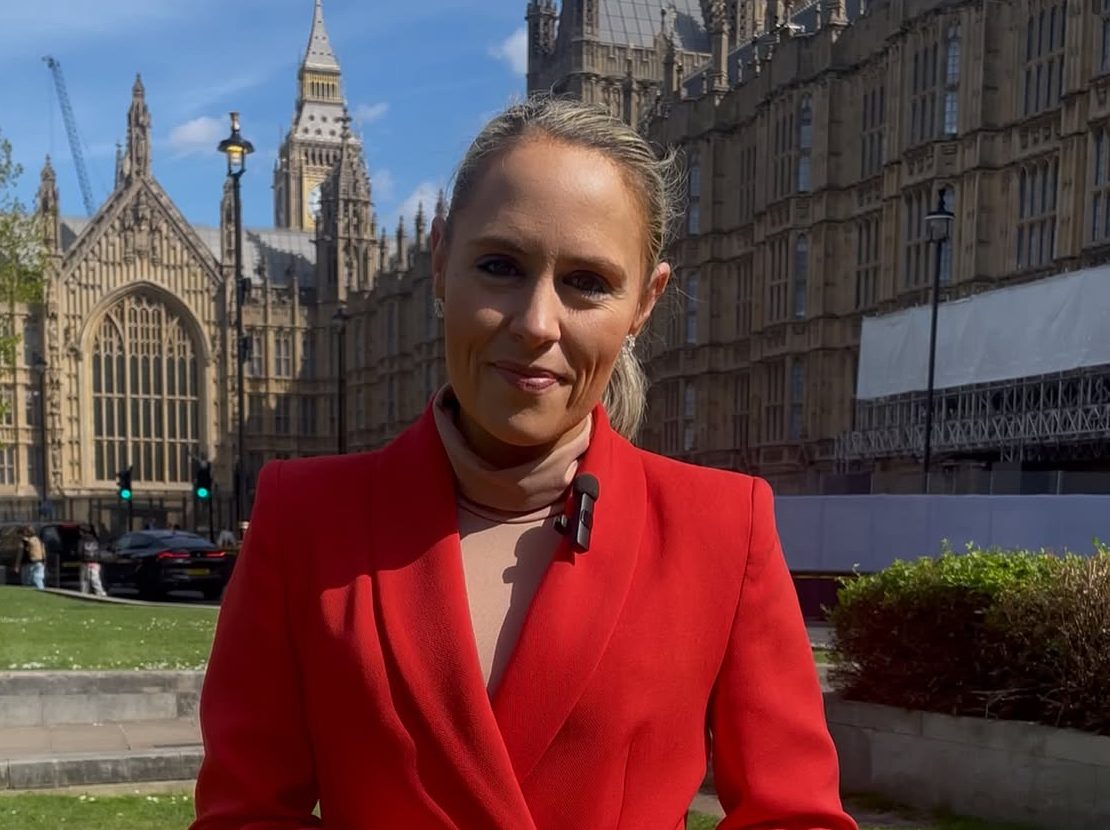
The following is an opinion piece by Kirstie Logan-Townshend, founder of Kirstie Logan Communications, a Swansea-based strategic communications consultancy advising clients in the tech, institutional, governmental and charity sectors. Its clients include Welsh Labour. She was previously senior press officer for AI at the Department for Science, Innovation and Technology, a politically neutral civil service role. The views expressed are her own and do not represent the editorial position of Swansea Bay News. Swansea Bay News publishes OpEds from politicians and public figures across the political spectrum.
It is Wednesday morning in Swansea, and I am working from a hotel restaurant, coffee at my elbow. By evening the bar will be pouring cocktails, and whoever stands behind it will decide, nightly, who is old enough to be served.
Since Tuesday, a change to the Licensing Act 2003 permits venues across England and Wales to accept digital proof of age. The customer shows a QR code or taps a phone; the person serving learns, in essence, that the customer is over 18 and that the proof is genuinely theirs. Not a name. Not an address. The check runs through a certified provider on a government register; physical ID remains valid, and the drinking age has not moved an inch.
So is it any good? I judge technology by a simple test: does it improve people’s lives?
Let us not overblow it. A friend in tech puts it plainly: the strongest argument is convenience, and the economic impact will be modest. This will not transform hospitality. It makes one transaction marginally quicker: phone out, payment made, age proved.
A seventeen-year-old I spoke to approved: it is easier to prove your age and stops people faking theirs.
Wind Street holds both ends of the argument. My favourite wine bar, No Sign, stands on it, its cellars immortalised as the Wine Vaults of Dylan Thomas’s The Followers. Elsewhere on the street, door staff at bigger venues squint at plastic cards under streetlight. There, days away from the Swansea University Students’ Union’s freshers takeover, a screen confirming age in a moment has obvious appeal.
Efficiency has costs, however. Visual checks are ruled out, so venues must select providers, sign contracts, rewrite policies and train staff. A pub in deepest, darkest Gower, serving the last stragglers of summer, would invest for marginal return. The night-time economy of Pennard is not that of Wind Street, which is precisely why it is optional.
A multi-venue owner lambasted the government on WhatsApp, which amused me, before adding that his venues “have given no serious consideration to accepting digital ID” and “will continue to accept physical identification. The new rules give venues a choice, and that is the choice we are making.” Quite right too. He would reconsider, he said, “if reliable, independent evidence eventually demonstrates that digital ID is safer, simpler and more economical”. The pint is the pilot: a small, optional test the rest of us can try, and one he is entitled to sit out until the evidence arrives.
The order does leave me scratching my head: the digital driving licence ought to have come first, then this. But this track began with a consultation under the last Conservative government, which could not have organised a pint in a brewery. Labour committed to the change in December 2024, and credit where it is due: Andy Burnham’s government has delivered it. This is the start of the plumbing for better digital infrastructure, and I welcome it.
It should be noted that this is not the scheme he scrapped. On taking office, the Prime Minister abandoned the national digital ID scheme, a government-issued identity first proposed as mandatory, and quite rightly put the money towards the cost of living. Proof of age for alcohol is a separate, optional change on its own track, and it quietly future-proofs where it can. You can support it and still think its scope should be limited, with living conditions prioritised. Those two are not in contention. That is the nature of government: decisions live side by side, seldom arrive in tidy order, and opinions can be held in duality.
To those who raise civil liberties: I think we are in a good place. Nobody is handed a state identity card at the bar. Licence holders and providers are bound by data protection law, including data minimisation, and may process only what is needed to verify age. That is a legal duty, not goodwill. The data must still be accurate, reliable and ours, never harvested by default.
A few argue that anonymity at the bar is a gift to wrongdoers. If a bar knows only that I am over 18, how does it know I am who the proof says I am, and what trail is left after a spiking or sexual assault? There are two answers. First, the person behind the QR code is not a ghost. Their identity must have been verified to at least a medium level of confidence, and the proof must belong to the person presenting it, so a real person stands behind every check. Second, the trail the critics imagine often never existed. Many venues never scanned ID, and a glance in a doorway leaves no record.
Nor must we forget digital inclusion. Not everyone owns a smartphone, and a technology that serves only those with the latest phone serves nobody well. But this is an additional carriage on the train, not a replacement. By keeping physical ID, this policy keeps everyone in view.
Back at my table, the coffee has gone cold, and my WhatsApp tour has settled it for me. I shan’t be building cathedrals on a QR code, but this is a good thing. I still carry my driving licence for every time I am told I look under 25. It has been a quiet year for the licence, but a girl can dream.
Kirstie Logan-Townshend is the founder of Kirstie Logan Communications, a Swansea-based strategic communications consultancy. If you would like to submit an OpEd for consideration by Swansea Bay News, please email editor@swanseabaynews.com.

Discover more from Swansea Bay News
Subscribe to get the latest posts sent to your email.