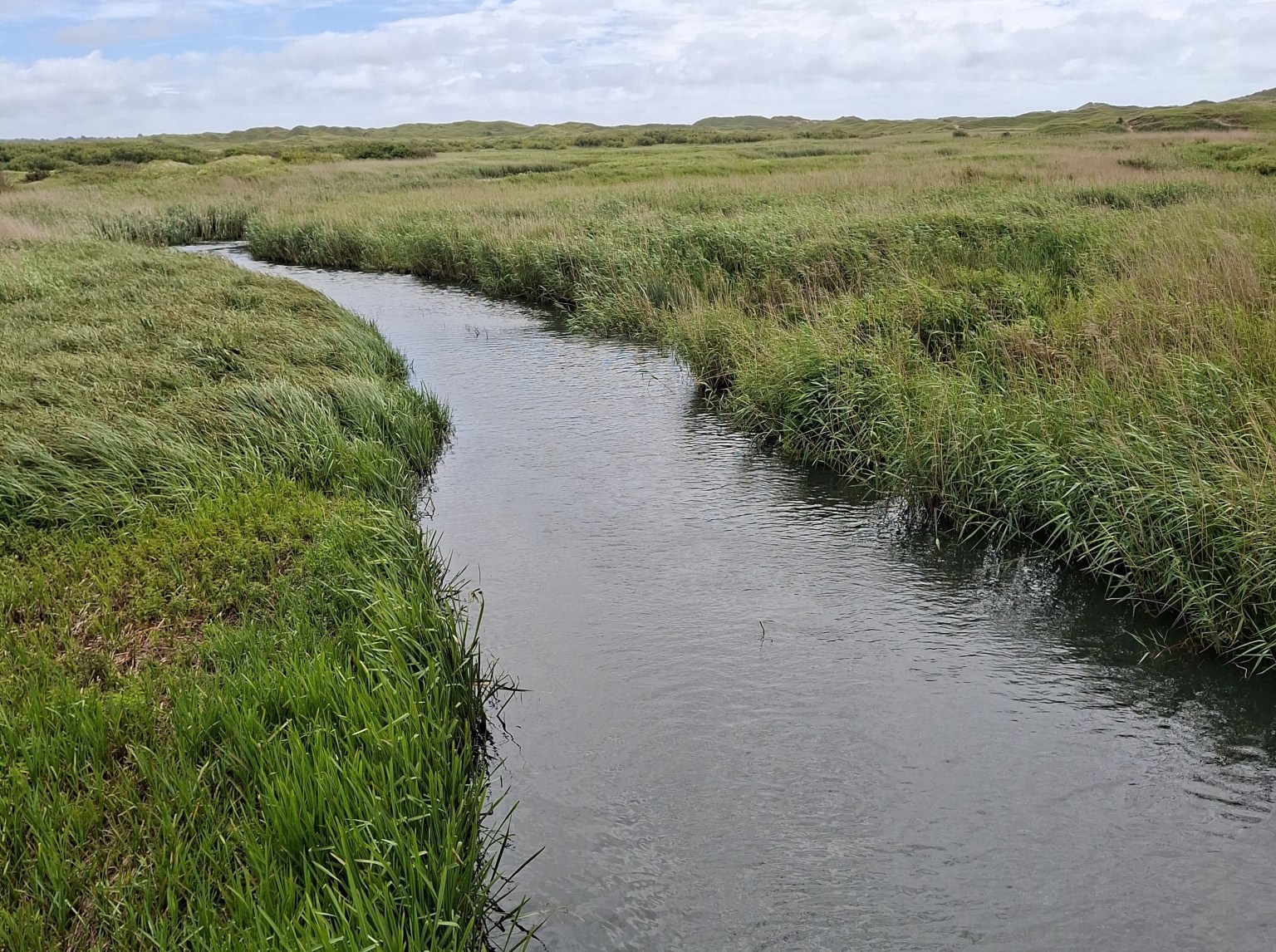
The burst sewage main that polluted the River Kenfig caused four of Welsh Water’s nine serious pollution incidents last year, the most the company has ever recorded.
Natural Resources Wales has kept the company on two stars, its “requires improvement” grade, for a fourth year running. Welsh Water says it is sorry and that its performance “is not good enough”.
The 9km Marlas rising main carries sewage from North Cornelly to the Afan treatment works in Port Talbot. It has been bursting since 2023 and NRW opened a formal investigation in June after months of discharges into the river and its National Nature Reserve.
Welsh Water told Swansea Bay News the pipe was laid in the 1990s and failed decades ahead of its expected lifespan. It is now being replaced at a cost of £30m, more than double the £13m the company put on the job in June.
Nine serious incidents, up from six
Welsh Water had six serious incidents in 2024, seven in 2023 and five in 2022, according to NRW’s annual assessment of the company. It rates the 2025 figure red.
Besides the four from Marlas, there were two more on the sewage network and three on the drinking water side, one of them the most serious category NRW records.
The regulator says the decline “cannot be attributed to the tightening” of its scoring thresholds in 2021. NRW has also sent the company a warning letter over its plan for cutting pollution incidents, and is considering enforcement over a separate serious water resources incident in August 2025.
Fewer sewer spills, more water supply incidents
There was some better news. Sewerage pollution incidents of every grade fell to 107 from 132 in 2024, which had been a ten-year high.
Incidents on the water supply side went the other way, more than doubling from 23 to 55.
Welsh Water reported 78% of its own incidents before anyone else did, up from 74% but short of the 80% NRW wants. At pumping stations and treatment works, 12 incidents went unreported even though the company had telemetry watching them.
Compliance with the numerical limits in its discharge permits slipped to 98.1%, with 12 sites failing. Compliance with the descriptive conditions fell from 85% to 72%, with 237 sites falling short.
Storm overflows: 223 outfalls spilled for more than 1,000 hours
Monitoring of storm overflows improved. Of 1,983 permitted overflows, 105 had monitors working for less than 90% of the year, down from 279 the year before.
NRW says 216 overflows spilled between 100 and 299 times in 2025 and three spilled more than 300 times, in what it calls an average year for rain. By duration, 223 overflows were discharging for between 1,000 and 5,000 hours over the year.
“We apologise for the environmental harm we have caused”
A Welsh Water spokesperson said: “We recognise that our environmental performance is not good enough. Our customers and communities rightly expect better, and we apologise for the environmental harm we have caused.”
The company says it improved on two of NRW’s six measures and had the second-lowest rate of pollution incidents per 10,000km of sewer in the industry. “These improvements are important, but not sufficient.”
It points to £4.2bn of investment between 2025 and 2030, £2.5bn of it on the environment, and what it calls a “fundamental transformation programme” this year with a new leadership team, a restructure and a new operating model.
On Marlas, the spokesperson said the £30m replacement “does not diminish the impact of those incidents, but demonstrates the targeted action we are taking to tackle their causes”.
The company also warns that NRW is changing what counts as a pollution incident from 2026, so next year’s totals are likely to rise across the industry “even if the performance doesn’t change”.
First joint report by four regulators
The figures came out on the same day the four water regulators in England and Wales published their first joint report on the industry. NRW, Ofwat, the Environment Agency and the Drinking Water Inspectorate counted 2,991 pollution incidents across both countries in 2025, 84 of them serious.
Ceri Davies, NRW’s chief executive, said: “Improving water quality is one of the most significant environmental challenges we face. While progress has been made in some areas, there is more to do.”
NRW says it has brought ten prosecutions against water companies since 2015, with fines totalling £665,000. Its biggest, a £1.35m penalty on Welsh Water for more than 800 permit breaches, was cut to £120,000 on appeal a year ago.
Ofwat confirmed a separate £44.7m enforcement package against Welsh Water in June over how it ran its sewage works. Campaigners rallied at Caswell Bay in May over sewage in the sea off Gower.

Discover more from Swansea Bay News
Subscribe to get the latest posts sent to your email.