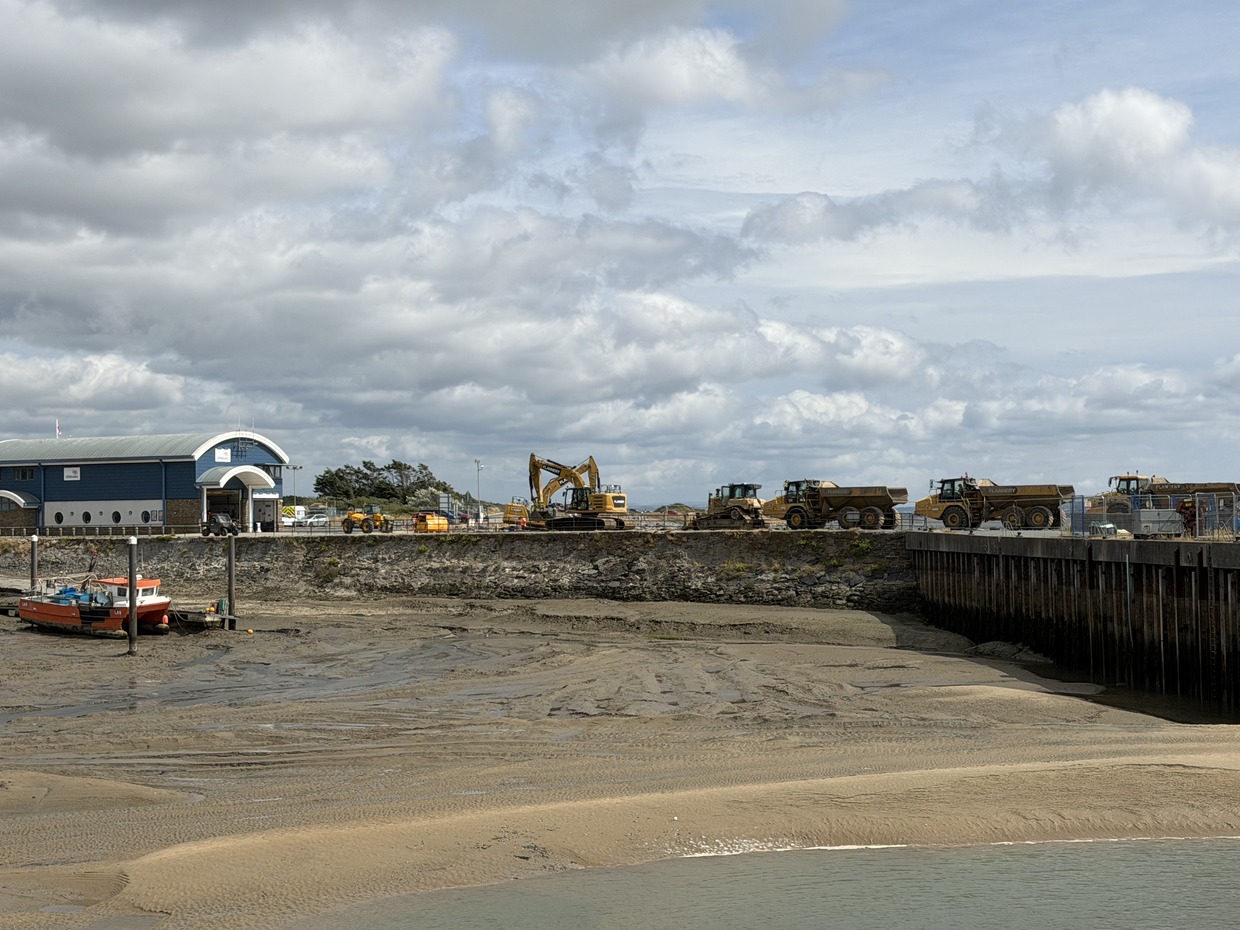
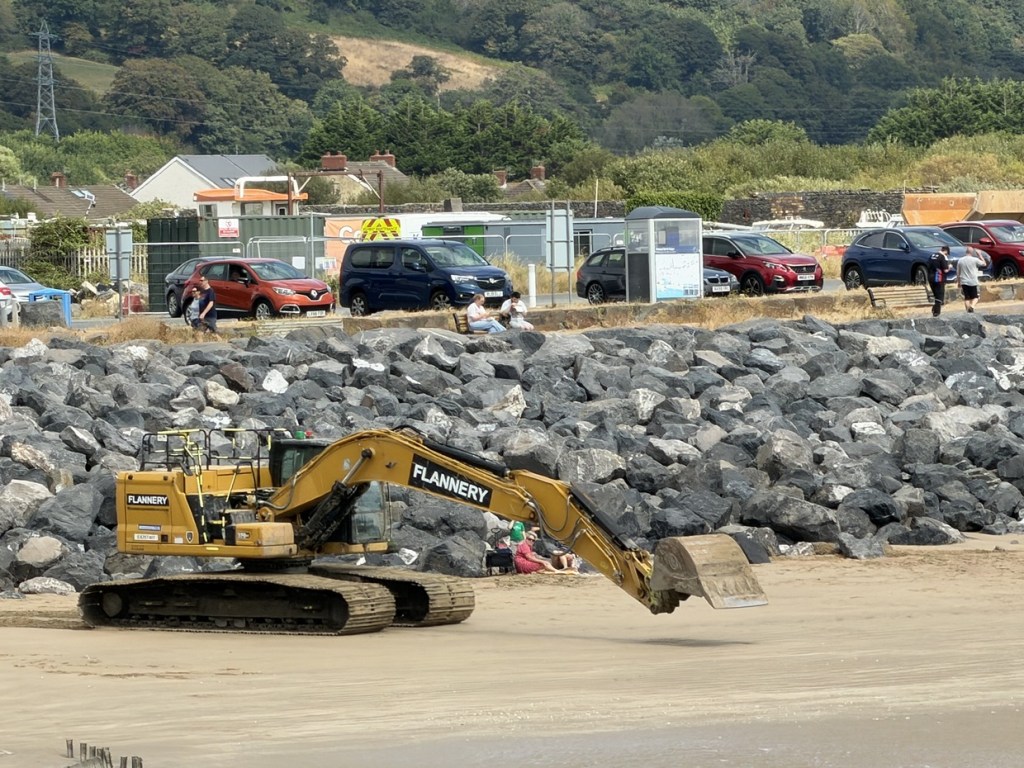
The diggers that have spent the summer clearing Burry Port Harbour finish work on Wednesday, with around 57,000 cubic metres of sand removed from the harbour and its approach channel.
The figure comes in a progress update from Carmarthenshire Council, shared by Burry Port county councillors John James and Shelly Godfrey-Coles, ahead of the next phase: a specialist vessel that clears silt with high-pressure water.
Mechanical dredging is scheduled to conclude on 9 September, the council says, having cut a new, deeper access channel from the estuary into and through the harbour.
At least a metre of water in the berths
The council’s stated aim is a minimum of one metre of water in the berth areas and across the outer harbour, with the approach channel excavated to around two metres, enough, it says, for roughly two and a half hours of access either side of high water.
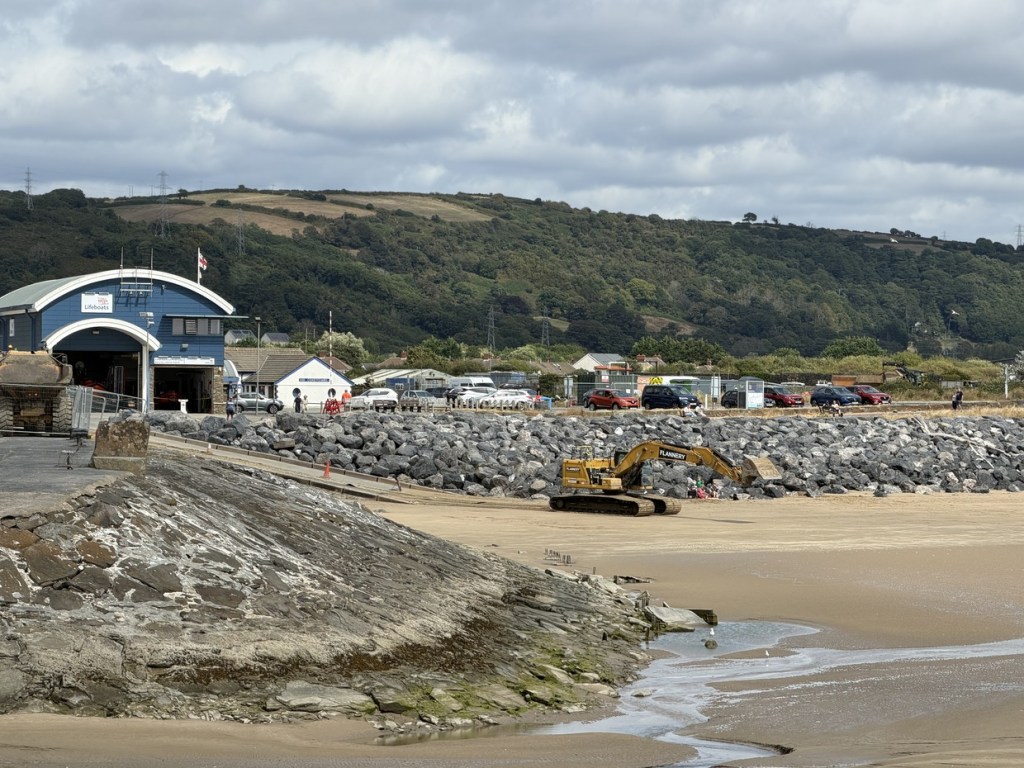
The sand has not gone far. Under the marine licence it is being deposited on East Beach, where the council says it supports coastal protection.
Water Injection Dredging is expected to start in October, subject to final contracts being completed, operating over roughly 54 tidal cycles.
The technique targets what the diggers cannot: the lighter silt that has built up in the harbour basin and beneath the mooring pontoons, where mechanical excavators cannot reach.
The water jets and the tide
A vessel injects high-pressure water into the silt to stir it back up into the water, and the ebb tide then carries it out through the gates and into the estuary. The council describes it as “effectively reversing” the process that silted the harbour up in the first place.
The tide is the engine of the whole method. Burry Port sits on one of the highest tidal ranges in the world, which is what carried the silt in, and what the water jets will now use to carry it back out.
Before the jets arrive, the harbour gate’s hydraulic ram is being repaired and is due back in place, and a LiDAR survey of the harbour bed taken before dredging began will be repeated afterwards, a requirement of the marine licence, to measure what the project has achieved.
Investment is going in above the waterline too: a £180,000 upgrade of the pontoon lighting, electrics and pedestals has been commissioned, 64 replacement pontoon floats have already been bought for fitting over the next six months, fencing is going up on the quay walls, and an additional commercial pontoon is under consideration.
Once the capital works finish, an annual maintenance dredge will be introduced to hold the depths and protect the investment.
A decade after the warning
This is the dredge Burry Port spent a decade asking for. A council-commissioned report by consultants Atkins recommended regular mechanical dredging backed by water injection as far back as 2016, warning that without long-term investment the harbour would “struggle to survive as an asset”, according to the councillors’ open letter quoting it.
The years since tested that warning. The operator handed the harbour in 2018 went into administration in 2023, the council stepped back in and now funds it fully at around £281,000 a year, and the harbour’s own dredger, the Seaka, sank at its moorings in early 2024 before being towed away by administrators.
The marine licence was finally granted on 30 June, two days after the councillors published an open letter declaring “enough is enough” and threatening to take the harbour’s case to Welsh ministers. Whether that timing was coincidence or pressure is a question the councillors have pointedly left open. The diggers moved in by mid-July.
Mooring holders, who kept paying their fees throughout, were given a 25 per cent discount for July to September, with full charges returning in October. The council has committed £2 million of capital to the harbour over two years.
The council says the works are being aligned with a review of the harbour masterplan, taking in Pembrey Country Park and the Millennium Coastal Park, with early private sector interest in concessions and visitor activities. It has been a difficult stretch for the waterfront’s economy: in March the harbour surfaced as a surprise option for a cross-channel ferry that ran straight into questions about tides and stalled regeneration, and in August the town’s historic cockle factory was mothballed after what its owners called the hardest season in living memory.

Discover more from Swansea Bay News
Subscribe to get the latest posts sent to your email.