

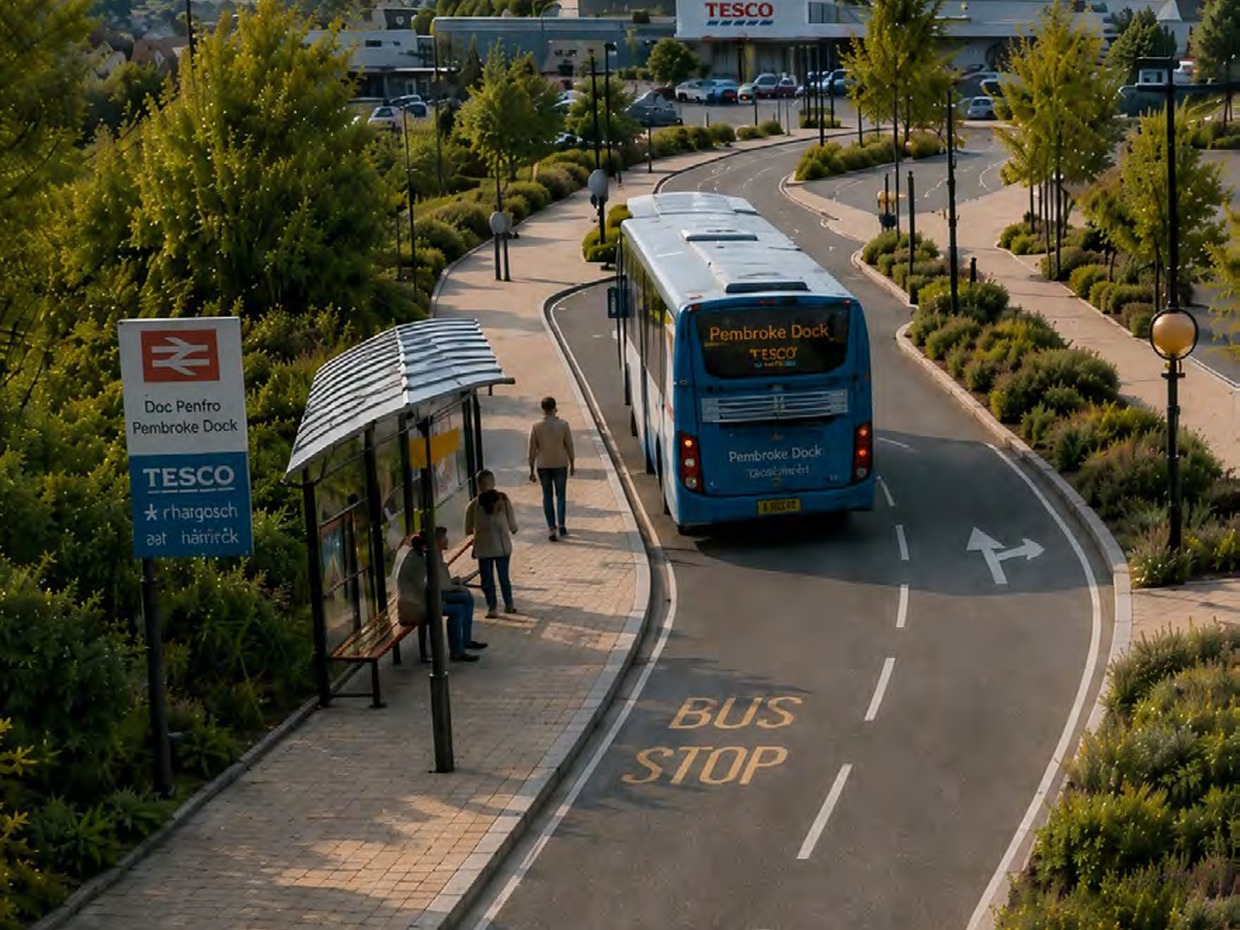
If you catch a bus in Swansea, Neath, Llanelli or Haverfordwest, nothing about it is going to change next year after all.
The takeover that would put Transport for Wales in charge of every route, timetable and fare in the four counties was promised for 2027. Papers going before regional transport councillors on Wednesday say the first publicly run buses will not roll until April or May 2028.
That is the date Transport for Wales gave the South West Wales regional transport sub-committee in July, according to the minutes of that meeting, which the committee is being asked to sign off this week.

A Labour law, now in Plaid’s hands
The bus law was Welsh Labour‘s from start to finish. It was introduced under Eluned Morgan, steered through the Senedd by Ken Skates as transport secretary and signed into law in February, three months before the election that ended 26 years of Labour rule.
At the signing the Welsh Government said the four counties would be “the first region to move to franchising in 2027”. Transport for Wales’s own vision document, also on Wednesday’s agenda, still says “bus franchising in 2027” in three places.
Since May the job has belonged to Plaid Cymru. The minutes say the timetable “remained dependent upon” secondary legislation from the Welsh Government, expected “by the end of the calendar year”. No firmer date is given.
Why a year has gone
Councillors were told the sums do not work any faster. Once the legislation is through, the minutes record about three months to protect the jobs of existing bus staff, about five months to run the tender, and up to nine months for the biggest contract areas to change over. Tendering is expected to start around March 2027.
TfW told the committee the risk to your current service while all that happens was “low”, but that it would “continue to be kept under review”.
What actually changes when it comes
Today the bus companies decide where to run and drop the routes that lose money. Under the new system TfW draws the map, sets the timetable and the fares, and companies bid to run the routes on contract, the way London has done for decades and Greater Manchester has since 2023.
The first timetable will look familiar. The minutes say the “base network” for the region has been endorsed and “largely reflected existing service provision and funding levels”. The reshaping comes later.
TfW has already bought three bus depots in the region, the minutes say, and has cut the area into 25 contract packages. Twenty-one of them need fewer than ten buses at peak, sized so that local firms can bid rather than only the big groups.
The sign at your stop, and the app
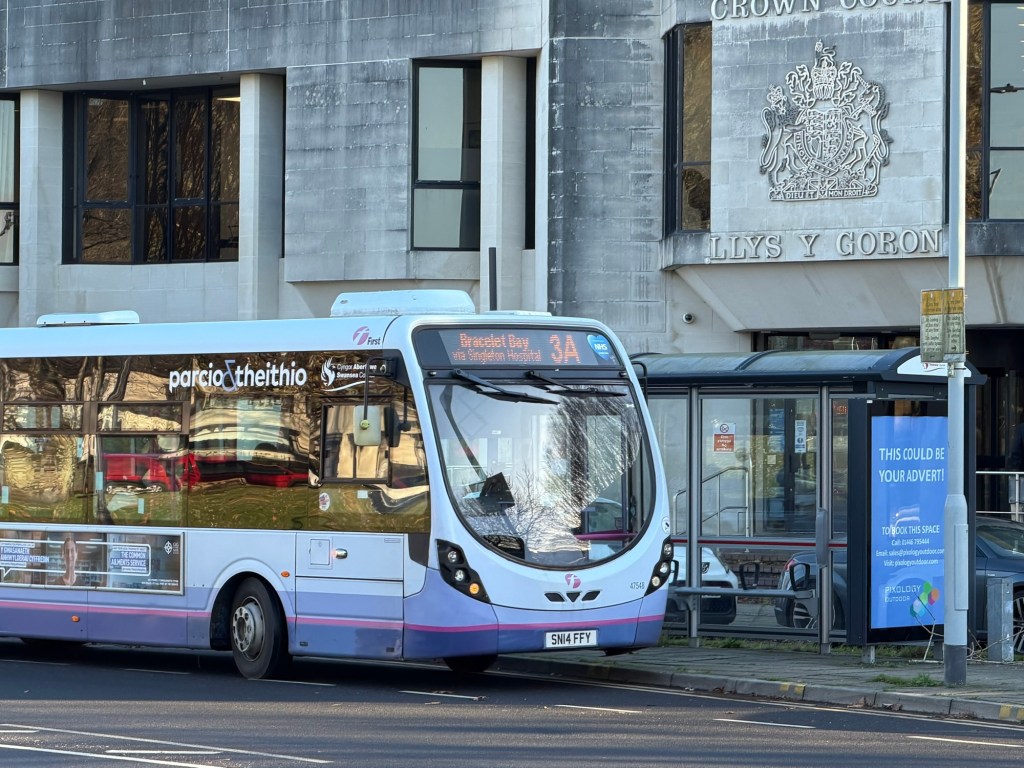
The timetable on the post at your stop stops being the council’s job and becomes TfW’s. Councillors were told TfW plans an app alongside the takeover for planning journeys, buying tickets and checking whether a stop has a shelter or a raised kerb.
To fill that app, TfW is surveying every stop in Wales. The minutes say Neath Port Talbot and Swansea are done, Carmarthenshire is under way and Pembrokeshire is next.
The shelter itself stays where it is: councillors asked, and TfW confirmed that shelters and the stops themselves remain with councils and community councils. Only the paper timetable changes hands.
Why the west got picked first
TfW’s figures presented to the committee show the gap the takeover is meant to close. More than 70% of people in Swansea and Neath Port Talbot live within 400 metres of a stop with at least an hourly bus. In Carmarthenshire and Pembrokeshire it is just over 25%, a figure the minutes note does not count the book-ahead flexi buses in rural areas.
TfW also told councillors it had mapped where buses get stuck in traffic, and that time saved could be “reinvested in improved service coverage”, which is the polite way of saying faster buses could mean more buses.
Also in Wednesday’s papers
The Carmarthen to Bangor TaithCymru coach is confirmed for an October start, about five hours end to end.
The direct trains from west Wales to Bristol Temple Meads that TfW said in May it was aiming to run from September are now down as December 2026, subject to the rail regulator.
And Swansea Arena will host the Public Transport Summit on 16 and 17 June next year, which TfW describes as bringing transport leaders and policymakers from across Wales together.
The sub-committee, chaired by Carmarthenshire councillor Linda Evans, meets at 10am on Wednesday on Teams and is webcast on Neath Port Talbot Council’s website.

Discover more from Swansea Bay News
Subscribe to get the latest posts sent to your email.





Headline is wrong which is the whole issue with franchising. Franchises will be planned by government but operated by commercial companies. It should make you wonder why the likes of first Stagecoach and other multinational companies support franchising. Is it because the tax payer takes the risk? Is it because however many passengers use the service doesn’t actually matter to them? Is it because guaranteed operational profits year on year?
You be the judge