


Swansea or Abertawe? Carmarthen or Caerfyrddin? A new Senedd petition calling for Cymru to become the nation’s only official name — and for cities, towns and villages to carry a single name rather than two — has drawn a sharp response from a Conservative Senedd member whose seat covers part of the region.
The petition, started by John Price, calls for the country to “use Cymru not Wales as the official name for our nation, and one name only for our place names”. It is collecting signatures until 30 December.
“Wales is not the name of our nation,” the petition states. “Meaning ‘foreigners’ it was imposed on us, and poorly reflects who we as a people are.”
The name Wales derives from Wēalas, an Old English word used by Anglo-Saxons for the Britons and, more broadly, foreigners. Cymru comes from the older Brittonic word combrogi — fellow countrymen.
“With an outward looking Government, now is the time for us to assert our own intention for how we are seen across the world, in the language of our nation using the name chosen by our nation,” the petition continues, arguing the change would “reset, rebrand and renew our nation”.
Its second proposal would reach into every corner of the region: “Now is also the time for us to stop using two names for places with deeper, older Welsh names. We can sensibly keep some names with other dual and important historical meanings.”
Across south west Wales, most towns carry two official names. A single-name policy built on the older Welsh forms could mean Abertawe rather than Swansea, Castell-nedd rather than Neath and Caerfyrddin rather than Carmarthen.
Further west, Fishguard would go by Abergwaun and Haverfordwest by Hwlffordd. Tenby would be known only as Dinbych-y-pysgod. And Bridgend would carry Pen-y-bont ar Ogwr alone.
Which names would qualify for the petition’s exception for “dual and important historical meanings” is not spelled out. Swansea’s English name, for instance, is not English at all — it is generally traced to Old Norse, from the Viking-era “Sveinn’s island”.
The question of which name belongs on the sign is already being fought over locally — with paint. In February, the English translations on road signs across Wales were sprayed over in green in a series of apparently co-ordinated overnight incidents, Nation.Cymru reported — among them signs for Caerfyrddin (Carmarthen), Porth Tywyn (Burry Port), Cydweli (Kidwelly) and Penbre (Pembrey).
Only the English names were targeted, and no group claimed responsibility. The choice of green paint carried an echo, though: during the road-sign campaigns of the 1960s and 70s, Welsh language activists obliterated English-only signs in green — immortalised in Dafydd Iwan’s protest song Peintio’r Byd yn Wyrdd, Painting the World Green.
Weeks earlier the traffic had run the other way in Tenby, where the Welsh text on bilingual information signs across the town — including parking and beach notices — was blacked out, with the English left untouched.
The town’s mayor, Councillor Dai Morgan, condemned the vandalism as “unacceptable”, while Pembrokeshire County Council said clearing it up diverted time and resources from public services.
The petition points to Türkiye, which formally dropped “Turkey” at the United Nations in 2022, and Czechia as countries that have changed their names. It also cites the international attention gained since Brecon Beacons National Park became Bannau Brycheiniog — taking in Waterfall Country at the top of the Neath Valley — and Snowdonia became Eryri.
The petition had gathered 1,542 signatures by Tuesday. Petitions passing 250 signatures are discussed by the Senedd’s Petitions Committee once collection closes, while those passing 10,000 are considered for a debate in the Senedd.
A previous petition calling for the change, started by former police and crime commissioner Arfon Jones, went on to pass 10,000 signatures — but was not taken forward by the previous Welsh Labour government. The political landscape has shifted since, with Plaid Cymru now leading the Welsh Government.
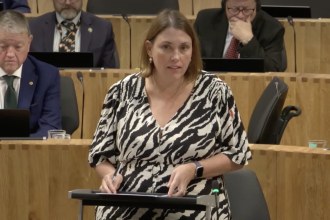
Andrew RT Davies, the Conservative Senedd member for the Vale of Glamorgan and Bridgend, has urged people to reject the campaign — labelling it an attempt to change Wales’ culture and exclude those who do not speak Welsh.
“I was born and brought up in Wales and have lived here my whole life,” Mr Davies said. “The name Wales is an important part of our history, identity and culture. This attempt to scrap it must be resisted.”
Mr Davies pointed out that more than 80% of people in Wales do not speak Welsh — a figure borne out by the 2021 census, which recorded 17.8% of people aged three and over as Welsh speakers — and warned that dropping the English-language name would exclude them.
The petition does not, however, propose banning the word Wales. When news channel GB News described the campaign as seeking to “ban” the name, Nation.Cymru challenged the characterisation — noting the change concerns the official name used by government and international bodies, with “Turkey” and “the Czech Republic” both still in everyday use.
Mr Price told Nation.Cymru: “No one is calling to ‘ban’ the term Wales. Just as we can call Norway ‘Norway’ and not Norge as the Norwegians do, or Spanish people call their land España.” All the petition asks, he said, is that the nation confidently uses its own native name rather than one applied from outside.
Welsh independence campaigner Gwern Gwynfil has said, in comments reported by Nation.Cymru: “This is a normal thing for nations to do. Perhaps the more relevant issue here is why are some people so viscerally against the idea?”
Reform Senedd member Iain McIntosh has meanwhile asked the First Minister to condemn the campaign — alongside the removal of union flags by independence activists in Wrexham — and to confirm the Welsh Government “supports the continued use of Wales’ established national identity”.
The petition remains open for signatures until 30 December.

Discover more from Swansea Bay News
Subscribe to get the latest posts sent to your email.