

Quirky Scandinavian brand Flying Tiger Copenhagen looks set to come under the ownership of a private equity firm that has presided over the recent collapse of several other well-known retail brands.
Modella Capital is closing in on a deal to buy the Danish variety retailer — including its two south-west Wales outlets in Swansea and Carmarthen.
The deal — first reported by The Times and tipped to be announced imminently — would add Flying Tiger’s 900 global stores to Modella’s growing portfolio. It would also expand the firm’s already substantial local footprint, with a Hobbycraft store at the Swansea West retail park in Fforestfach already in the portfolio, alongside TGJones outlets it inherited from WHSmith last year.
Who are Modella?
Modella Capital is a London-based private equity firm that has rapidly built up a portfolio of well-known British high street chains in recent years.
Its biggest acquisition was the £40 million purchase of WHSmith’s 480-store high street business in 2025, which it has since rebranded as TGJones.
Modella also owns Hobbycraft, and previously bought Claire’s Accessories and The Original Factory Shop — both of which subsequently fell into administration, resulting in hundreds of job losses.
The firm, which is chaired by retail investor Steve Curtis and run by managing director Joseph Price, operates as part of the wider Hay Wain Group — a family office led by financier Jamie Constable.
A track record of restructuring and closure
The Flying Tiger deal comes as Modella faces mounting questions over its existing retail empire.
The firm is currently pursuing a major restructuring of TGJones that, if approved by the High Court, would see up to 150 stores closed and steep rent reductions imposed on landlords at remaining sites. Modella has warned that without court approval by the end of June, the chain will go into administration.
Up to seven TGJones stores in south-west Wales are caught up in that restructuring process. The firm has already faced controversy locally after WHSmith refused to fund redundancy payments at the chain amid threats of bailiff action and tax debts.
The new TGJones chief executive, Alex Willson, who took over in April, has been openly critical of the chain’s previous management. He has described the business as having suffered a “slow death” under WHSmith ownership and said he found stores missing lightbulbs and ceiling tiles, threadbare carpets, and lifts and escalators that did not work.
Modella has pledged to invest millions of pounds in a turnaround plan if its restructuring proposal is approved by the court — and would be blocked from taking dividends from the business during the period landlords’ terms are reduced.
What this could mean for Swansea
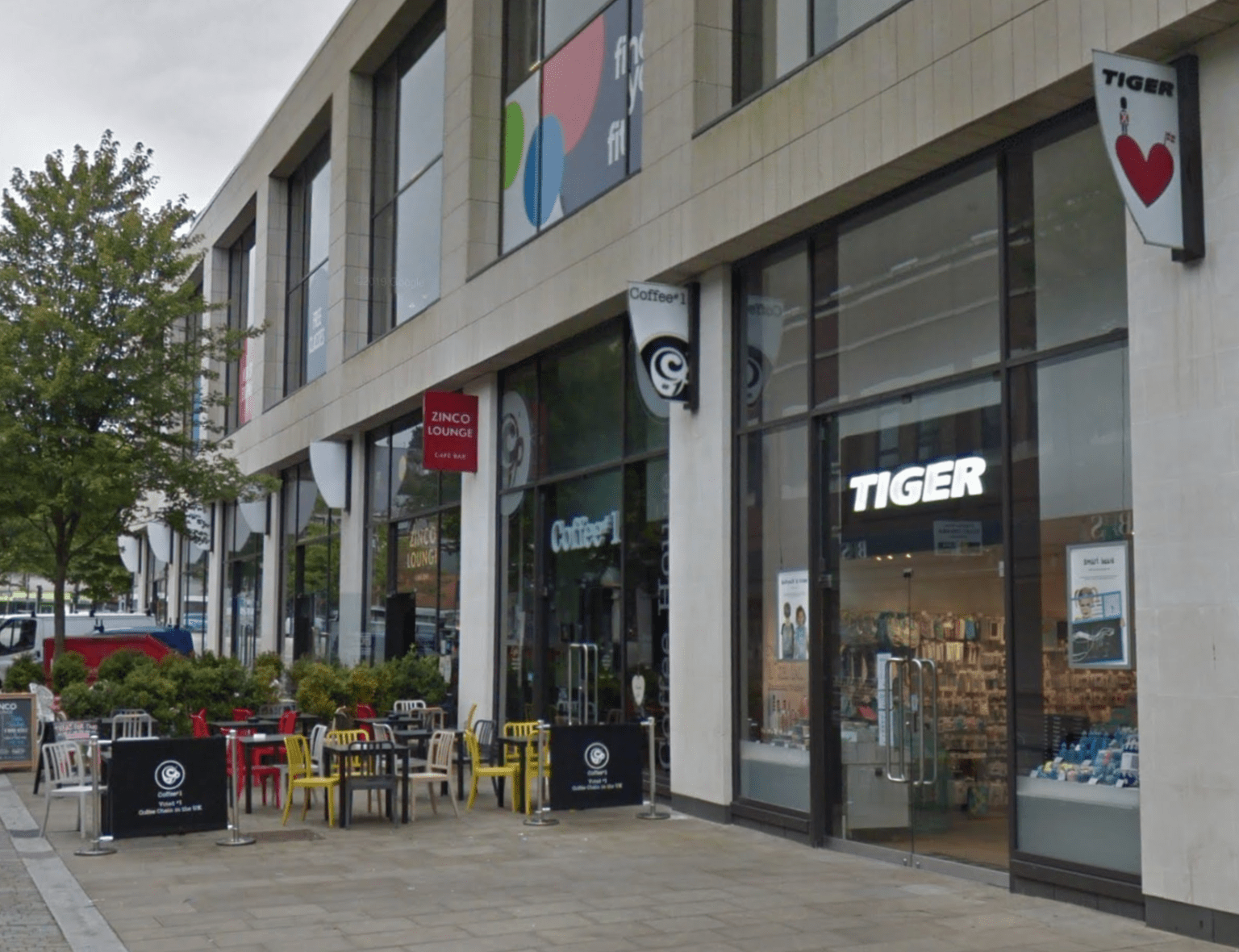
In Swansea, Flying Tiger trades from a unit on Princess Way, in the heart of the city centre’s retail quarter.
The store sits in the same block as the newly opened Søstrene Grene store — another Danish variety retailer offering a similar product range that opened earlier this month in the former Zara unit just yards from Flying Tiger.
That puts two competing Scandinavian homeware brands within metres of one another on the same street — a direct competitive overlap that under different ownership models might not have lasted.
The same block also faces other changes. Directly across Princess Way sits Swansea Council’s recently opened Y Storfa community hub, in the former BHS unit on the corner with Oxford Street.
Next door to Y Storfa on Oxford Street, the flagship Marks & Spencer store is set to close on Saturday 30 May, ending decades of trading at the site. And just along Princess Way at the Quadrant Shopping Centre, the former Debenhams unit is expected to see new tenants announced shortly.
What this could mean for Carmarthen
For Carmarthen, the implications of any Modella restructuring of Flying Tiger could be more acute.
Flying Tiger trades from a unit at St Catherine’s Walk — the shopping centre that opened in 2010 with Debenhams as its flagship anchor store and which once promised to make Carmarthen the dominant shopping destination west of Swansea.
But since 2020, St Catherine’s Walk has seen a steady haemorrhage of national chains, including Topshop, Topman, Miss Selfridge, River Island, Debenhams, H&M, Joules, Monsoon, Accessorize, Fat Face and Burger King — leaving an increasingly thinned-out retail offer that has been bolstered in recent years by independent traders.
The closed Debenhams store at the centre of the shopping development meanwhile sits empty awaiting conversion into a new town centre hub called Atriwm, an opening now pushed back to 2027 following Carmarthenshire Council’s £146 million capital plan.
Flying Tiger has been one of the centre’s remaining sources of footfall — a popular destination for shoppers seeking affordable gifts, homeware and stationery in a familiar, branded environment.
The “fictitious brand” controversy
The Flying Tiger deal also lands at a moment of fresh scrutiny over Modella’s operating model.
Earlier this month, The Guardian revealed that Modella is charging TGJones millions of pounds for the use of the TGJones brand name itself — a brand the firm created when it bought WHSmith’s high street business and rebranded the stores.
Modella has defended its track record by blaming “adverse government fiscal policies” and weak consumer confidence for the difficulties facing its existing retail businesses. The firm has previously said it acquires retailers in need of “significant investment” with the aim of returning them to sustainable growth, while accepting that it “won’t win every battle”.
What Flying Tiger says
Flying Tiger Copenhagen itself is a Danish-founded variety retailer best known for its colourful homeware, stationery, arts and crafts supplies, toys, gifts and party goods — typically priced at the lower end of the high street and laid out in maze-like store designs that guide customers through the entire shop floor before reaching the tills.
The brand traces its origins to a Copenhagen flea market in the 1980s, where founders Lennart and Suz Lajboschitz began selling umbrellas. The first permanent store opened in the Danish capital in 1995, with every item originally priced at 10 Danish krone.
The chain reported turnover of 5.2 billion Danish krone — around £600 million — in 2024, and employs thousands of staff globally across 30 European markets and franchise partners in the Philippines, Vietnam and Israel.
The retailer underwent a major financial restructuring in early 2025 which put control in the hands of a coalition including former chief executive Martin Jermiin, finance chief Christian Kofoed Hertz Jakobsen, and banks Danske Bank and Nordea. Jens Aarup Mikkelsen took over as chief executive in February.
What happens next
Modella has so far declined to comment on what it describes as “market speculation” about the Flying Tiger deal.
For shoppers in Swansea and Carmarthen, the takeover does not — on current information — point to any immediate change in trading at either store. Flying Tiger has been performing strongly enough at a global level to attract a substantial private equity buyer.
But what comes after a Modella takeover at any of its previous acquisitions has been less reassuring. With the TGJones restructuring still working its way through the courts, the recent administrations of Claire’s and The Original Factory Shop, and the firm’s existing Hobbycraft outlet at Fforestfach already in the portfolio, the ownership change is one shoppers in both towns will want to watch closely.
Discover more from Swansea Bay News
Subscribe to get the latest posts sent to your email.