


Wales has come bottom of the UK class in the latest international school rankings, scoring lowest of the four nations in maths, reading and science.
The PISA 2025 results, published today, show maths in Wales fell significantly for the second cycle running, down from 466 points in 2022 to 456, while reading and science scores were statistically unchanged.
Welsh learners scored 476 in science, significantly below the international OECD average of 482, and 456 in maths against an OECD average of 463.
In reading, Wales scored 459, statistically level with the OECD average of 461. That is less a Welsh climb than an international fall: reading scores collapsed by 20 points or more since 2022 in countries from Hong Kong to Denmark, while Wales held steady.
The gap to the rest of the UK remains wide. England scored 516 in science, 497 in reading and 492 in maths, with Northern Ireland and Scotland also significantly ahead of Wales in all three subjects.
The report itself urges some caution on that comparison: learners in Wales sat the tests in September and October, at the very start of the school year, while most of England’s cohort was tested between February and May, months further into their GCSE courses.
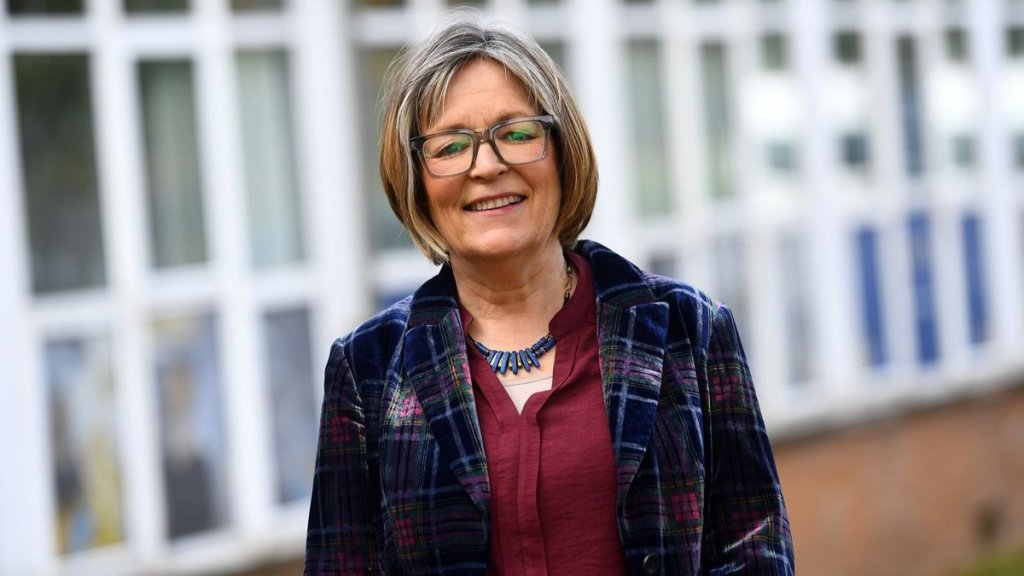
Cabinet Minister for Education and the Welsh Language Anna Brychan said: “Let me be clear, these results are not where we want them to be. But in many ways, they reinforce what we knew already and highlight our need to improve standards of reading and maths, as a priority.”
The Welsh Government described the science result as “a modest improvement”. The report classes the three-point rise since 2022 as not statistically significant.
The one bright spot the data backs up
Where the minister’s case is strongest is on disadvantage. The gap between the most and least disadvantaged learners in Wales was 50 points in reading, 65 in science and 70 in maths, significantly narrower than the OECD average in every subject.
Socioeconomic background also predicts less of a learner’s score in Wales than almost anywhere: it explained just 4% of the variation in reading performance, against an OECD average of 9%.
And more of Wales’s poorest learners beat the odds. Between 14% and 17% of disadvantaged learners were classed as “academically resilient”, performing in the top quarter despite their background, above the OECD average in all three subjects.
“I am encouraged that our most disadvantaged learners compare well internationally, and we are indebted to our teaching profession for supporting learners to achieve regardless of background,” Ms Brychan said. “But it is clear that we have much more work to do.”
At the other end of the scale, Wales has a top-end problem: just 4% of learners reached the highest levels in reading, 6% in science and 6% in maths, significantly below the OECD average in every subject. The minister said Wales “must also do more to ensure our highest-achieving learners reach their full potential”.
The longer trend offers little comfort: reading and maths scores in Wales are both significantly below where they stood a decade ago in 2015, with only science holding stable.
Ms Brychan, whose government took office after May’s Senedd election, said the results were “not the fault of schools or teachers”, adding: “We have inherited an education system that lacks clarity, coherence and a sure sense of direction.” She has promised teachers there will be no knee-jerk response.
Her first move will be a Foundational Literacy and Numeracy Plan, due to launch soon, which she said would “set out clearly our expectations for action” as “an important first step in the development of an equitable education system that works for all”.
‘Alarm bells must be ringing’
Opposition parties rounded on the Welsh Government within hours of the results.
Welsh Conservative Shadow Education Minister Sam Rowlands said the figures “should be a wake-up call”, with the report’s own tables showing Wales recorded the steepest falls of any UK nation in reading and maths since 2022, and the smallest rise in science while all four nations improved.
“Wales is being left behind by every other part of the UK in maths, reading and science and the gap with England is particularly stark,” he said.
“Decades of socialist rule by Labour and Plaid Cymru have driven down Wales’ educational standards and are failing this generation of young people. Every child in Wales deserves an education that gives them the best possible start in life.
“Alarm bells must be ringing in the Welsh Government on the publication of these figures. The Welsh Government must set about improving standards in our classrooms, supporting teachers and making sure pupils get the skills they need to succeed.”
Reform UK Wales pointed the finger at both of the parties to have governed in Cardiff Bay. Its Shadow Education Minister, Helen Jenner, called the results “stark and deeply concerning”, warning that “a whole generation of children have their futures on the line”.
“We simply cannot go on with a situation where pupils in Wales are consistently falling behind their counterparts in other parts of the United Kingdom,” she said. “The Plaid Cymru government have to take responsibility for their part in propping the previous 27 years of Labour. These failings are on both of them.”
The reading picture will be familiar to Swansea Bay News readers: days before the results were published, our columnist Kirstie Logan-Townshend wrote about the children locked out of reading and the small interventions that change it.
PISA is run by the OECD across 91 countries, testing how well 15-year-olds apply their skills to real-world problems. In Wales, 3,406 learners at 113 schools sat the two-hour assessment last autumn, ahead of their GCSEs next summer, with 456 completing it entirely in Welsh.
Related stories from Swansea Bay News
OPINION: ‘Ambition on its own has never taught anybody to read’
Kirstie Logan-Townshend on the children locked out of reading, published days before these results.
Education news
Schools, colleges and lifelong learning across Swansea Bay.
More from the Welsh Government
Policies, funding and decisions, and what they mean locally.
Discover more from Swansea Bay News
Subscribe to get the latest posts sent to your email.