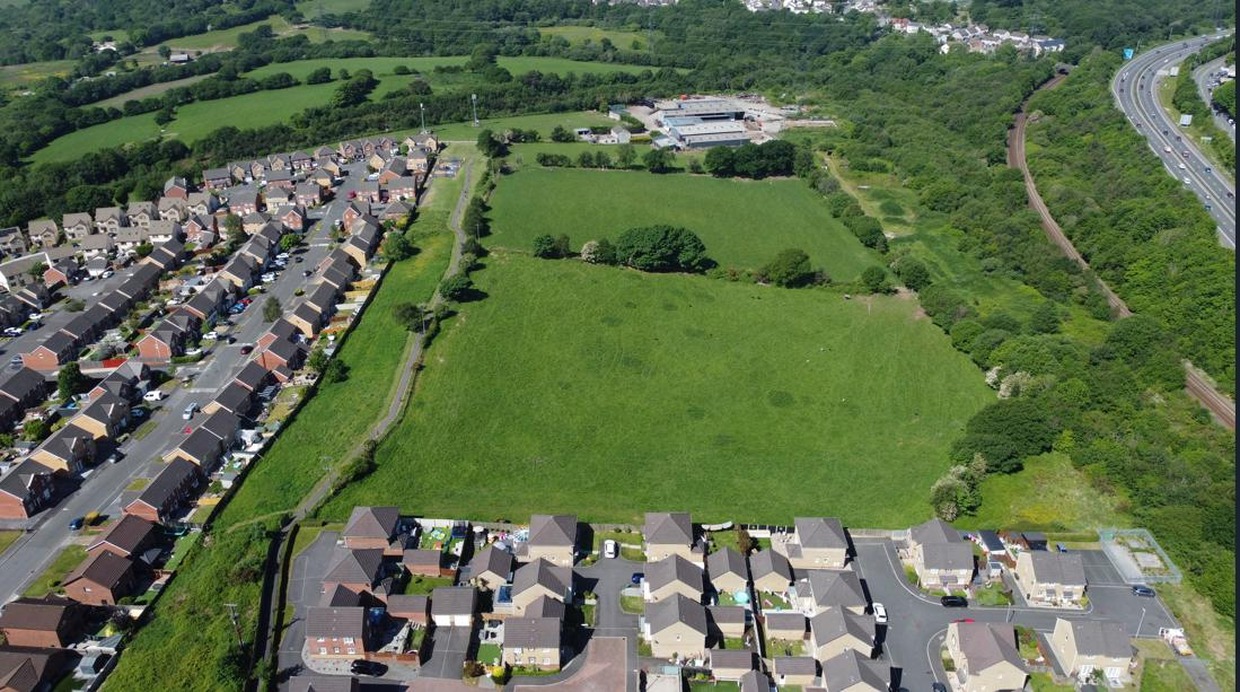
Up to 139 homes could be built on the fields north of Crymlyn Parc in Skewen, after planning officers advised councillors to approve them.
The decision falls to Neath Port Talbot Council’s planning committee on Tuesday 1 December. That is three weeks after the same councillors refused 250 homes at Leiros Parc in Bryncoch.
Both schemes come from Codi Group, the housing association formerly known as Pobl, which is working with Hale Group on the Skewen site.
This one has drawn 217 objections and a single letter of support. Unlike Leiros Parc, though, it has no objection from the council’s own highways officers.
Three fields between Cae Morfa and the M4
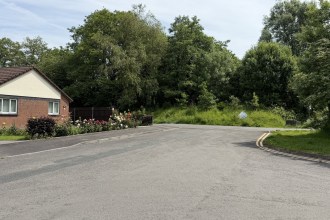
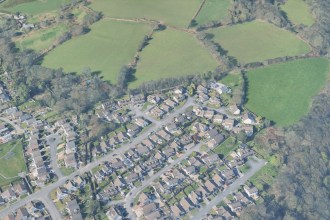
The site is 4.7 hectares of grazing land, with Cae Morfa on one side, Pentwyn Farm on the other and the motorway about 80 metres to the north.
Cars would reach the new homes through the two estates already there. An illustrative plan shows one entrance from Cae Morfa and another from Crymlyn Parc, linked by a road through the middle.
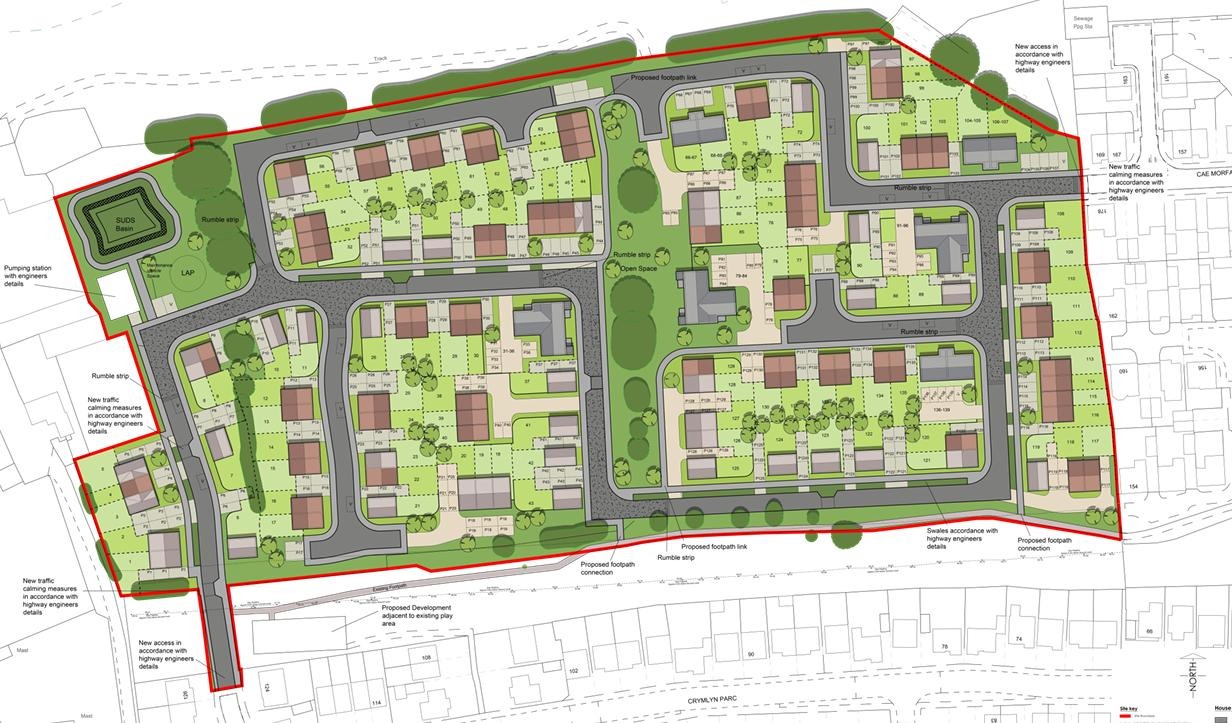
The same plan shows mostly two-storey buildings, a mix of apartment blocks, semi-detached houses and short terraces.
It is only a guide. Councillors are being asked to agree the principle and the number of homes, with the layout and house types to follow in a later application.
That number has already come down once, from 146 when the plans went in during April last year.
Town council fears for Crymlyn Road, but highways officers do not object
Traffic runs through most of the objections, and Coedffranc Town Council has raised it too.
It says local roads are “already narrow and constrained”, and that when Crymlyn Road is blocked at the Trallwn end, congestion backs up through Skewen at peak times.
Highways officers have studied the developers’ traffic figures and reached a different view. They say the road network “has sufficient capacity” for the extra cars, including those from other developments already approved nearby.
Many residents also complained about potholes and worn road surfaces. Officers say those are a maintenance job for the council and cannot count against the scheme.
The town council’s other worry is whether surgeries, dentists and schools can absorb more families.
On GPs, Swansea Bay University Health Board told the council in February that Tabernacle Surgery and Queens Medical Centre had room for the patients about 150 homes would bring.
Residents object to what would be built as well as how many. They point to six apartment blocks holding 30 one-bedroom flats, on estates made up mostly of detached and semi-detached family homes.
Some linked the affordable housing to fears of anti-social behaviour. Officers dismissed that, writing that “the ability of a person to own a home does not imply that they have specific social problems”.
Others want the brownfield land at Coed Darcy finished first. The officers’ answer is that planning policy does not require brownfield sites to be built out before fields like these.
Gas main limits the homes at the southern end
One limit on the site lies underground. A high-pressure gas pipeline run by Wales & West Utilities crosses its southern end on the way from Llandarcy to Pontarddulais.
The Health and Safety Executive advises against more than 30 homes inside the zone around it, and officers want a condition holding the developers to that number.
Developers would pay £8,933 a home towards schools
If councillors agree, the developers would pay £8,933 towards schools for every home with two or more bedrooms, and up to £2,280 a home towards open space.
The fields have been earmarked for about 150 homes since 2016 in the council’s Local Development Plan, which runs out on 31 December.
The committee meets at 2.30pm next Tuesday at Neath Civic Centre.

Discover more from Swansea Bay News
Subscribe to get the latest posts sent to your email.