



A café in Swansea has removed a historic photograph from its wall after a customer believed it showed belongings from a Nazi concentration camp.
The image, which had been displayed at Zinco Lounge, sparked concern when a visitor recognised what she thought was a scene connected to the Holocaust.
Emma Jones contacted Swansea Bay News after spotting the photograph while meeting friends for a Mother’s Day catch-up.
She said the image immediately reminded her of photographs she had seen years earlier during a visit to the Holocaust exhibition at the Imperial War Museum London.

“I was at Zinco Lounge in Swansea having a Mother’s Day catch-up with friends when I saw this image from a concentration camp up on their wall,” she said.
“It was very upsetting thinking what all those children and people went through.”
Emma said she believed the photograph showed items belonging to victims at Majdanek concentration camp, one of the Nazi camps used during the Holocaust.
However, she added that staff at the café responded quickly when the concern was raised.
“They were lovely, apologetic and took it down,” she said.
“But it made me sad to think how many people might have seen it and not realised what it was.”
The venue, located on Princess Way in Swansea city centre, on the site where the former David Evans Department Store once stood, later carried out checks into the image’s origin.
In a statement, the company said the photograph was not connected to the Holocaust.
“We take this kind of concern very seriously, and we’re glad our team responded promptly when the issue was raised,” a spokesperson said.
“The photograph was removed from the venue immediately as a precaution, and we have since investigated its provenance fully.”
The company says the image is a 1940 British press photograph showing a wartime contraband seizure.
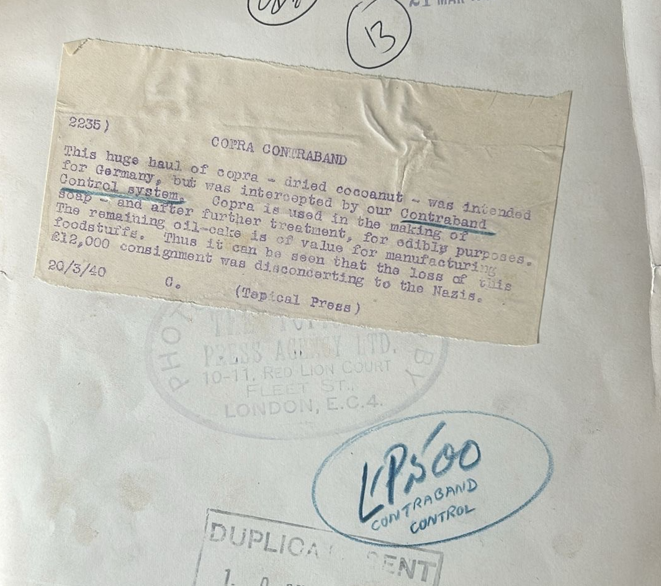
(Image: Loungers)
According to documentation supplied by the venue, the photograph depicts a large consignment of copra (dried coconut) intercepted by British Contraband Control during the Second World War.
The typed press caption accompanying the image states the shipment had been intended for Germany but was intercepted by British authorities.
The consignment, dated 20 March 1940, was reportedly valuable because copra was used in the manufacture of soap and other products during wartime.
Despite the clarification, Emma said the experience highlighted how powerful historical images can be.
“I guess some things the brain can’t forget once you know,” she said.
“I thought maybe it could also be an opportunity to raise awareness of what people went through and stop people forgetting the past.”
Discover more from Swansea Bay News
Subscribe to get the latest posts sent to your email.




If Emma was wrong in her assumption, why has it been taken down?