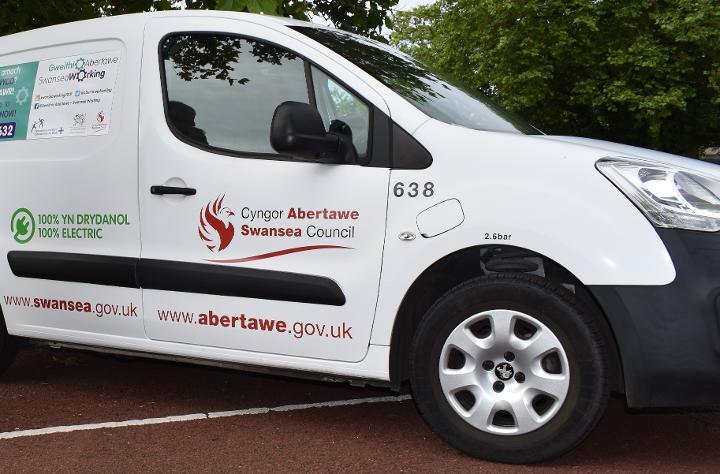
Swansea Council now runs 134 battery electric vehicles, backed by charging points at 18 sites, in a fleet it says is central to cutting its carbon emissions.
The figures appear in two reports for the council’s climate change and nature scrutiny performance panel, tracking progress on Swansea Council‘s plan to cut carbon from its own operations and on the wider Climate Change 2050 ambition for the city.
The fleet has grown by around a third since passing the 100-vehicle milestone in the summer of 2023.
The reports also point to the launch of Swansea Project Zero, a new online hub gathering the council’s climate information in one place.
Climate Cafés are on the way too: sessions intended to help residents and businesses learn about climate action and, in the words of one cabinet member, become part of Swansea’s response to it.
The council says its 30-point cutting carbon action plan is continuing, with investment in building retrofits, low-carbon technologies and behaviour change programmes.
Cllr Andrea Harrington, deputy leader and cabinet member for service transformation, said tackling climate change was about more than reducing emissions: “It’s about creating a more resilient, efficient and sustainable council that can continue delivering essential services while protecting our environment for future generations.”
She was frank about the pressures: “While challenges around funding and resources remain, we will continue working with partners and seek external investment to keep Swansea moving towards our climate change ambitions.”
Energy security is part of the same push, she said, to make sure the city uses “as much locally generated energy as possible – preferably from green sources – to help protect residents and businesses from the incredibly volatile energy prices we have seen in recent years.”
That ambition surfaced at the same committee last week, when councillors discussed the £100m idea of heating the city centre with warmth from the sewage works. It builds on the local energy blueprint approved in 2024.
Cllr Rebecca Fogarty, cabinet member for community support, said the electric fleet was “an important part of reducing the council’s carbon emissions while continuing to deliver essential services”, adding cleaner vehicles would be expanded “where it’s practical to do so”.
Cllr Andrew Williams, cabinet member for development, said climate action worked best “when it brings together communities, businesses and public sector organisations”, pointing to Project Zero, the council’s Climate Charter partnership and the forthcoming cafés as ways of making trusted information easier to reach.
He said the council was also strengthening its ability to adapt to the changing climate, “improving resilience across council services and supporting practical projects that benefit both people and nature”.
Swansea is not alone in the electric race: neighbouring Neath Port Talbot is set to become the UK’s first council with a fully electric bin lorry fleet, while Swansea’s wider transport plans include a switch to hydrogen buses.
The reports conclude that further work is needed to maintain momentum, but say the city is making steady progress through partnership working, targeted investment and practical action.
Related stories from Swansea Bay News
SWANSEA: The £100m plan to heat the city centre with warmth from the sewage works
Councillors have been told what the district heat network idea needs next, and who won’t be paying for it.
RECYCLING: Neath Port Talbot to become UK’s first council with a fully electric bin lorry fleet
The neighbouring council says it will be the only local authority in the country running an all-electric recycling fleet.
Council says its growing green fleet is helping cut city pollution
Our 2023 report as Swansea Council’s electric fleet passed the 100-vehicle milestone.
Local energy blueprint aims to chart ways towards city’s net zero future
The blueprint that could transform how Swansea powers its cars and homes over 30 years.

Discover more from Swansea Bay News
Subscribe to get the latest posts sent to your email.