

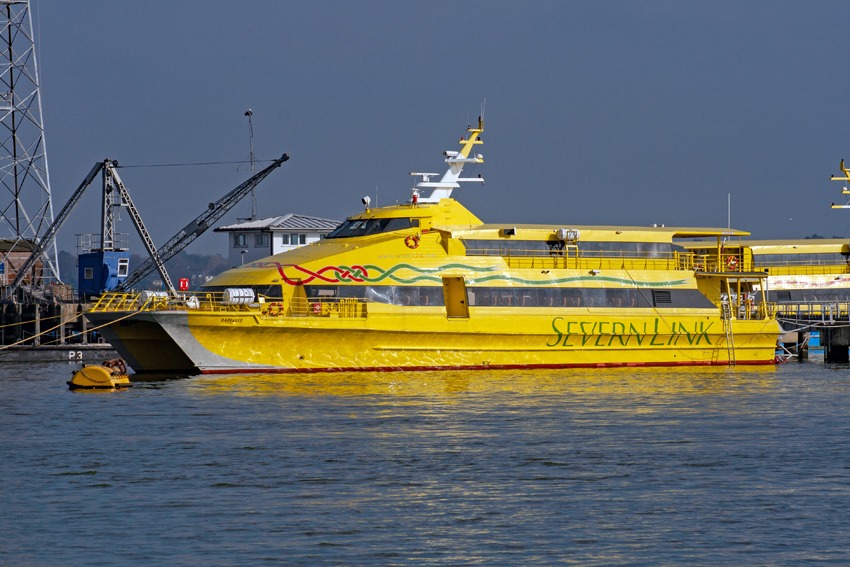
In the early weeks of 2010, a fast catamaran in fresh Severn Link livery tied up in Swansea Docks, went in for an interior refit, and waited for Easter.
It was still waiting in August, when it slipped back out of the docks and left Swansea for good. It never carried a single paying passenger.
As councillors weigh a new high-speed ferry across the Bristol Channel, the story of Severn Link is the nearest thing the current proposal has to a dress rehearsal, on the same water, with the same promise attached.
Severn Link unveiled its plan in the autumn of 2009: a year-round passenger service from Swansea to Ilfracombe using two former Wightlink catamarans capable of 34 knots with around 360 seats each. The crossing would take 50 minutes against three and a half hours by road, at an estimated average fare of £22, with the company promising more than £3m of investment and around 40 jobs.
Founder Chris Marrow, a veteran of new ferry routes around the world, had eyed this water for years. “I have started ferry services in other parts of the world but I have always looked at the Bristol Channel and thought really there should be ferries there,” he said at the launch. “Every other long stretch of water in the world like that, that I’m aware of, does have active ferry services.”
Swansea’s then council leader Chris Holley called it “terrific news”, saying a fast-cat to Ilfracombe “would be a boost for the city’s tourism economy”.
Seventeen years on, Holley leads the opposition on Swansea Council, and chairs the scrutiny panel now asking the hard questions of the current ferry proposal. The man who welcomed the last fast ferry across this water is the one interrogating the next.
The boats had pedigree: 40-metre sisters built in Singapore by Kvaerner Fjellstrand in the mid-1990s, fresh from a decade shuttling between Portsmouth and Ryde. One was renamed Rapparee, after the cove at Ilfracombe, the winning entry in a local competition.
In January 2010 the other, the FastCat Shanklin, was repainted in Severn Link colours at Portsmouth and sailed west, calling at Ilfracombe before berthing in Swansea. The interior refit was costed at around £100,000, with suppliers to be sourced from Swansea and south Wales wherever possible, and managing director Geoff Metcalf promised a crossing that would be “fun, fast and affordable”.
The investor, the mortgages, and an Easter that never came
Sea trials were run on the catamarans, and Marrow would later say the company came within weeks of starting. But Easter 2010 passed without a sailing: delays in creating landing facilities at Swansea pushed the launch back to 2011, and then the major investor holding the mortgages on both catamarans pulled out.
By August the launch had been postponed indefinitely and both boats were up for sale, the Shanklin slipping out of Swansea for Hampshire. Talks with a new backer that autumn, which Marrow hoped to complete “by the end of the year”, came to nothing.
In May 2011 the pair were sold to a Russian operator, lifted aboard a heavy-lift ship and carried to the Black Sea, where the Rapparee has spent the years since running passengers out of Novorossiysk as the Sochi-1. The boats got their ferry career in the end, 2,500 miles from Swansea Bay.
Marrow refused to bury the idea. “It’s not forgotten,” he said in 2012, calling it a live project while declining to name a date: “Having almost got started and then disappointed people I’m loath to disappoint them again.” Replacing the boats would be easy, he said, in a buyer’s market with ferry adverts landing daily. The harder problem was infrastructure: the landing facilities at Swansea, and access at Ilfracombe in high winds. “There’s a lot of ducks to get in a row.”
The ducks never lined up, and the dream passed to others. From 2014 Ilfracombe boat operator Mark Hutchings pushed his own plan for a 280-seat custom-built ferry to Swansea; in 2018 a £25m quay and breakwater regeneration at Ilfracombe was discussed with a ferry berth in mind; and in 2021 North Devon MP Selaine Saxby took it to the Commons. “I can see South Wales from my North Devon constituency,” she told MPs, describing visions “ranging from a Dylan Thomas literary tour, through to a Barry booze cruise”. No ferry has sailed.
Today’s proposal differs from Severn Link’s in two ways. It is council-commissioned rather than resting on a single private investor, and it is designed to carry vehicles as well as passengers, something Severn Link admitted its routes lacked the infrastructure to support, with car-carrying only ever an eventual ambition.
But the deeper problem has not moved in seventeen years: the landing. Infrastructure troubles at both ends helped sink the 2010 attempt, and the lack of it on the North Devon side is one of the open questions councillors are asking of the current plan, which has yet to confirm where in the south west a ferry would berth.
There is a poignant footnote in Severn Link’s launch pitch: it sold itself as a feeder for the new Fastnet Line ferry to Cork, the crossing revived by Irish community pledges that same spring. Within two years, both were gone.
Steamers ran this water for the best part of a century, from Pockett’s paddlers to the Campbell fleet’s daily summer runs. The 50-minute promise has been made before, too. The test, then as now, is everything that has to happen before the first passenger steps aboard.
Related stories from Swansea Bay News
SWANSEA FERRY: Who pays, where does it dock, and how does it hit 60 knots?
Councillors sharpen their questions on the current proposal.
SWANSEA FERRY: Halfpenny rowboats, paddle steamers and the night boat to Cork
The many ferry ages of Swansea, from the White Rock crossing to the Superferry.
SWANSEA FERRY: Brittany Ferries watching Swansea’s ferry ambitions with “genuine interest”
The established operator keeping an eye on the Bristol Channel plan.
Historic Waverley paddle steamer to get extended summer Bristol Channel season
The last seagoing paddle steamer still recreates the Ilfracombe run.

Discover more from Swansea Bay News
Subscribe to get the latest posts sent to your email.