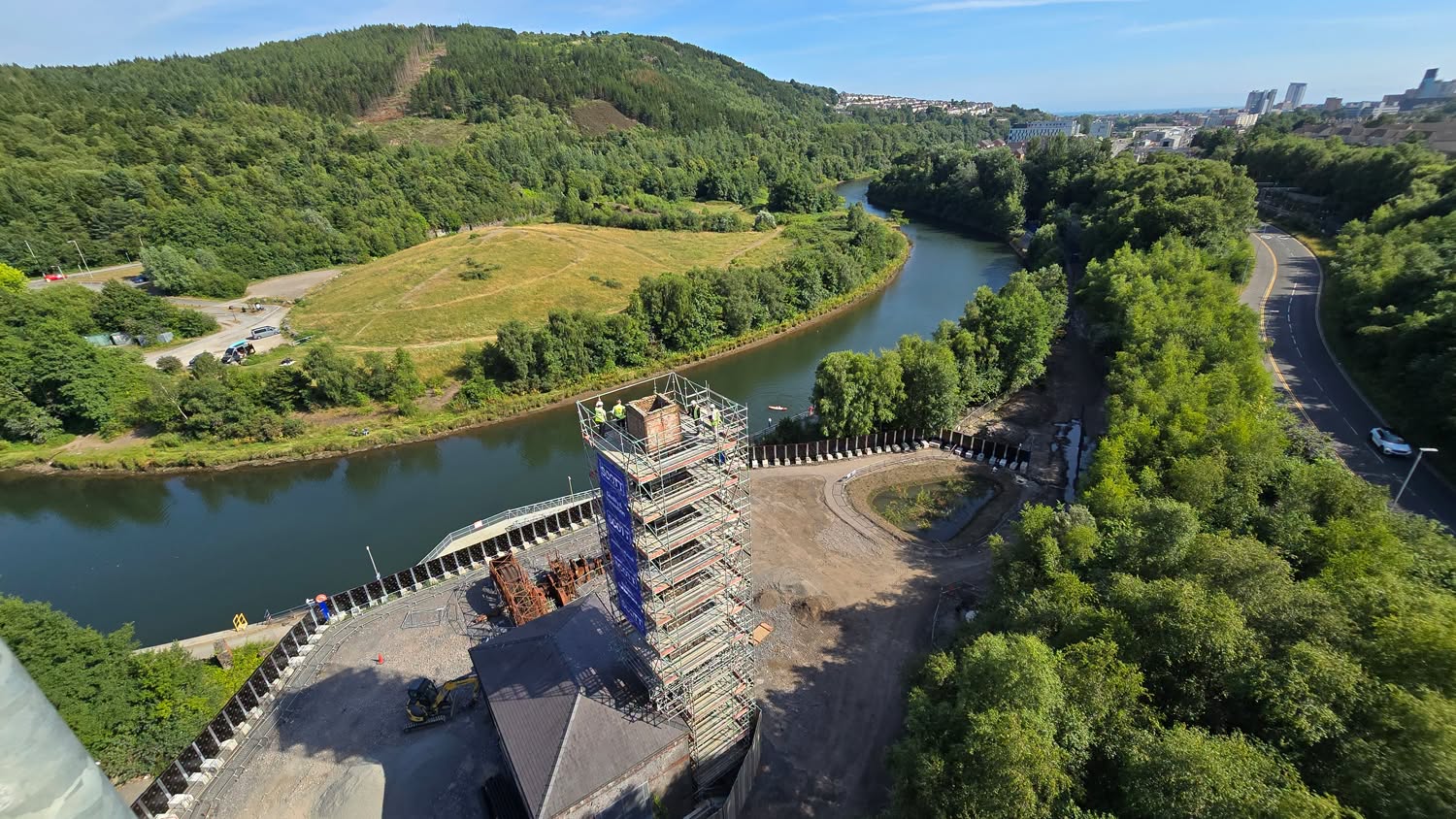
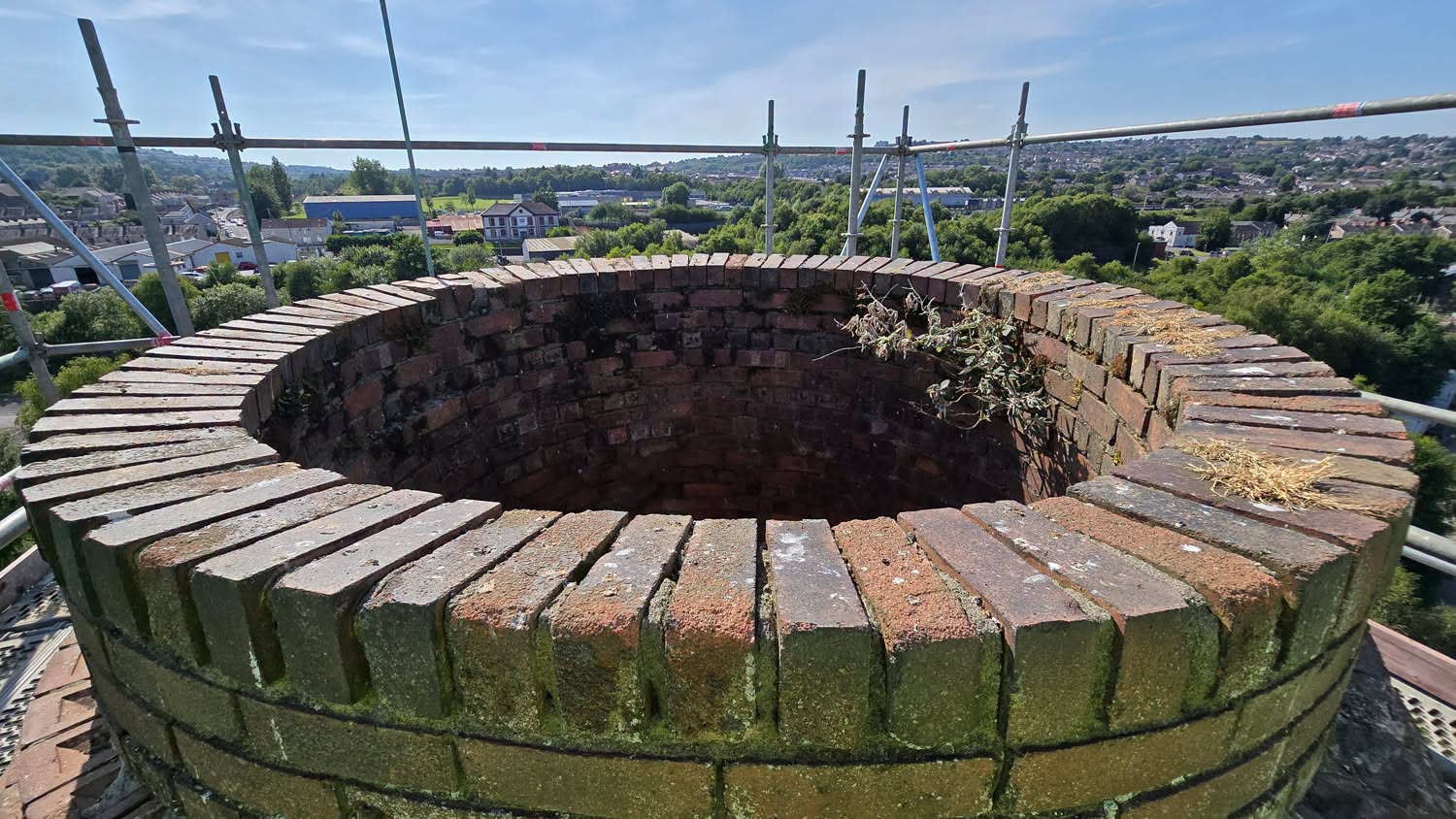
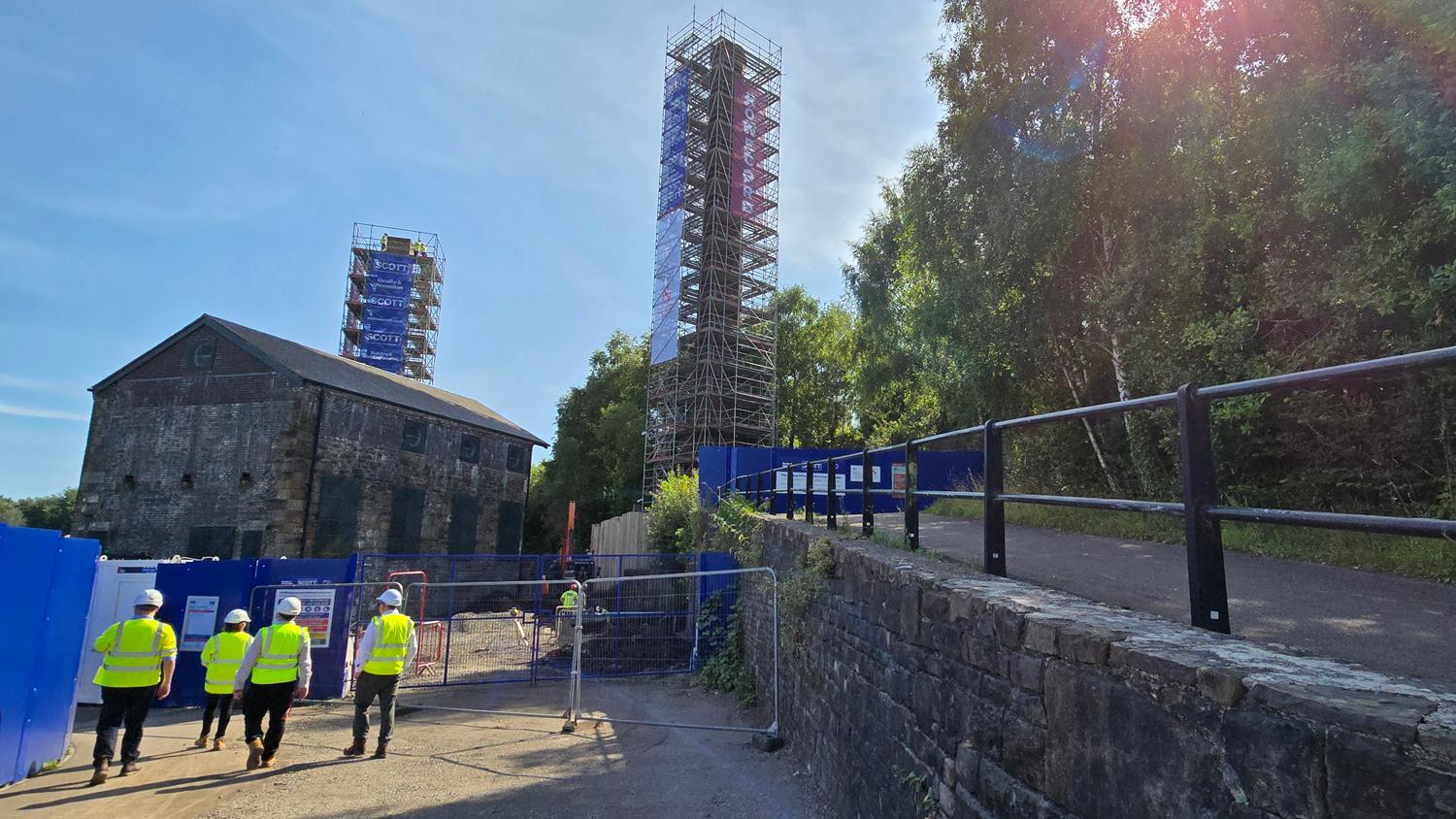
The landmark chimneys of Swansea’s historic copperworks have been scaffolded to their summits — the most visible sign yet that restoration of the site’s engine houses is under way.
Contractors Andrew Scott have been on site at the former Hafod-Morfa Copperworks since mid-April, working on plans to restore the Vivian and Musgrave Engine Houses and the neighbouring V&S No.1 locomotive shed.
Swansea Council said activity so far has included site set-up, vegetation clearance and preparations for detailed condition surveys of the key structures.
A sustainable drainage pond has been excavated, and work has started on new access routes into the site.
The council said further visible progress is expected over the coming weeks as site preparation and infrastructure works continue.
The scheme aims to bring the listed buildings back into use — with the council saying the restored engine houses could in future support food, retail and exhibition space, drawing more visitors to the Lower Swansea Valley.

The two engine houses are among the most important survivors of Swansea’s copper industry, which powered the town’s growth over some 300 years.
The Vivian Engine House dates from 1860, and is set to gain a mezzanine floor, with a new building linking the two structures and an outdoor terrace.
The Musgrave Engine House, built around 1910, contains the Musgrave Engine — a scheduled ancient monument, and the only one of its kind in the UK still in its original location. Its external elements are due to get a covered shelter to allow future restoration.
Andrew Scott, the Swansea-based contractor whose history stretches back more than 150 years, was chosen for the project last summer following a competitive tender.
Plans for the restoration were approved in early 2025, and restoration work is also under way on the site’s Grade II listed powerhouse building, which could become a restaurant for more than 100 diners.
The site has also produced “internationally significant” archaeological discoveries in recent months, with rare evidence of historic copper-processing techniques unearthed.
The engine houses sit close to the route of the Skyline development, the £49m cable car and luge attraction now under construction on Kilvey Hill — part of a wave of investment along the River Tawe corridor.
The restoration project is supported by UK Government funding through the Local Regeneration Fund, the council said.

Discover more from Swansea Bay News
Subscribe to get the latest posts sent to your email.