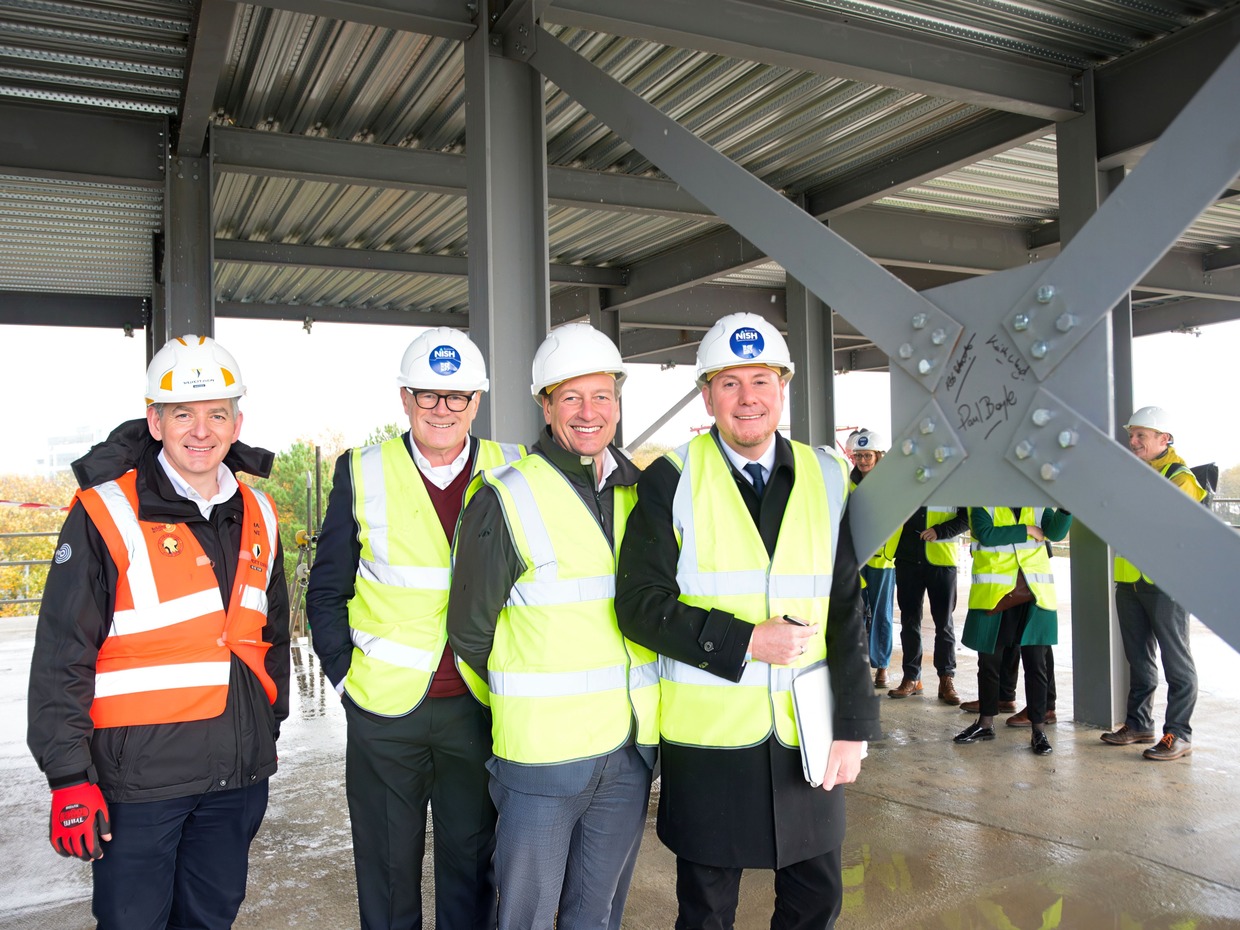
The new sport and health institute going up at the entrance to Swansea Bay Sports Park has reached its full height.
The steel frame of the four-storey building on Sketty Lane, Swansea, is finished, a stage builders call topping out. It is due to open next year.
Swansea University, which is leading the project, says the National Institute for Sport and Health will be a place where sports technology, medical devices and health ideas are developed and tested.
Those at the ceremony signed one of the steel beams on the top deck.

Hot desks from £120 a month: what will be inside
The 2,000 square metre building will have co-working space, a health and wellbeing academy, a sport simulation suite, and research and media facilities, the university says.
It will also have what the university calls incubation suites: cheap, supported space for new companies while they get started.
Businesses can apply now for space there. The institute’s website lists hot desks from £120 a month and a dedicated desk from £220, with a £120-a-year membership for those who don’t need one.
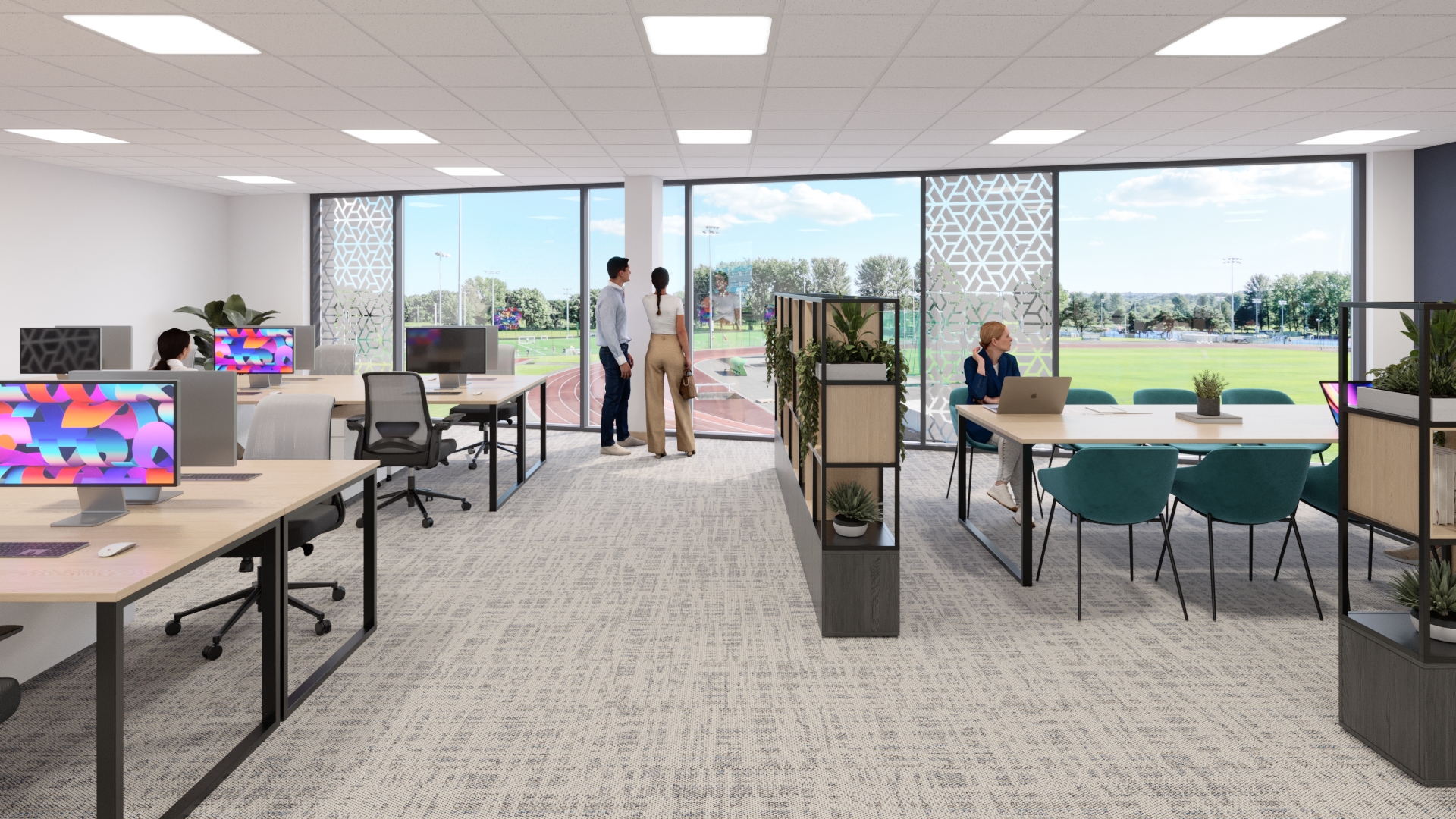
It stands beside the Wales National Pool, and the university’s plan is for it to anchor a wider science and innovation park on the site.
Singleton Hospital is across the road, which the university says is deliberate.
“Turn ideas into real-world impact”: what the university wants from it
The thinking is that research done in the university’s labs gets turned into products and treatments by firms working in the same building, alongside doctors and sports clubs who can try them out.
Vice-chancellor Prof Paul Boyle said: “This facility will provide a focal point for pioneering health and wellbeing innovation, helping to turn world-leading research into real-world benefits for our local community and economy.”
He added: “We are delighted to have reached a significant milestone for everyone involved in bringing the NISH vision to life.”
Prof Boyle said the university was “creating an environment where innovation can thrive, supporting jobs, skills and sustainable growth for years to come”.
Prof Keith Lloyd, the institute’s director, said: “Seeing the NISH building reach this important stage is a really exciting moment for us.”
He went on: “This will be a space for researchers, businesses, healthcare professionals and the sporting community to work together and turn ideas into real-world impact. We can’t wait to welcome new partners through the door.”
1,000 jobs promised by 2033
When work started in February, those behind the scheme said it would create more than 1,000 jobs and add more than £150m to the region’s economy by 2033.
The money comes through the Swansea Bay City Deal, the investment programme shared by the region’s four councils.
Swansea Council and local health boards are also backing it.
Willmott Dixon is the main contractor. Its director Richard Jones said: “Reaching this milestone is a testament to the dedication and expertise of everyone involved in the project.”
He added: “We’re proud to be playing our part in delivering a facility that will help strengthen Swansea’s reputation as a centre of excellence and create opportunities for future generations.”

Rob Stewart: “exactly the type of collaborative project” the region needs
Cllr Rob Stewart leads Swansea Council and chairs the South West Wales Corporate Joint Committee, the body through which the four councils plan transport and the economy together.
He said: “This milestone is another significant step forward for both Swansea and the wider South West Wales region.”
The institute would “create new opportunities for businesses and researchers, and help drive investment, skilled jobs and economic growth across the region”, he said.
Cllr Stewart added: “This is exactly the type of collaborative project that demonstrates what can be achieved when partners work together to deliver long-term benefits for our communities and economy.”
He called it “another important element of the sports science park”, alongside new facilities at King George V playing fields, a new cricket ground, the rebuilt St Helen’s and new arrangements for the national pool.
The council agreed in March to bring the sports park under a single operator. Freedom Leisure took over on 1 August.

Discover more from Swansea Bay News
Subscribe to get the latest posts sent to your email.