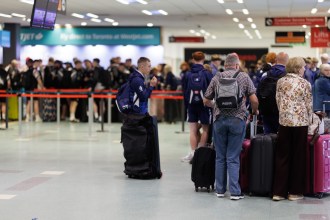
Disabled and less mobile passengers flying from Cardiff Airport can expect some of the best assistance in the UK, the aviation regulator says, after the airport kept its top rating for a second year running.
The Civil Aviation Authority’s annual Airport Accessibility Report, published today, rates Cardiff ‘Very Good’, the highest band, matching last year’s result.
In practice, that rating means help arriving fast. To earn it, an airport must reach 99% of departing passengers who booked assistance within 30 minutes, meet 98% of pre-notified arriving passengers within 20 minutes of the plane parking, and score at least 4 out of 5 in surveys of the people who actually use the service.
Cardiff was also one of just five airports given a deep-dive accessibility assessment by the regulator this year, alongside Bristol, Edinburgh, Glasgow Prestwick and Liverpool.
There is good news whichever airport south west Wales flyers use. Bristol, the other big option for many in the region, climbed from ‘Good’ to ‘Very Good’ this year.
Nationally, 19 of the 28 airports assessed were rated ‘Very Good’ and nine ‘Good’, with none falling below that. London Heathrow was among those rated only ‘Good’.
Demand for the services has never been higher. A record 5.9 million passengers used assistance at UK airports in 2025, according to the regulator.
Requests for help have grown far faster than passenger numbers: up 115.8% since 2015, against overall passenger growth of 23.9%.
The services cover far more than wheelchairs. Assistance can include support from the car park or train station, help through check-in, security and passport control, boarding and leaving the aircraft, and collecting baggage, for anyone from elderly travellers to families with young children.

The report is not all good news. The regulator’s own consumer survey found overall passenger satisfaction at 88%, the highest since the survey began in 2016, but satisfaction among passengers with accessibility or disability needs sat lower, at 82%.
More than half of disabled consumers, 58%, reported difficulties accessing or using airports and flying, with the most common needs relating to walking, standing or carrying luggage.
Anna Bowles, head of consumer protection at the Civil Aviation Authority, said the progress of the last decade was “encouraging”. When the regulator’s framework was introduced in 2014, 13 airports were rated ‘Poor’ or ‘Needs Improvement’.
“The fact that no airport was rated ‘Needs Improvement’ or ‘Poor’ this year is welcome, but we cannot be complacent,” she said. “Some disabled passengers still face difficulties when travelling, and with demand for assistance services continuing to rise, airports must continue to invest in assistance services.”
A revised version of the framework goes out to consultation later this year, and Ms Bowles said the Civil Aviation Bill currently before Parliament would, if approved, give the regulator “additional enforcement powers to better hold airports to account for meeting the legal rights of passengers, including in relation to accessibility”.
The rating lands during the busiest run Cardiff has had in years, with the airport passing a million passengers in twelve months and named the UK’s second fastest-growing, meaning more people than ever needing a hand through its terminal.
The full rankings for all 28 airports are on the Civil Aviation Authority’s website.
Related stories from Swansea Bay News
CARDIFF AIRPORT: A million passengers in a year as Welsh airport becomes UK’s second fastest-growing
The milestone that capped the airport’s strongest year in over a decade.
CARDIFF AIRPORT: Children aged eight and nine can now use eGates
The border change making the journey home smoother for families.
CARDIFF AIRPORT: First direct WestJet flight from Toronto touches down
The transatlantic route that landed in May.
Bristol Airport drags Welsh ministers to tribunal over £205m Cardiff Airport bailout
The legal fight over the airport’s public funding.

Discover more from Swansea Bay News
Subscribe to get the latest posts sent to your email.