

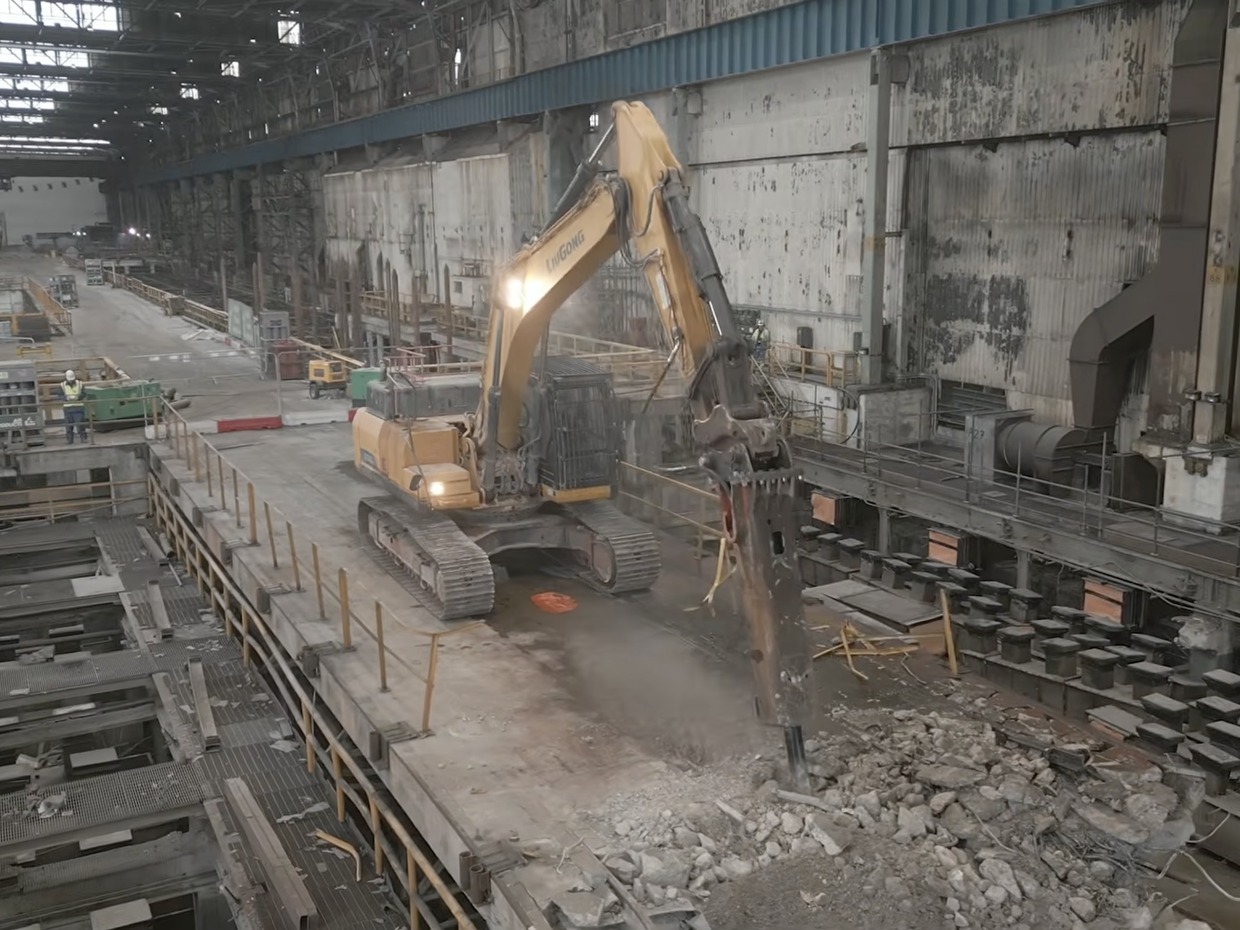
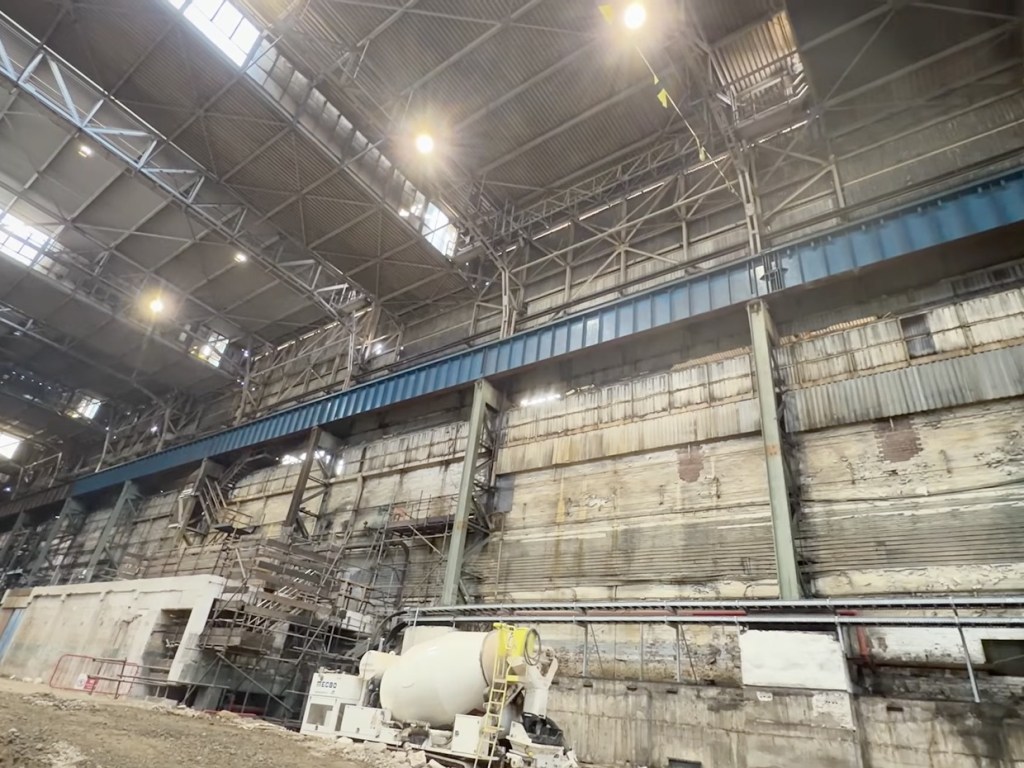
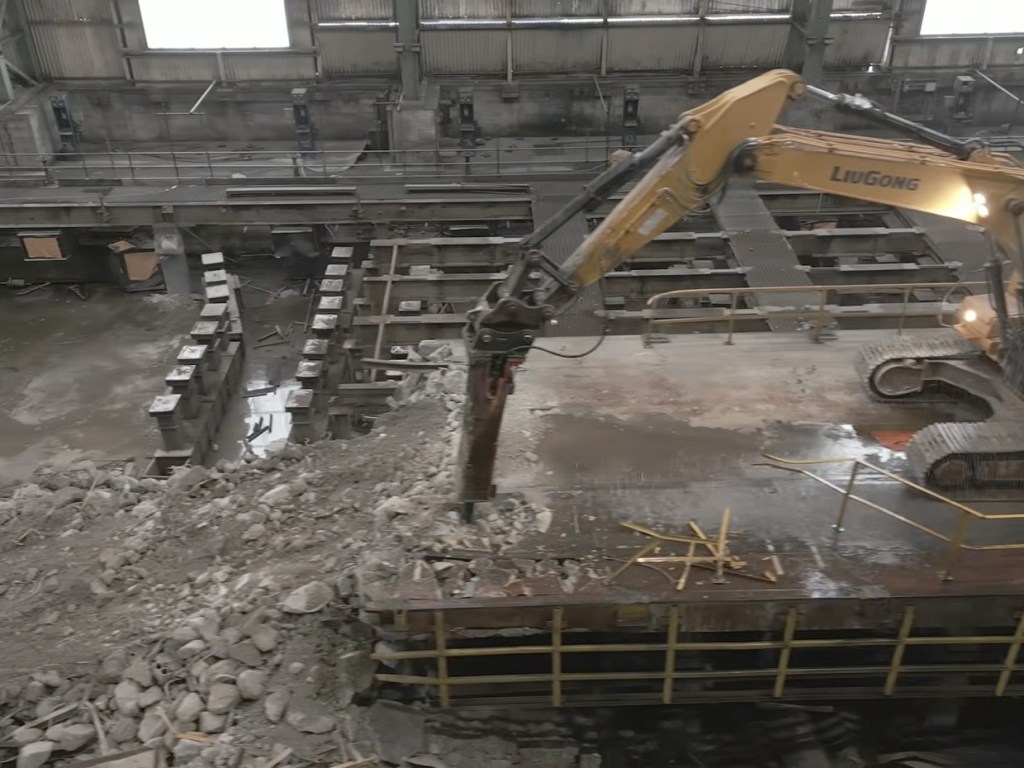
The bay where Tata Steel is building the new pickle line for Port Talbot has no roof at one end. The June fire that burned for two days and brought more than 100 firefighters to the works spread into the bay and the next one over, and the company’s programme lead for the mills says the roof “has been destroyed, it’s gone”.
Andrew McGregor, speaking in a Tata Steel UK video from inside the bay, says the crane girders were badly damaged too, so a crane can no longer run the length of the building. The plan had been to build 30 to 40 tonne modules of steelwork at the far end and crane them into place. They will now be built on the slab.
What the fire did, and what it didn’t
The exit end of the line, where the finished strip comes off, cannot yet be reached safely for foundation work, he says: the exit foundations are “subject to the fire damage”. In June Tata told customers the fire would not affect its £1.25bn electric arc furnace; this is its first account of what the blaze did to the rest of the programme.
There is an upside, in Mr McGregor’s telling. Work on the mill entry accumulator, which feeds the cold mill, was going to have to wait for a summer stop so as not to interrupt production. With the cold mill not running, “now we can do it as soon as we have access”.
“We’re trying to learn from this incident,” he says. “We’re not trying to pre-empt the investigation which needs to happen, but we can’t wait for the investigation either.” A full deluge system was already in the design.
Below the water table
The rest of the bay has been dug out to its basement, 20 or 30 feet below the old mill floor, and is being piled: 410 piles under the process section and another 600 at the entry and exit ends. Water pools on the floor, in a drought. The bay sits below the water table, Mr McGregor says, with springs and a tidal influence, and a dewatering rig runs until the new slab is cast to hold the water down.
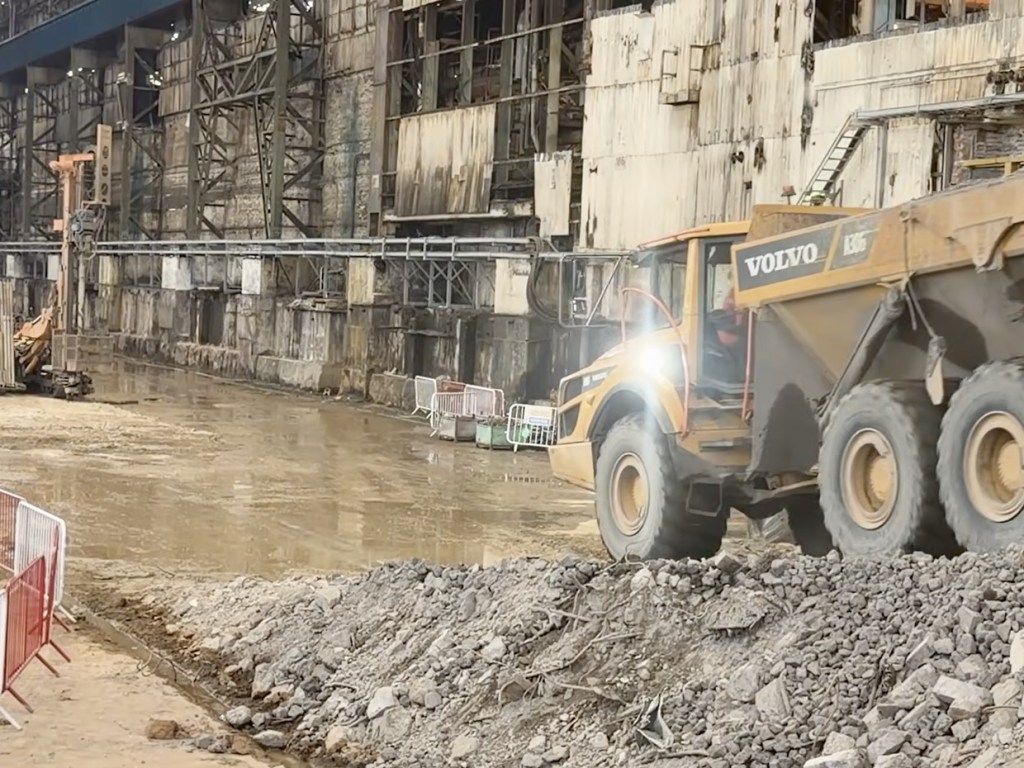
Two things could not be moved and the line was designed around them: the main electrical feed to the hot mill, which runs through the middle of the bay under a ridge the dumper trucks now cross on steel girders, and a stream running under the far end.
A 140-tonne welder and four acid tanks 50 feet up
Coils will come through a new hole in the wall from the hot mill, onto two payoff reels, over the power feed and into a laser welder, at about 140 tonnes the heaviest single piece of the line. From there the strip enters an accumulator that can hold 650 metres of steel, so the line keeps running while the next coil is welded on.
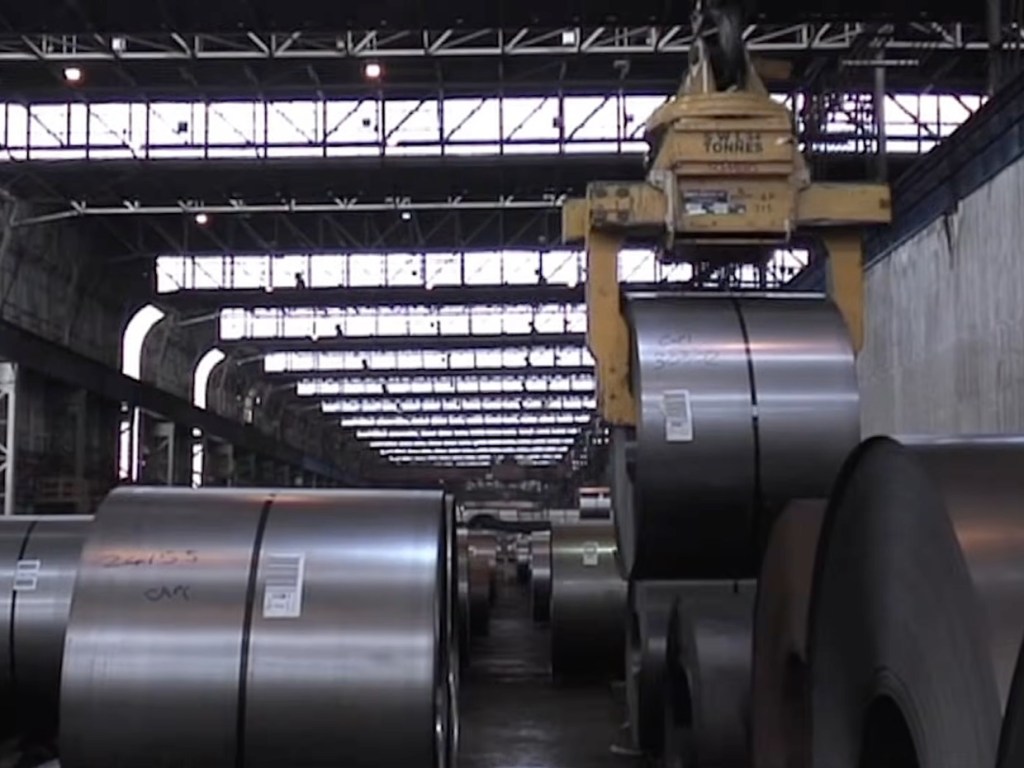
A 90-tonne scale breaker cracks the oxide off the strip, then four hydrochloric acid tanks eat away the scale, sitting on a steel structure at about the height of the crane gantry. Rinsed, the strip is either oiled and coiled for customers or fed straight into the five-stand cold mill.
Reusing the old bay rather than building new has cost “a lot of services” to relocate, cable by cable, but Mr McGregor says the saving over a new building was “phenomenal”.
The hot mill keeps rolling through it
The other half of his job is the hot mill, which is still rolling around 1.5m tonnes a year while its own life extension is prepared. The summer stop was used to identify and reroute cables and move electrical boxes so foundations can go in; the Christmas stop is the next big window, and the new coil box and crop shear go in next summer.
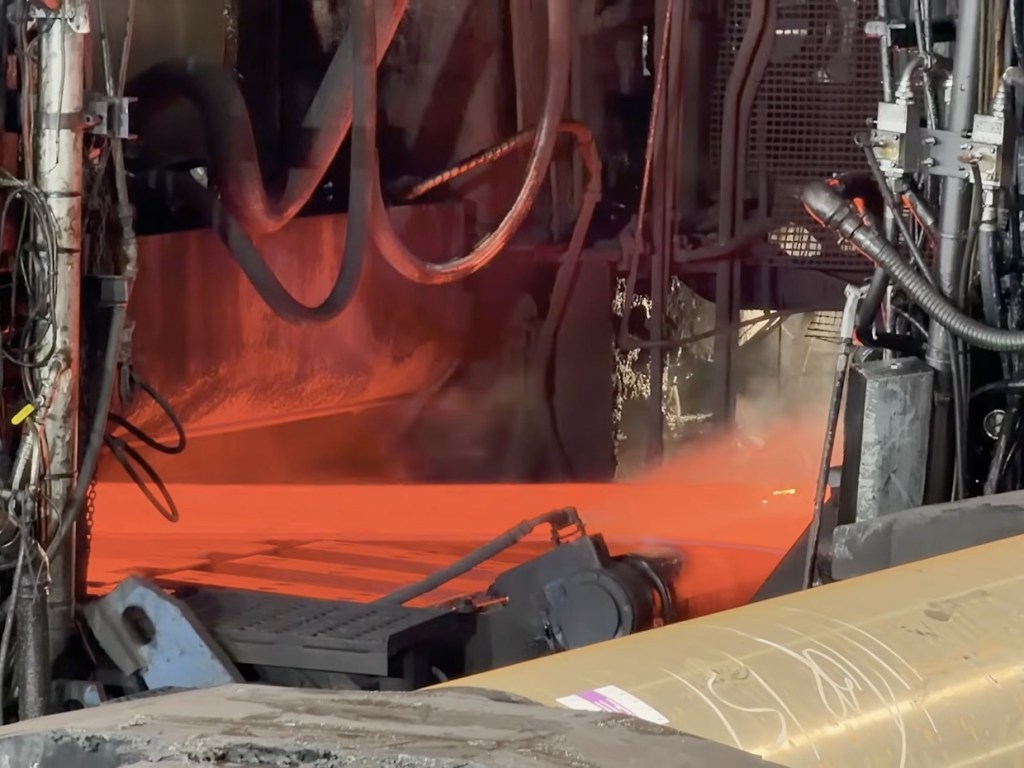
“It’s no good having an electric arc and being able to produce slab if we can’t process it,” he says. “All of our downstream is fed from our one hot mill.”
What to look for next
Half the new slab in the process section is due by October, with steelwork erection starting after that. In six months the entry foundations should be well on; in nine, the structural steel should be up; in twelve, “the height of the mechanical installation and the electrical installation”.
The pickle line and the hot mill upgrade are two of the strands of Project Invictus, the programme built around the electric arc furnace that is to replace the blast furnaces closed in 2024 with the loss of around 2,000 jobs. The furnace itself faces a possible delay of up to eight months over its National Grid connection.

Discover more from Swansea Bay News
Subscribe to get the latest posts sent to your email.