

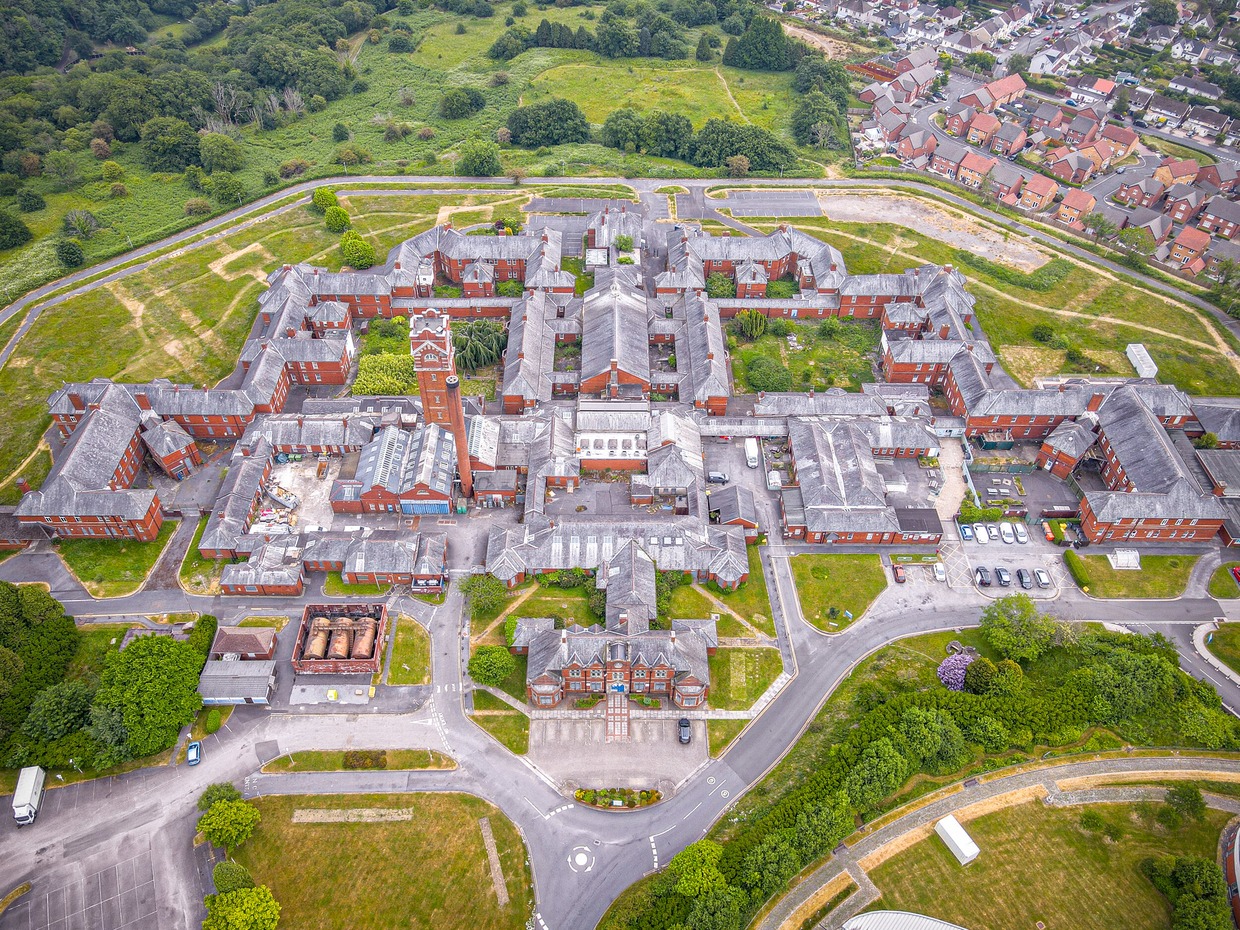
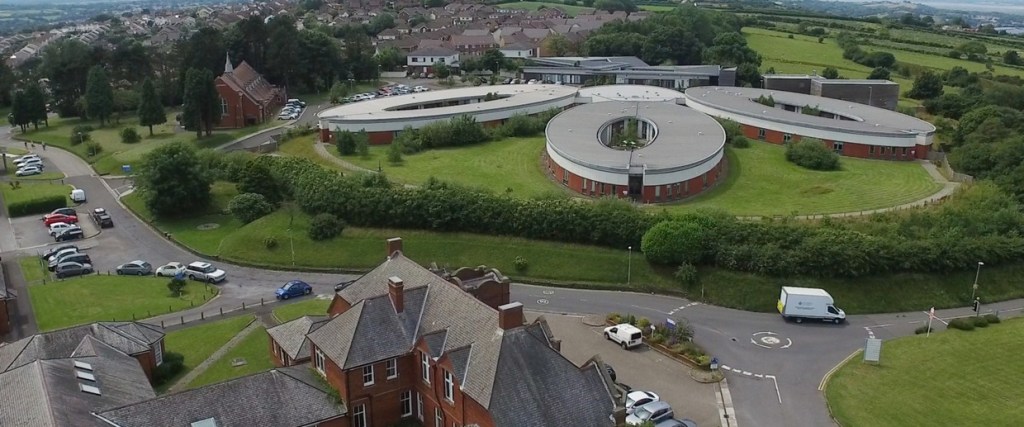
Swansea’s mental health hospital opened in 1932 and, by the health board’s own account, is the oldest continually occupied inpatient hospital estate in Wales and the UK. On Thursday the board will be asked to approve a £27.9m bid to Welsh Government to keep it safe for another few years.
The money would go on anti-ligature work in wards at Cefn Coed, Tonna and Neath Port Talbot hospitals, on rerouting the water, heating and power that still run through the derelict main building so it can eventually be demolished, and on rebuilding Celyn Ward at Cefn Coed to take patients from two other sites.
Those patients are the 20 on Ward F at Neath Port Talbot Hospital, the adult admissions ward that sits alongside the crisis team, and the five people at any one time who need intensive psychiatric care and are currently sent to the Princess of Wales Hospital in Bridgend because Swansea Bay has no unit of its own.
Under the board’s preferred timetable the Celyn works would be finished by April 2029, with Ward F moving to Swansea at that point. The papers say the move would be “subject to public engagement” on the future use of the ward, which is currently one of three older people’s mental health wards in the Ysbryd y Coed unit. They do not say where those patients would go.
Break-ins, asbestos and a 94-year-old building
The case for the money is built on risk. The board’s business case says the redundant sections of the old hospital, mostly shut since 2015, are “subject to unauthorised access and vandalism”, and that the pipes and cables serving the two live wards in the Tawe Clinic next door run straight through them.
One figure stands out: 504 trespassers were prevented from getting into the disused parts of the site during May 2026 alone. The papers say the empty buildings contain asbestos and present “a significant risk of harm to the public”. Part of the £27.9m would go on concrete barriers across the unoccupied areas.
The old asylum has been a target for years. In 2022 the board reported two break-ins in a single weekend, one by a group describing themselves as urban explorers who damaged pipework, the other by thieves who stripped lead and tiles from a roof, and warned that anyone caught would be reported to police.
The same argument has played out this summer at Stradey Park Hotel in Llanelli, where explorers filmed inside the closed venue and told this site their approach was to “document things and leave”. They added that if access was not wanted, the building should be properly secured. At Cefn Coed, the board’s answer to that is now a line in a £27.9m bid.
One explorer who went in during June 2024 described “the typical redundant smell”, chequered floor tiles that change colour from block to block, and paint hanging off the walls of the Ward A corridor. He climbed the water tower for the view. He asked not to be named.
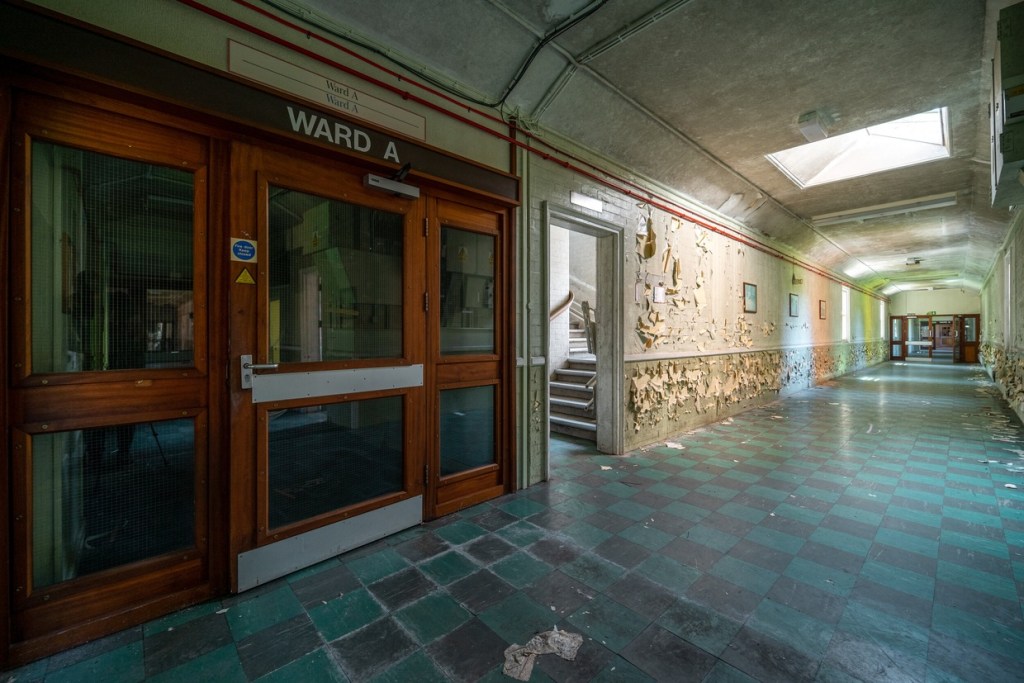
His account of the building’s past, which matches the board’s own summary, has it designed by the asylum architect George Thomas Hine, used as a casualty hospital in the Second World War, partly replaced by a new unit on the same site in 2012 and by the Taith Newydd low-secure unit in Bridgend in 2015, with the phased closure and demolition of the old wards announced that year and never finished.
“Serious harm or death”
The board’s corporate risk register scores the condition of the mental health estate at 20 out of 25. Its wording is blunt: if the wards cannot be made safe at pace, “the Health Board may be unable to provide safe, therapeutic and dignified care. This may result in serious harm or death (including self-harm/suicide risk)”.
Adult mental health in Swansea Bay remains a formal Welsh Government “service of concern”, the chief executive’s report to the same meeting says, because of “the condition and suitability of the estate, ligature and environmental risks, workforce capacity” and doubts about how long the current stopgaps can hold.
Inside the live wards, independent ligature assessments have found compliance problems across all three older people’s wards and both adult wards at Cefn Coed, at Ward F, and at both suites at Tonna Hospital, including Uned Gobaith, Wales’s only mother and baby mental health unit, which shut for six weeks last autumn for roof and cooling repairs.
Healthcare Inspectorate Wales has inspected the board’s mental health services repeatedly since 2016, most recently at the Tawe Clinic this year, and the board’s own summary of those reports describes parts of the estate as “tired, well-worn and in need of decoration, repair and refurbishment”.
A plan for a long-term replacement went to Welsh Government in October 2023 and has been on hold ever since “due to competing capital priorities”. This bid is explicitly the fallback: the papers call it a “do-minimum” programme and accept that even if it is all built, “residual risks will remain”.
What happens next
If the board approves the case on Thursday it goes to Welsh Government the following day, with an answer hoped for in November. Detailed designs and tenders for each ward would follow, with work spread across 2027 to 2029 and most of the spending, £18.5m, falling in 2028/29.
The board says it is already spending about £200,000 “at risk” on designing the Derwen Ward works before any approval, and it wants to put a new place-of-safety suite for people detained by police into the Tawe Clinic this year using £421,000 it already has.
The price tag arrives at a board that is £35m in deficit five months into the year and has told Welsh Government it cannot balance its books before 2028/29. The business case says the running costs of the rebuilt wards would be met from existing budgets.
Swansea Bay ended August with 20 adults in private mental health beds outside the area, the highest number of any health board in Wales, after a spike to 33 over the first weekend of the month. The board hopes bringing the intensive care patients home from Bridgend will cut that bill.
If you are struggling, the Samaritans can be reached at any time on 116 123.

Discover more from Swansea Bay News
Subscribe to get the latest posts sent to your email.