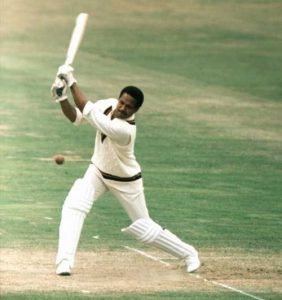
Sir Garfield Sobers — the man who wrote St Helen’s into sporting history with six sixes in a single over — has died aged 89.
Cricket West Indies announced his death at his home in Barbados on Friday, 11 days short of his 90th birthday, saying simply: “A great innings has come to an end.”
Sobers is widely regarded as the finest all-rounder the game has produced — 93 Tests for the West Indies, more than 8,000 runs at an average bettered by almost no one, 235 wickets, and a world-record Test score of 365 not out that stood for 36 years.
But in Swansea, he is remembered for six deliveries on the last day of August 1968.
Playing for Nottinghamshire against Glamorgan at St Helen’s, Sobers struck the home side’s Malcolm Nash for six sixes in one over — the first time it had ever been done in first-class cricket.
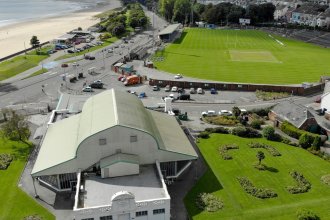
The second six nearly wrecked a nearby pub, striking its guttering — Nash, who died in 2019, recalled the ball flying like a tracer bullet and still rising as it hit the building.
The final ball disappeared out of the ground altogether — and the feat, captured by BBC cameras, made the Brynmill ground famous wherever cricket is played.
Sobers himself insisted records were never the point, saying he only sensed history at “about the fifth six” — and that anything he broke came in the stride of his duty to his team.
Born in Barbados, one of seven children, he was raised by his mother after his father, a merchant seaman, died when his ship was torpedoed during the Second World War. Sobers was five.
He was playing for the Barbados police team at 15, made his first-class debut at 16 and his Test debut at 17 — and his unbeaten 365 against Pakistan in 1958 set a record that stood until Brian Lara’s 375 in 1994, with Sobers at the ground to urge him on.
He was knighted in 1975, declared a National Hero of Barbados in 1998, and named among Wisden’s five cricketers of the century — second only to Sir Don Bradman.
Cricket West Indies’ president described him as more than a sporting icon: a symbol of Caribbean excellence who redefined the meaning of greatness for a region finding its voice on the world stage.
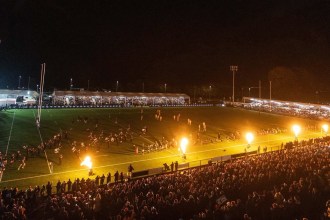
The ground where his most famous over was bowled is today being rebuilt in a £7.6m transformation — its pitch stripped to bare earth, its old main stand coming apart, and the Ospreys moving in next season.
Cricket itself has left: Glamorgan said in 2024 that St Helen’s did not figure in the county’s future — leaving the Sobers over as the ground’s defining cricketing memory.
Fifty-eight years separate the young Barbadian who cleared the St Helen’s stands six times in an afternoon from the ground now being remade — but wherever the game is played, the two names will always be spoken together.

Discover more from Swansea Bay News
Subscribe to get the latest posts sent to your email.