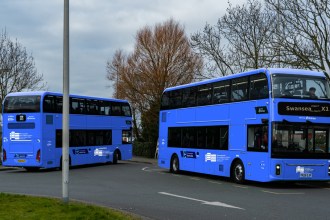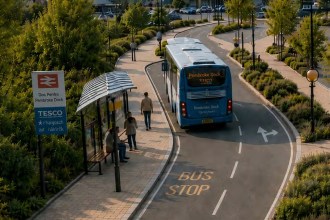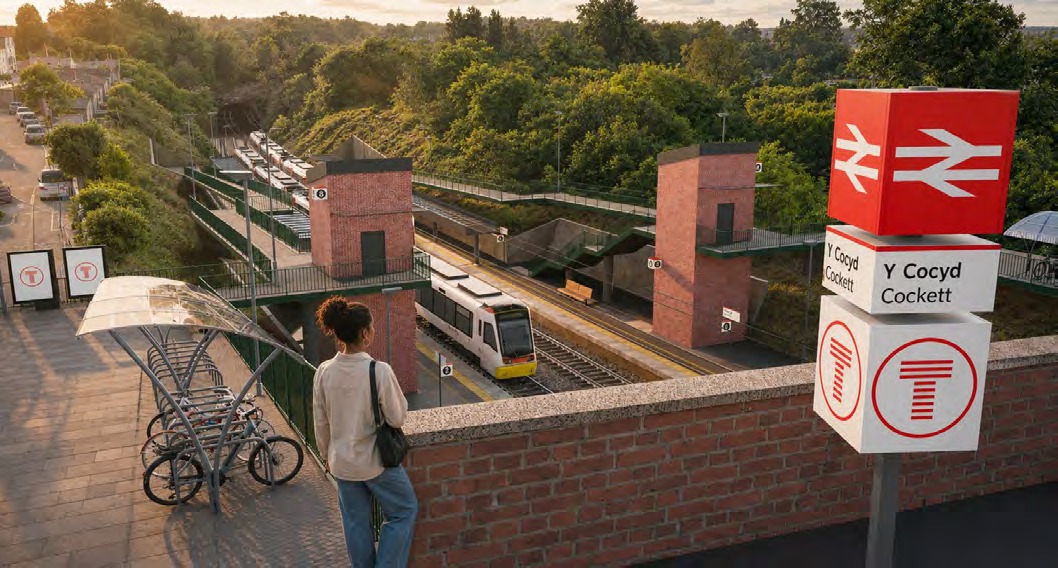
A station at Cockett with a train into Swansea every half hour. Hourly trains home to Pembroke Dock and Milford Haven instead of one every two hours. A tram-train from Swansea High Street to Neath through the Bay Campus, the kind Cardiff already runs on its Metro. A station at St Clears, six years after it was promised.
That is the Swansea Bay Metro, and every piece of it now has a price in the 2050 transport map going before the region’s councillors on Wednesday. What none of it has yet is the funding.
It is planned in phases. TfW‘s Phase A is Cockett and the half-hourly Burry Port trains. Phase B opens the District Line and covers the west Wales upgrades, St Clears included. The tram-train and electrification are the long-term end of the plan, and the document’s own timeline runs from bus reform now, through a 2040 milestone, to 2050.
Cockett first, and it could be the cheapest
The first thing on the list is a new station at Cockett, on the line west out of Swansea, with trains every half hour between Swansea and Burry Port and a new Platform 0 at Swansea to run them from. The document costs it at under £50 million and it is the one scheme with paperwork moving: the business case was due with the Welsh Government last month.

A station at St Clears is in the same price band. The Welsh Government promised the money in 2020 and there is still no shovel in the ground; the map lists it as ready for detailed design “once funding became available”.

Twice as many trains for Pembrokeshire
Pembroke Dock and Milford Haven each get a train every two hours today. The map proposes doubling that to hourly on both branches, with level crossing and signalling work on the Pembroke Dock line and “infrastructure and safety upgrades” towards Milford Haven. Each is costed at under £50 million.
Two new stations east of the city
Landore and Winch Wen would get stations on the main line east of Swansea, at £50 million to £150 million for the pair. Landore would sit beside the Swans’ ground and the park and ride; Winch Wen would serve the Enterprise Park.
The freight line that could carry passengers to Morriston
The Swansea District Line is the railway most people in Swansea have never used, because it only carries freight. It loops north of the city through Llangyfelach, Morriston and Llandarcy. The map proposes opening it to passengers with new stations at Pontlliw, Felindre, Morriston and Llandarcy and a train every half hour between Swansea, Neath and Pontarddulais, possibly running on to Ammanford. Price: over £150 million.
A tram-train to Neath, but not to Mumbles
The biggest piece of the Metro is a light rail line from Swansea High Street to Neath through the Bay Campus, then on to Tonna and Aberdulais. It is the one scheme costed at over £1 billion.
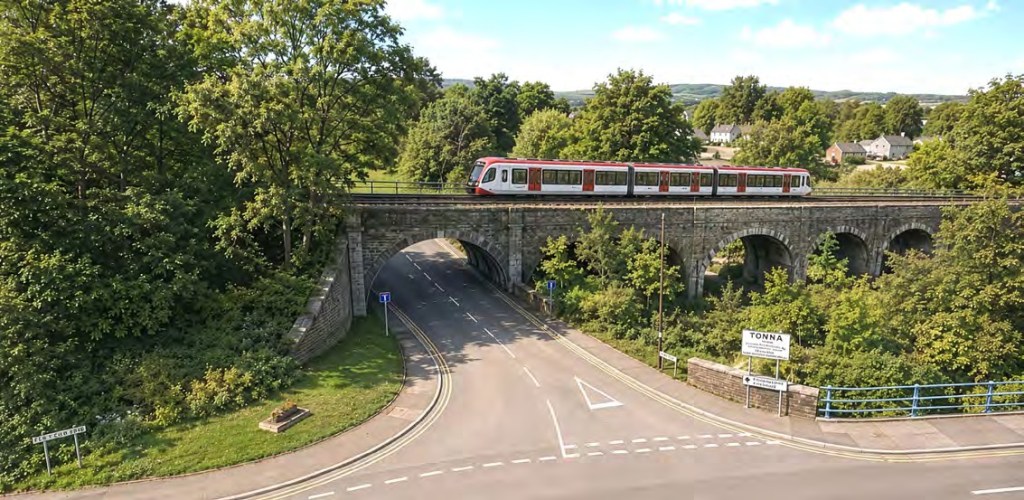
It would use tram-trains, which can run on ordinary railway and on street track, as they already do on the South Wales Metro through Cardiff. A study on where the Swansea line could run was finished this summer.
There is no mention of a tram to Mumbles along the seafront. That was the route of the railway that closed in 1960, and it is the line most people ask about whenever trams come up.
Electric trains, one day, west of Cardiff
Electric trains stop at Cardiff; no line west of it is wired. The map costs a “phased electrification programme” for the Swansea Bay area at over £150 million, and sets out a separate, uncosted hope of wires from Cardiff to Swansea and eventually Carmarthen, which would be Network Rail’s and the UK Government’s to pay for.
Cardiff in half an hour, Bristol in an hour and a half
The document’s promise for a Swansea passenger is Cardiff in 30 to 35 minutes; today it is 50 to 55. From Carmarthen it is Cardiff in an hour and Bristol in 90 minutes.
The trade the region wants in return is fewer cars. The targets are to get public transport from one in 20 journeys to one in eight by 2040, and to cut car use from 68% of trips to 52%.
Now the catch
The region’s transport money this year is £24.7 million from the Welsh Government. It is being spent on flood work at Killay Square, a new bus and rail interchange at Llanelli, the next stretch of the Neath to Cimla path and a shared path to Coppet Hall in Pembrokeshire. Good things, all of them, and none of them a station.
By the end of June the four councils had claimed £163,000 of it, which the report says is normal for the first quarter because councils claim after the work is done. Officers’ own verdict on the pot is that it “is not sufficient for the region to achieve its ambitions”, and the Welsh Government has told them to expect a “flat budget” next year.
The Metro’s stations and tram line need capital from the Welsh and UK governments. Neither St Clears nor the Swansea Bay Metro won any in the 2025 Spending Review, TfW told councillors in July, and the next one is not until 2027. TfW’s £14 billion rail vision, unveiled in March, “did not attract additional funding” but was endorsed by both governments as a framework for bids.
The row that hasn’t gone away
When that map came out, Carmarthenshire councillor Rob James called it a “political stunt” that had become “Swansea-centric”, with “no ring-fenced capital funding allocated”. Wednesday’s version has Milford Haven, Pembroke Dock and St Clears on it. The funding line is exactly where it was.
Meanwhile the trains that do run were on time about 70% of the time over the past year against TfW’s 81% target, and just over a quarter of people in Carmarthenshire and Pembrokeshire live within 400 metres of an hourly bus, against 70% in Swansea and Neath Port Talbot.
Wednesday’s meeting recommends the map and the South West Wales Network brand to the full joint committee, which decides, and commits no money to anything. The first franchised buses are now expected in spring 2028. The sub-committee meets at 10am on Teams and is webcast on Neath Port Talbot Council’s website.
Discover more from Swansea Bay News
Subscribe to get the latest posts sent to your email.