

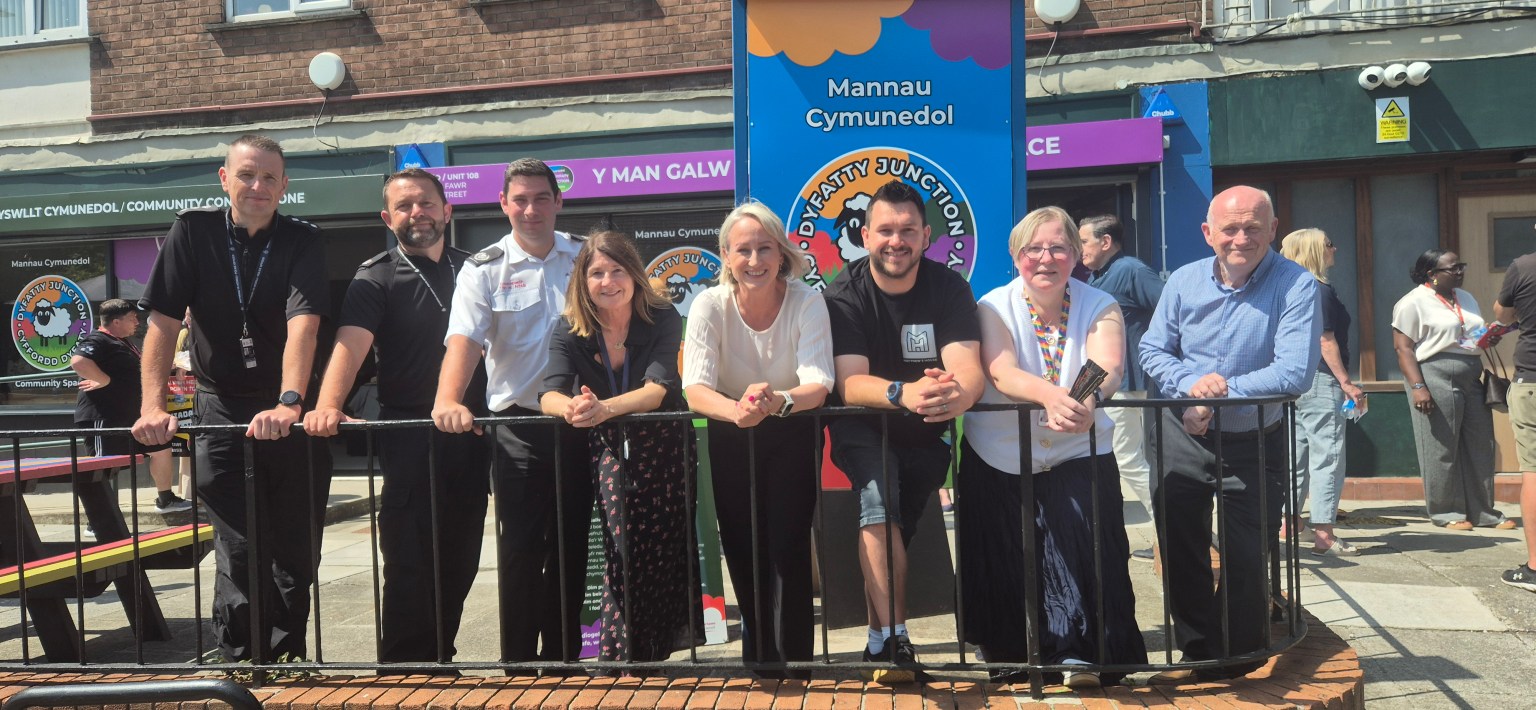
A parade of long-empty shops in Dyfatty has been brought back to life as a new community space for the neighbourhood.
Swansea Council has reopened the former units on High Street as Dyfatty Junction, a hub for drop-ins, advice, training and community activity.
The aim is to reconnect people with services and with each other, in a space designed to feel welcoming and local.
A range of partners are already involved, spanning health, housing, police, and voluntary and community organisations.
Services are expected to include regular drop-ins, training sessions and informal support in what organisers describe as a safe, trusted setting.
The units were cleared, refurbished and safety-checked before branding, signage and furniture were installed, with a phased programme of activity planned over the coming months.
Crucially, the council says the space will be shaped with and by the community, with residents helping to influence how it is used.
Walkabouts, drop-in sessions and chances to share ideas are planned as Dyfatty Junction becomes active.
Over time, the aim is for it to become a community-led facility, with the council stepping back as local ownership grows.
The launch marks a milestone in the Building a Better Dyfatty initiative, a partnership led by the Swansea Public Services Board and South Wales Police.
The approach pairs regeneration with a push to tackle serious and organised crime in Dyfatty and the surrounding area, using the police model known as Clear, Hold, Build.
Swansea Council’s cabinet member for children, young people and families, Alyson Anthony, said seeing the space open and welcoming people in made the work worthwhile.
She said it was about bringing support closer to people’s lives, removing barriers and helping conversations happen so people could get the help they need.
The opening builds on early signs that the crackdown is working, with police pointing to falling crime since the operation began in January.
Between 15 January and 15 May, South Wales Police figures show overall crime in the area down 11.5% on the same period last year, with anti-social behaviour down 63.2%.
City neighbourhood inspector Andrew Hedley said Clear, Hold, Build was about more than enforcement, and aimed to create lasting change by working with communities and partners.
He said bringing the empty units back into positive use helped create a visible, trusted space where support, engagement and opportunity could grow.
The work runs alongside a wider £20m, decade-long regeneration drive for Dyfatty and neighbouring communities, funded through the UK Government’s Pride in Place programme.
Discover more from Swansea Bay News
Subscribe to get the latest posts sent to your email.





I hope this project succeeds and improves the Dyfatty area, for to long the decent law abiding residents have had to put up with the day to day problems an issues associated with the druggies, drunks and street women all of which all combine to make the place unsafe for the children to play and generally makes it an unpleasant place to live.
Great idea, hope it works out. St. Helens Road and surrounding communities could urgently do with the same input. Organised crime and overcrowding (HMOs) have made area unbearable and unrecognisable.
Ultimately Swansea needs a good mix of work and career opportunities. Managed decline should not be the ambition and students and tourism will not transform Swansea. Community initiatives are essential but the council has to find a way to bring high skilled, well paid careers to the area.
Not ideal but this particular area would do well to service the growing commuter market (Cardiff and beyond) with quality homes on the doorstep of the rail station. It should be the jewel in the crown not a dumping ground for idiots.