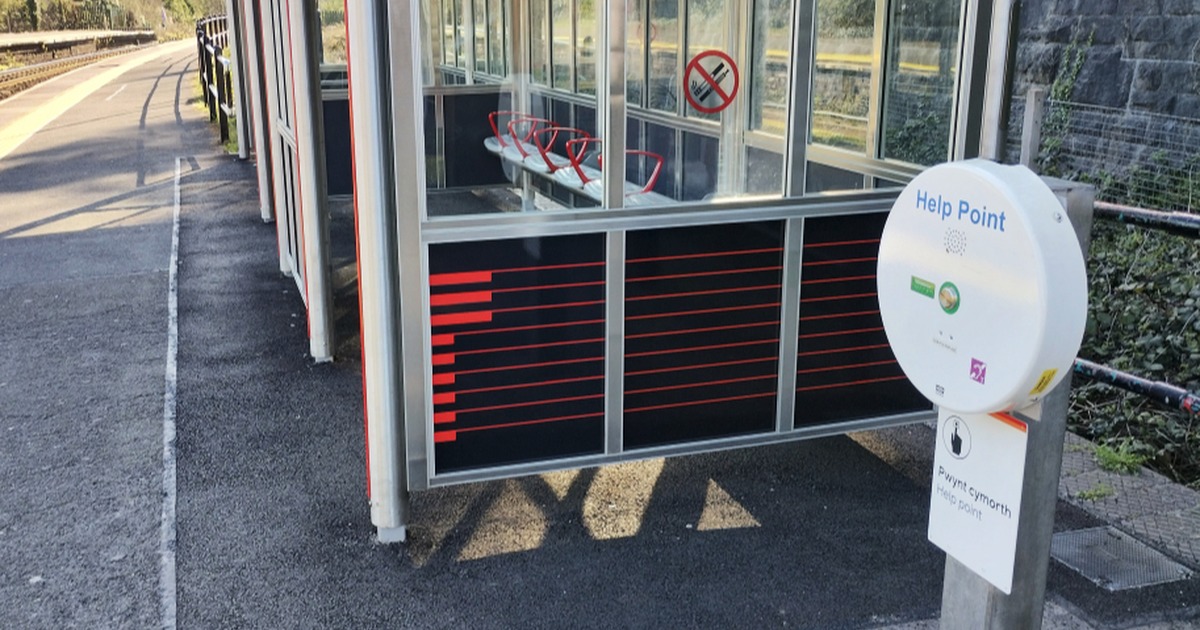
Talking to a real person at the press of a button is coming to 18 railway stations across Carmarthenshire, Pembrokeshire and Neath Port Talbot, under a £1m Transport for Wales plan covering 48 stations.
The help points, mounted on platforms and concourses, connect callers straight to customer information controllers based in Wales, for anything from checking the next train to requesting assistance or reporting a problem, and TfW says most of its controllers speak Welsh.
First in the queue are stations with no staff, infrequent trains and weak or non-existent mobile signal, along with stops that once had a BT payphone and lost it.
In Carmarthenshire the buttons are coming to Ammanford, Ferryside, Kidwelly, Llandeilo, Llandovery, Llangadog, Llandybie and Whitland.
For Ferryside and Kidwelly it is the second dose of modernisation inside a year, after the Victorian signal boxes that controlled the line for over a century were retired last November, with trains now signalled remotely from Port Talbot.
Pembrokeshire gets nine: Tenby, Saundersfoot, Manorbier, Kilgetty, Lamphey, Narberth, Pembroke, Pembroke Dock and Clarbeston Road, while Skewen carries the flag for Neath Port Talbot.
Several sit on the single-track Heart of Wales line, where trains can be hours apart and platforms often empty, exactly the stranded-and-guessing problem TfW says the buttons exist to solve.
“We want customers to feel safe, confident and connected when out on our network,” said Teleri Evans, the TfW customer information manager behind the strategy.
The buttons land on ground campaigners have been mapping. Soroptimist International volunteers visited 373 stations across Britain, checking for staff, lighting and emergency help points, and found only one station in ten staffed at all times, with more than half lacking any visible security provision.
“These key measures, which can help women feel more secure, remain inconsistent, patchy and mixed at best,” said the charity’s president Gillie O’Rourke, whose organisation has campaigned on women’s railway safety for 30 years.
Disruption has a habit of finding the same platforms. “There’s nothing worse than being at a station and not knowing what’s going on during disruption. So, we’re committing to installing these Help Points, starting with those stations with limited phone signal and ones that previously had BT payphones,” Evans said.
It is not a rare event to plan for, either: TfW’s trains were on time about 70 per cent of the time over the past year against its own 81 per cent target.
TfW manages 248 stations across Wales and the borders, and fewer than half currently have a help point.
The buttons arrive while the region’s bigger rail ambitions wait for money. The Swansea Bay Metro map published this week prices hourly trains to Pembroke Dock and Milford Haven at under £50m per branch, with no funding yet attached, making the £1m help point rollout a rare piece of the network’s wish list that is actually happening.
Industry figures cited by TfW suggest what the buttons will mostly be asked: about half of all help point calls are simply passengers wanting to know when the next train is, with only a tiny fraction requesting assistance or reporting an emergency.
The buttons are not reserved for emergencies, TfW says, and passengers are encouraged to press them for any journey help, though nuisance calls are cut off immediately.
Five north Wales stations will also have their worn-out units replaced, which TfW says will ensure bilingual assistance is available across the whole network.
There are no installation dates yet. “We expect to get some dates confirmed in the next few months and to begin the work this financial year,” said project manager Adam Zak.
That points to the first buttons appearing before next April, working with Network Rail on the rollout.
For villages where the payphone went years ago and the mobile signal never arrived, the plan promises to put a voice back on the platform.

Discover more from Swansea Bay News
Subscribe to get the latest posts sent to your email.