

The Workies closed for the last time on Sunday 19 July.
Now the freehold is up for auction. Guide price £200,000, hammer down on 10 September, and a sale could be agreed before then.
Save the Workies wants the village to buy it first.
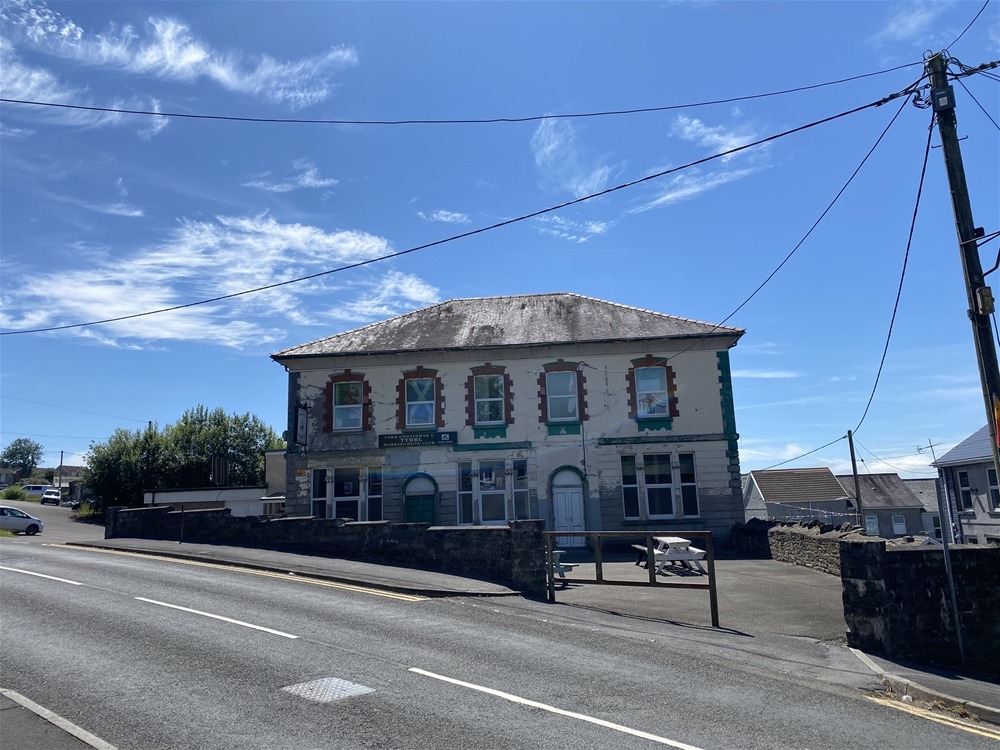
Agents Sidney Phillips are selling the four-storey building and its 0.85-acre plot at 1pm on the premises. Their particulars offer it up as accommodation, or as a site to develop for housing, subject to planning.
The club says a buyer may already be in the frame.
Committee member Dale Flear said the club is in negotiations with an individual who would keep a bar and the upstairs lounge running as licensed premises.
He said the club will be sold at auction on 10 September, or before, at the asking price, and asked that questions about the sale go to the club or to Sidney Phillips direct.
The committee broke the news on Facebook five days before last orders. The club had been at the heart of the village since 1893, they said. Its loss would be deeply felt.
A former chairman told the South Wales Guardian earlier this year that he could only picture the wrecking ball hitting the side of the club. Another piece of Tumble gone, he said, the same way as the Tumble Hotel. He asked anyone who could help to come forward.
The trouble had been coming for years.
BBC Wales reported in February 2023 that the club’s energy bill had quadrupled, from £500 a month to £2,500. The supplier cut it off over unpaid debt. The club ran on a diesel generator too small to power the big room.
The lights over the snooker table stayed off. A concert that might have brought in real money was cancelled, the ticket money handed back.
“These energy companies don’t know what they’re doing to little villages like ours,” chairwoman Helen Lloyd told the broadcaster. The club had around 600 members then, and doubled its subscription from £10 to £20 to hang on.
It was built in 1893 by the miners of the Great Mountain, directly opposite the pit gates. It gave them showers to wash off the shift.
The colliery opened in 1887 and worked anthracite, one of a chain of pits down the Gwendraeth with Cynheidre, Pontyberem and Cross Hands. Local histories record 61 deaths at the Great Mountain, the worst safety record in the valley. A memorial to Cynheidre’s 37 lost miners is unveiled on 23 August, 18 days before the auction.
The pit closed in 1962. The club outlasted it by 64 years.
No law in Wales gives the village first refusal
Members voted to sell, the campaign says, and it is not asking for creditors to be ignored. It doesn’t want to block the sale. It wants to be the buyer.
That is harder here than almost anywhere in Britain. Wales has no community right to buy. No right to bid either. The assets of community value rules in the Localism Act 2011 were never switched on here, so a Welsh village cannot even get its club onto a register.
England is legislating for first refusal right now. The Welsh Government has promised its own version, after the commission it set up recommended last November that Wales legislate across public, private and third sector owners.
The detail is unwritten. None of it lands before 10 September.
£2 a month, refunded if the village doesn’t turn out
The campaign launched on 18 July, the day before the doors shut.
Pledges start at £2 a month. Less than a pint. And it is all or nothing: if monthly pledges don’t hit £2,500 a month by 1 September, every payment is refunded and every pledge cancelled. None of it goes to the committee.
The money doesn’t buy the building. It proves the village is behind it, which is what lenders want to see before they part with anything.
Save the Workies is independent of the committee. Scott Flear, who started it, isn’t a committee member, and shares a surname with committee member Dale Flear.
“I started Save the Workies to bring people together,” Flear said in campaign material. Independence, he said, leaves them free to test every option. He isn’t asking to own the place, run the bar or manage it.
A new society, and 25 signatures to buy it time
The buyer would be a new Community Benefit Society. Open membership. A board elected one member, one vote. An asset lock to keep the building working for Tumble.
Cwmpas would build the society and a community share offer. PLANED would advise on running it. WCVA’s Community Asset Loan Fund, paid for by the Welsh Government, lends up to £300,000 for property purchase, and the campaign says an adviser suggested money by late September is possible if the paperwork clears.
Nothing is approved. No price, no loan, no grant.
The campaign reports net wet sales of £158,804 in 2025/26, down from £201,794. It puts liabilities at around £120,000, and calls that a working figure, not an agreed sum.
What it needs now is time. Rule 28 of the club’s own 1990 rulebook forces the committee to call a Special General Meeting if 25 members ask in writing. No permission needed. Those signatures are being gathered for a meeting in the last week of August.
The campaign also says Cefin Campbell, Plaid Cymru MS for Sir Gaerfyrddin and Deputy Minister for Skills and Tertiary Education, will look over the plan in early September with Cwmpas, WCVA and PLANED. Scrutiny, it stresses, not approval.
What Tumble stands to lose
People hear “club” and picture a bar.
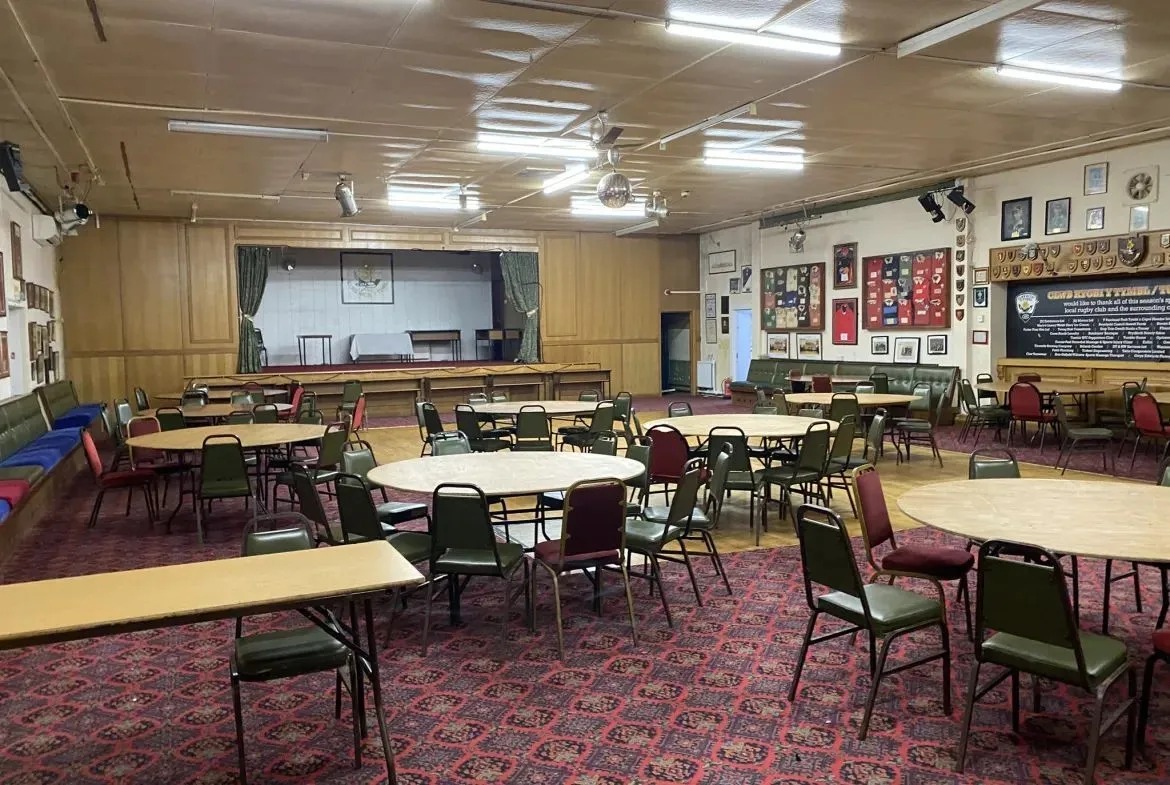
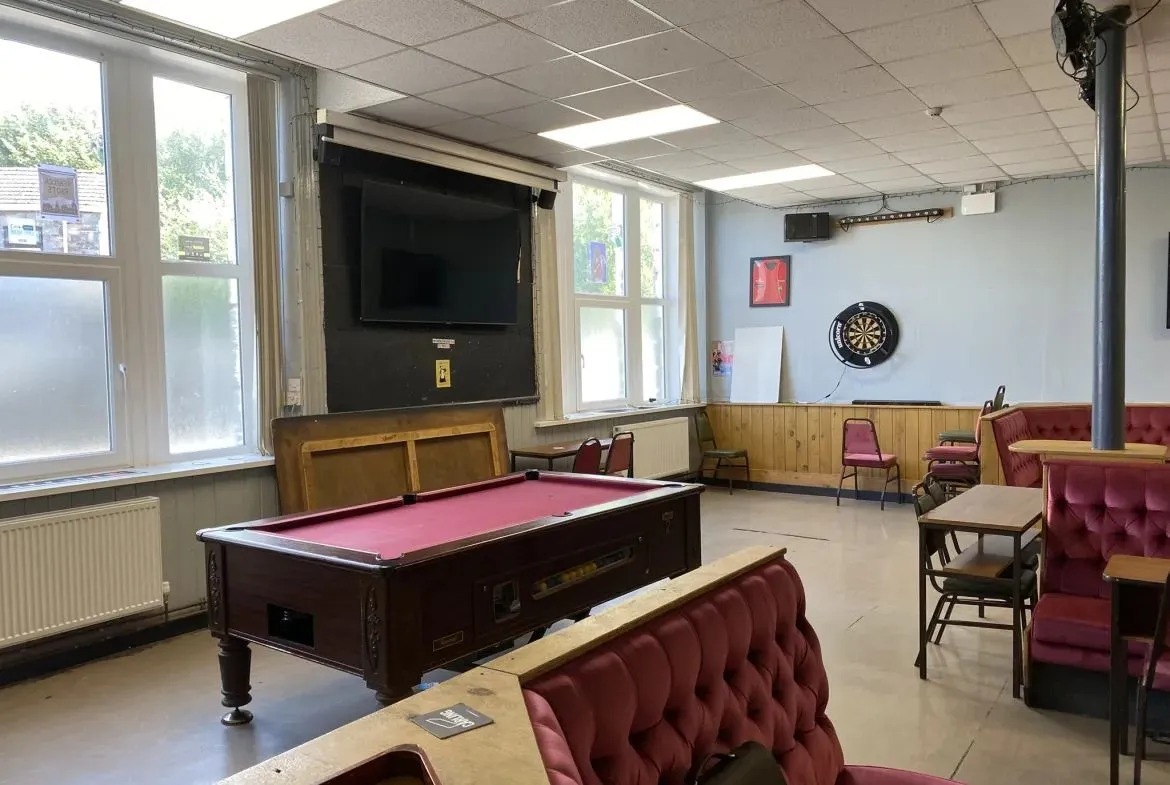
It’s a main hall with a proper stage. A big back room. A full kitchen. Snooker, pool and darts. Home to Tumble RFC and the village football club.

The Magpies were founded in 1897 for the colliery’s men. Their lounge, Lolfa’r Llewod, is named for the three British and Irish Lions this one village has produced. The women’s side, Y Piod Pinc, trained there too.
Tumble is one of Carmarthenshire’s Welsh-speaking strongholds, 57% of the village. The Community Asset Commission singled out community-owned buildings in Welsh-speaking areas as a direct contributor to the language surviving.
Llandwrog did it with 400 people
A Gwynedd village a tenth of Tumble’s size has already pulled this off. Llandwrog’s pub had been shut since 2017 and went on sale during the pandemic.
Residents called a meeting online. 120 joined. They formed a Community Benefit Society, and that evening 33 people pledged more than £700,000 in short-term loans. A seven-week share offer raised £400,000, half of it from within 25 miles.
Huw Jones, treasurer of Menter Ty’n Llan, wrote to Flear on Friday. The campaign has published the letter. In Welsh, he told Tumble: “Rwy’n credu’n llwyr eich bod chi ar y trywydd iawn.” He completely believed they were on the right track.
They bought the pub in June 2021. It now has a restaurant, five bed and breakfast rooms and two community spaces, and expects a profit this year on turnover above £1 million. The clubs and events it runs, Jones wrote, weren’t happening before.
His advice to Tumble: bring the whole village in from the start, and plan seven to ten years ahead.
Four miles away in Pontyates, campaigners forced Hywel Dda into a U-turn and saved their surgery last year.
The pledge deadline is 1 September. The auction is nine days later.

Discover more from Swansea Bay News
Subscribe to get the latest posts sent to your email.