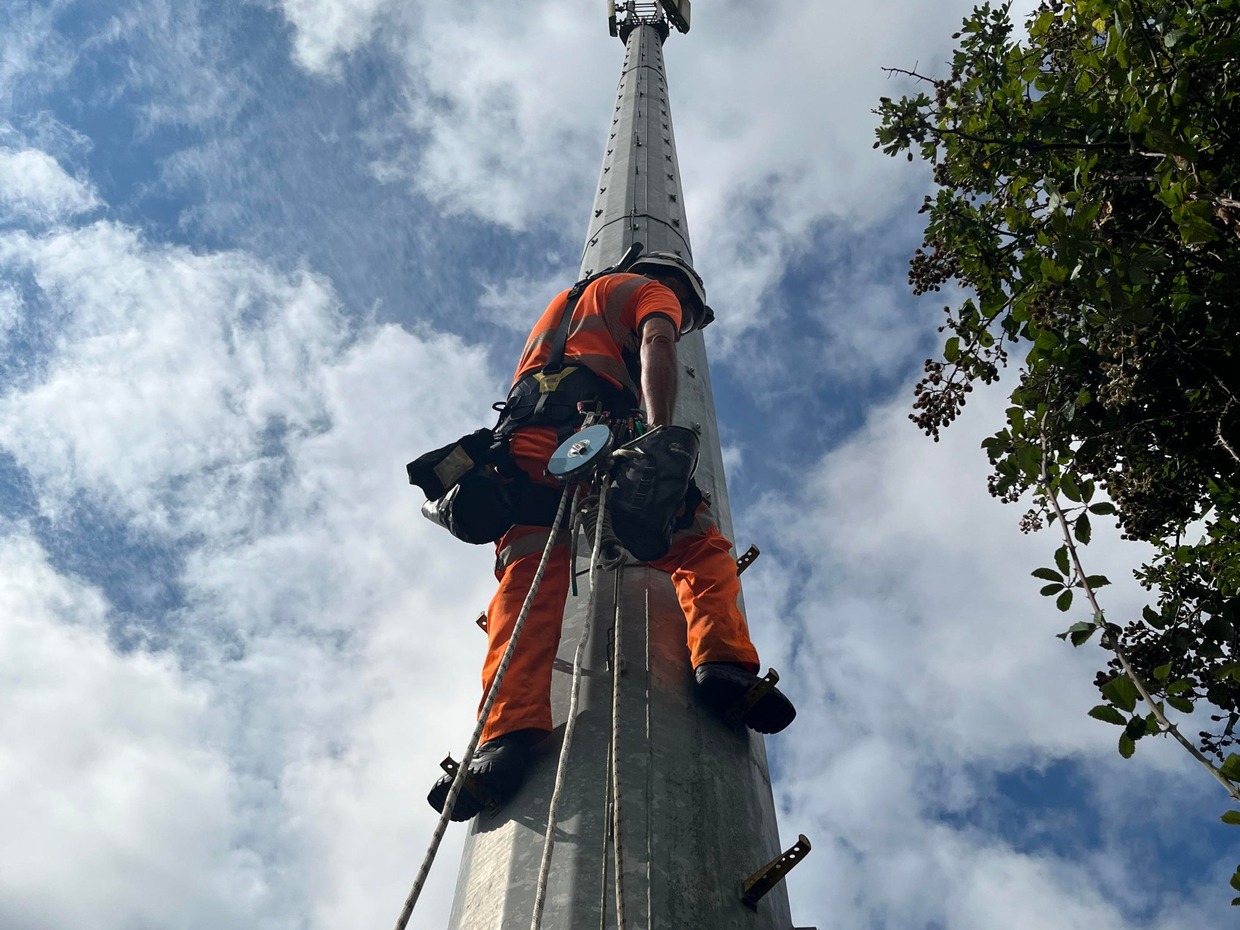
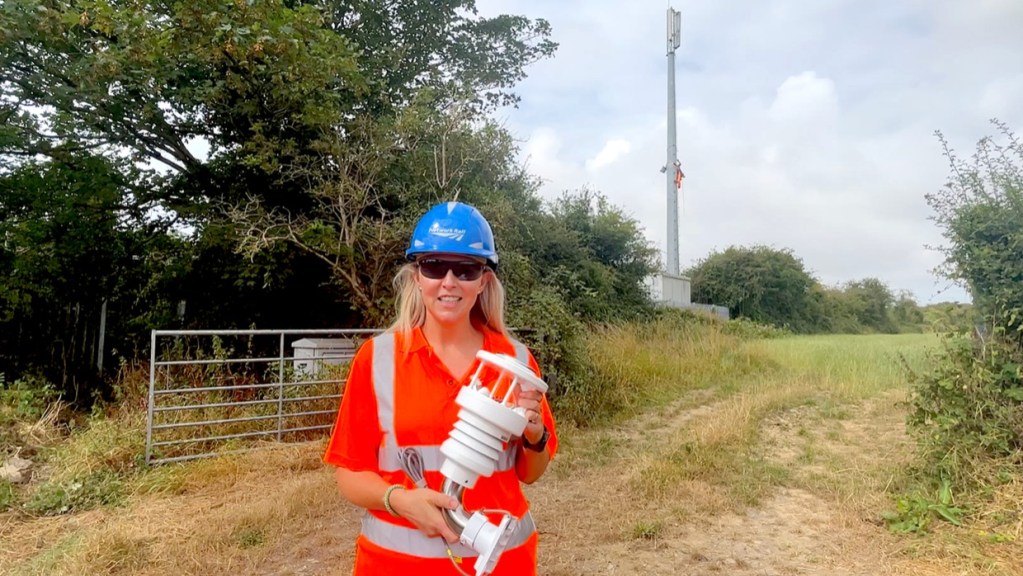
A weather station has been fitted to the railway radio mast at Whitland. Network Rail says its live readings could help keep trains moving safely when the next storm hits.
It is one of ten now running on the Wales and Borders route, the first anywhere in Network Rail to put weather stations on its radio masts.
The masts are the tall structures beside the track that carry the railway’s own radio system, which drivers and signallers use to talk to each other. That system is known as GSM-R.
Each station measures rainfall, wind speed and direction, temperature, humidity and air pressure, taken straight from the line itself.
Storm Darragh was the costliest of 25 named storms to hit the Wales and Borders railway
Network Rail says the move follows lessons learned from a run of severe weather that caused major disruption and cost. Between February 2023 and January 2026, 25 named storms hit the Wales and Borders route.
Where full performance data is available, Network Rail says each one caused an average of more than 38 hours of delays and £179,000 in train performance costs.
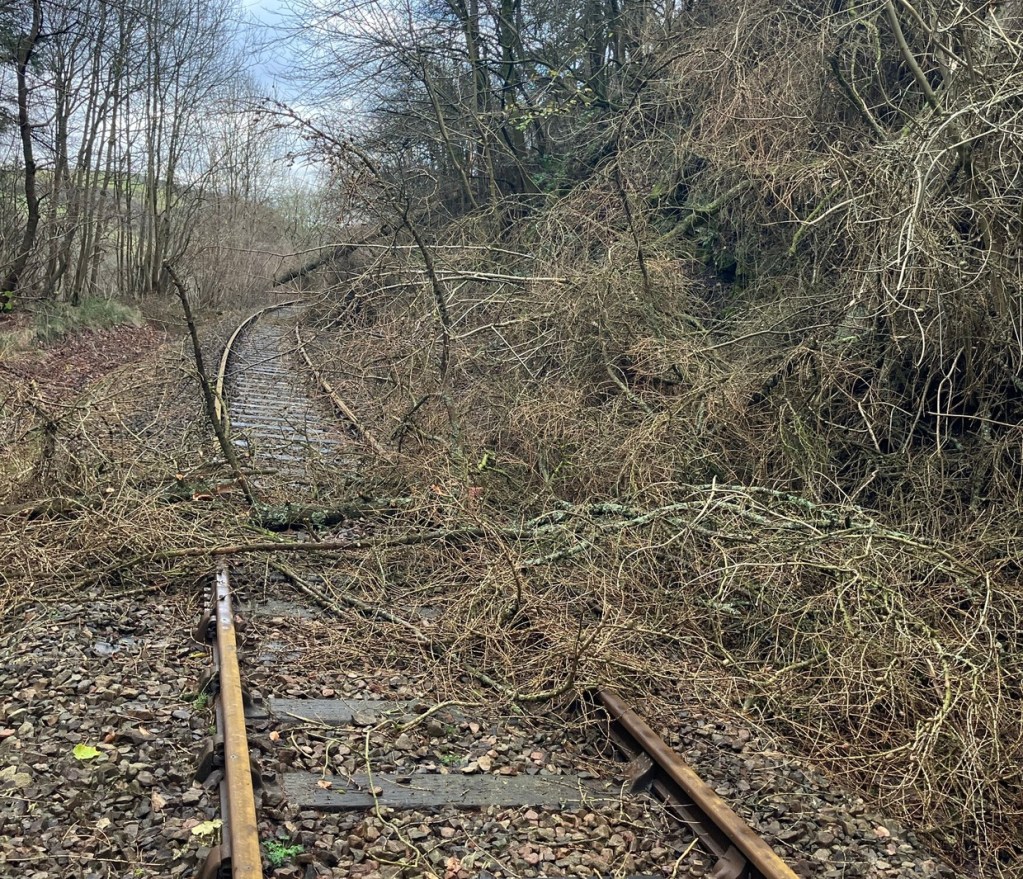
Storm Darragh was the most expensive, at £1.3m. Network Rail says winds reached 93mph at Capel Curig when it struck on 6 and 7 December 2024, with fallen trees and debris disrupting services across many parts of Wales.
Closer to home, that weekend brought fallen trees across Swansea’s roads and M4 closures near Port Talbot under a red warning.
How the Whitland weather station could change what happens to your train in a storm
Network Rail already works with forecasting specialists MetDesk to watch for severe weather. It says the new stations add readings from the railway itself, giving its teams a clearer picture of what is happening on the ground.
The data will also help MetDesk improve its forecasts and let Network Rail fine-tune the weather limits that trigger action on the line, the company says.
According to Network Rail, that could mean a more targeted response, from where teams and inspections are sent to when speed restrictions are brought in, keeping the railway safe while cutting unnecessary disruption for passengers.
Daniel Booth, head of operational weather strategy at Network Rail Wales and Borders, said the stations were “a great example” of the route turning to new technology, “giving our teams access to more accurate, localised information about conditions on the ground.”
He added: “By learning from events like Storm Darragh and working closely with our weather forecasting partners, we can make better-informed decisions, respond earlier to changing conditions and ultimately help keep the railway running safely and reliably.”
Whitland flooding saw 48 residents moved to the Town Hall last November
Network Rail says the ten sites were chosen to fill gaps in existing weather monitoring and give better information in areas vulnerable to severe weather.
Whitland has seen that weather up close. Last November, floodwater got into a retirement complex in the town, and crews evacuated 48 residents to Whitland Town Hall as a major incident was declared.
In January, Storm Goretti saw all train services west of Carmarthen suspended, Whitland included.
The other nine stations are at Llantwit, Cilmeri, St George’s and Trewyn in south and mid Wales, and at Craven Arms, Gobowen, Glantwymyn, Llanrwst and Buckley across north Wales and the Borders. Two of them, Cilmeri and Craven Arms, sit on the Heart of Wales line, where December 2024’s storms brought trees down across the track.
Network Rail says fixing the kit to existing masts gives the height needed for the readings, without the cost and complication of building separate structures.
The technology was developed by Ninehundred Communications Group.
Met Office points to a wetter, windier winter as rail autumn work steps up across Wales


The investment comes as the Met Office forecasts an increased chance of wetter and windier than average conditions through late autumn and early winter, with weather patterns such as El Niño playing a part.
Mr Booth said: “Autumn is always one of the most challenging periods of the year for the railway, and a huge amount of preparation goes into reducing the impact on passengers and freight customers.”
Four specialist treatment trains are set to treat more than 54,400 miles of track across Wales and Borders this autumn, Network Rail says.
According to the company, teams have also improved drainage at spots prone to flooding and stepped up vegetation clearance to reduce the risk from falling trees and branches.
Network Rail says it has 10 dedicated Autumn Response Teams ready to react as conditions change.
Related stories from Swansea Bay News
Major incident declared as flooding triggers rescues across West Wales and Swansea
Floodwater got into a Whitland retirement complex and 48 residents were taken to the Town Hall.
Storm Goretti: ‘Do Not Travel’ warning as rail lines shut and Wales braces for blizzard conditions
Services west of Carmarthen and the Heart of Wales line were suspended as Network Rail crews prepared for snow.
Council issue warning and update to drivers after effects of Storm Darragh
Fallen trees, M4 closures and a red warning as Darragh hit Swansea.
HEATWAVE: ‘Only travel if absolutely necessary’: rail warning for south Wales as red heat hits
TfW and Network Rail urged essential travel only as 38C heat threatened track and trains.
Buses to replace trains between Carmarthen and Pembroke Dock for 10 days due to track replacement work
Network Rail drainage and track work west of Carmarthen, with replacement buses calling at Whitland.

Discover more from Swansea Bay News
Subscribe to get the latest posts sent to your email.