


The rain has done its job in south-west Wales.
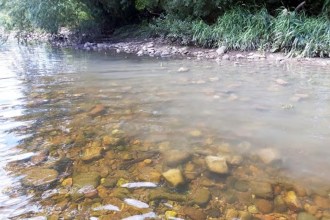
Many of the region’s rivers have responded well to the recent downpours and are approaching normal flows for the time of year, Natural Resources Wales says. It has moved the area out of drought and into “recovery from drought” status.
The rest of Wales is not there yet. South-east Wales, north Wales and the upper Severn stay in drought, with rivers still low for the season and extra environmental monitoring carrying on.
Wales as a whole has had 78% of its expected September rainfall so far, according to NRW.
South-west Wales rivers bounce back after the driest July in 190 years
It is a turnaround from the height of summer, when the whole of Wales was declared in drought on 30 July. North Wales had gone into drought a week earlier.
Rivers across the south west were among the worst hit, with NRW listing the Cleddau in Pembrokeshire and the Cothi and Teifi in Carmarthenshire as exceptionally low.
In early August, extra water was released from Llyn Brianne to prop up the Towy.
The summer brought the driest July since records began 190 years ago, and the driest July and August together since 1976, according to NRW. The Met Office has provisionally named it the UK’s hottest summer on record.
No hosepipe ban anywhere in Welsh Water’s area
Households are not under any water restrictions. Welsh Water lifted its hosepipe ban on around 33,000 properties in Ceredigion, north Pembrokeshire and north Carmarthenshire on 4 September, and says there are now no restrictions anywhere in its area.
NRW warns ‘we cannot be complacent’ as Wales braces for more droughts
Rhian Thomas, sustainable water and nature manager at NRW, said the summer’s heatwaves caused “a rapid deterioration of the environment and widespread impacts to waters, soils, wildlife and habitats”.
She warned that the recovery would not be quick. “While it’s promising to see signs of recovery, we cannot be complacent,” she said. “We expect it will take time, and more sufficient rainfall into the autumn before the environment fully recovers.”
Wales has now reached drought conditions two summers running, and she said people should expect more of them. “As our climate continues to change, we expect to see a shift towards hotter, drier summers and wetter winters, with water less reliably available throughout the year.”
Welsh farmers still feeling the drought on crops and livestock feed
While parts of Wales stay in drought, NRW is still advising the Welsh Government’s Drought Liaison Group, which includes farming representatives.
NRW says the group is hearing about the drought’s continuing hit to crop production, and farmers having to give livestock extra feed.
It is also working with the Environment Agency on the cross-border Severn and Dee.
Anyone worried about drought damage to the environment, or about pollution, can report it to NRW’s incident hotline on 03000 65 3000.
People are being asked to keep using water wisely through the autumn and winter to help nature recover.

Discover more from Swansea Bay News
Subscribe to get the latest posts sent to your email.