

The driest summer in living memory has done something no excavation has: it has drawn the outline of a lost wartime camp back onto the parkland at Dinefwr.
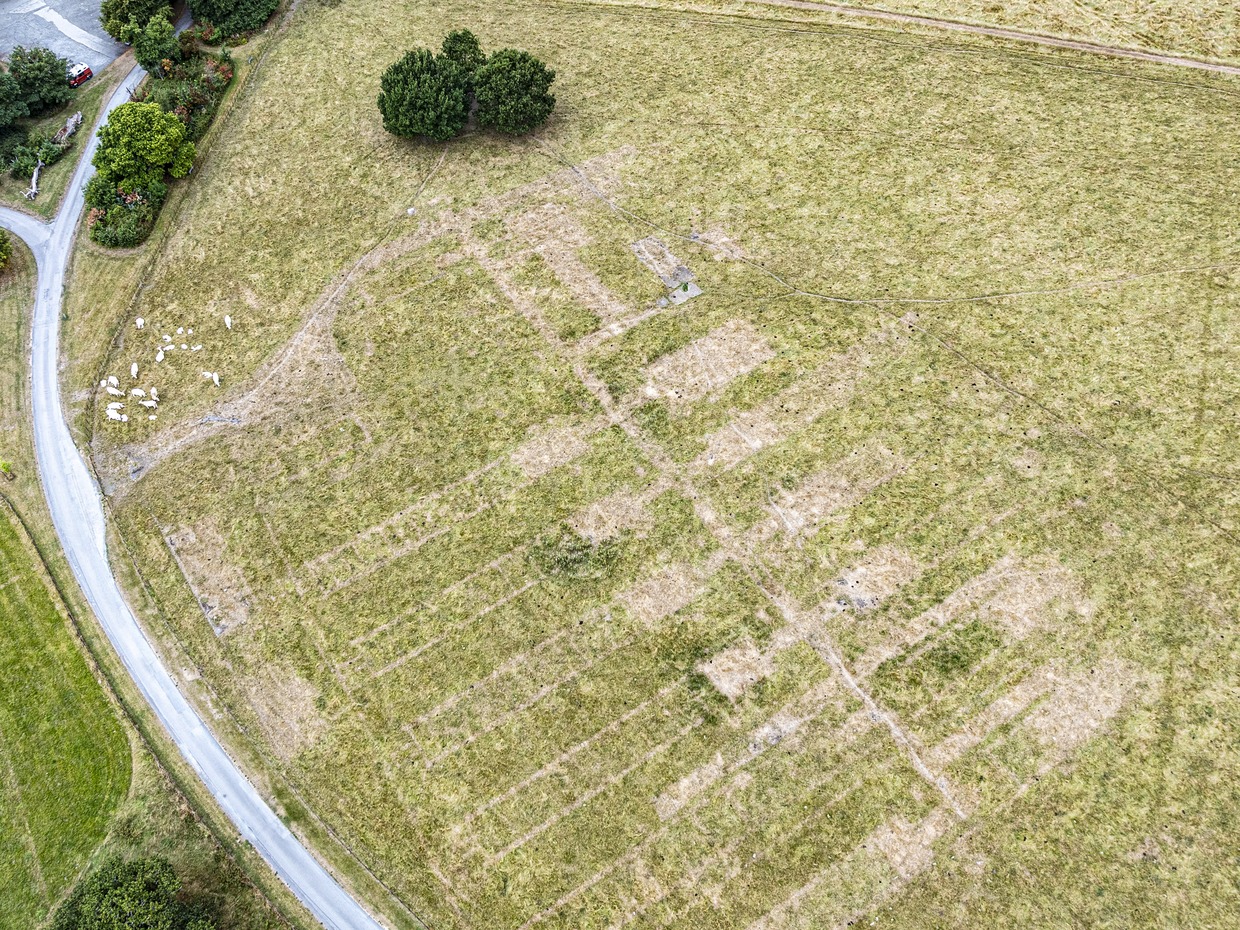
A grid of pale rectangles has appeared in the grass near Newton House, at Llandeilo, marking out where a row of Nissen huts once stood.
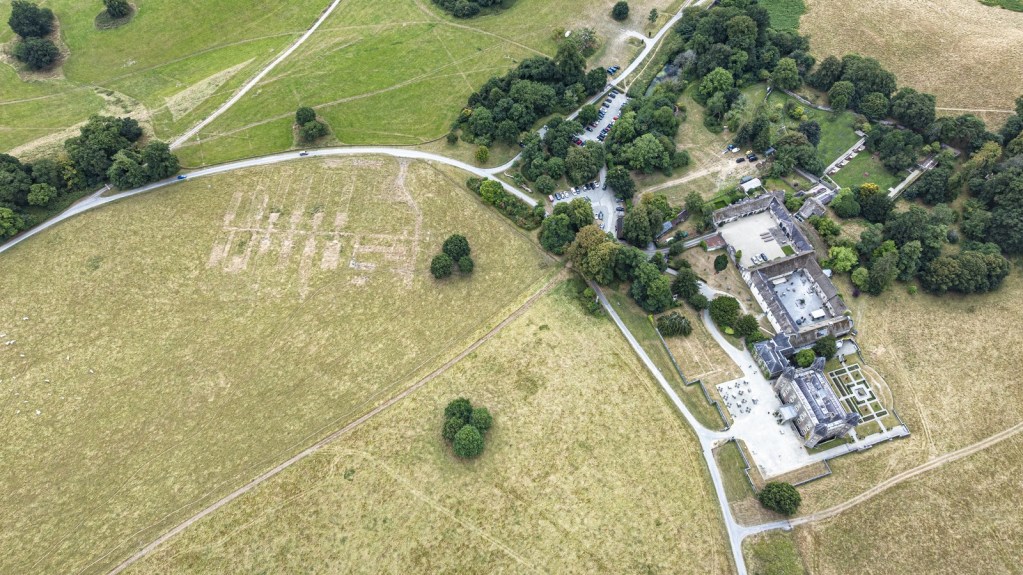
They are parch marks. Where buildings once sat, the ground underneath holds less water, so the grass above dries out faster and browns first, printing the foundations back onto the surface.

The huts served as a hospital during the Second World War, then as a prisoner of war camp, according to National Trust Cymru, which cares for the estate.
Nothing of them is visible at ground level in a normal summer.
David Thomas, archaeologist for National Trust Cymru, said most people know Dinefwr for its parkland and its medieval history rather than anything so recent.
“The huts served a range of important functions, from a wartime hospital and prisoner of war camp to much-needed housing for local families in the years after the war,” he said.
He said discoveries like this help explain how people adapted to wartime and post-war life in rural Wales.
The families who moved into the huts and called it Tin Town
That last use is the one still remembered locally. With housing desperately short across Britain after 1945, the empty military huts were converted into homes.
The settlement became known as Tin Town.
Corrugated steel walls, a curved roof, and families raising children in buildings put up as temporary military accommodation.
The aerial photographs make the scale of it clear. A Royal Air Force reconnaissance frame taken on 7 July 1946, held by the Welsh Government, shows the huts still standing in tight rows in the field beside the house.
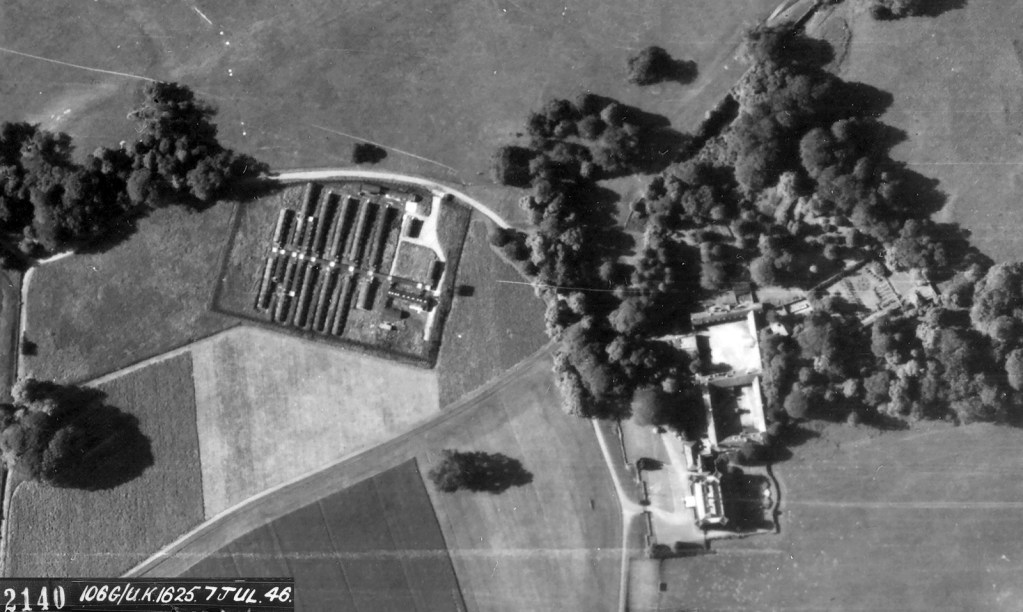
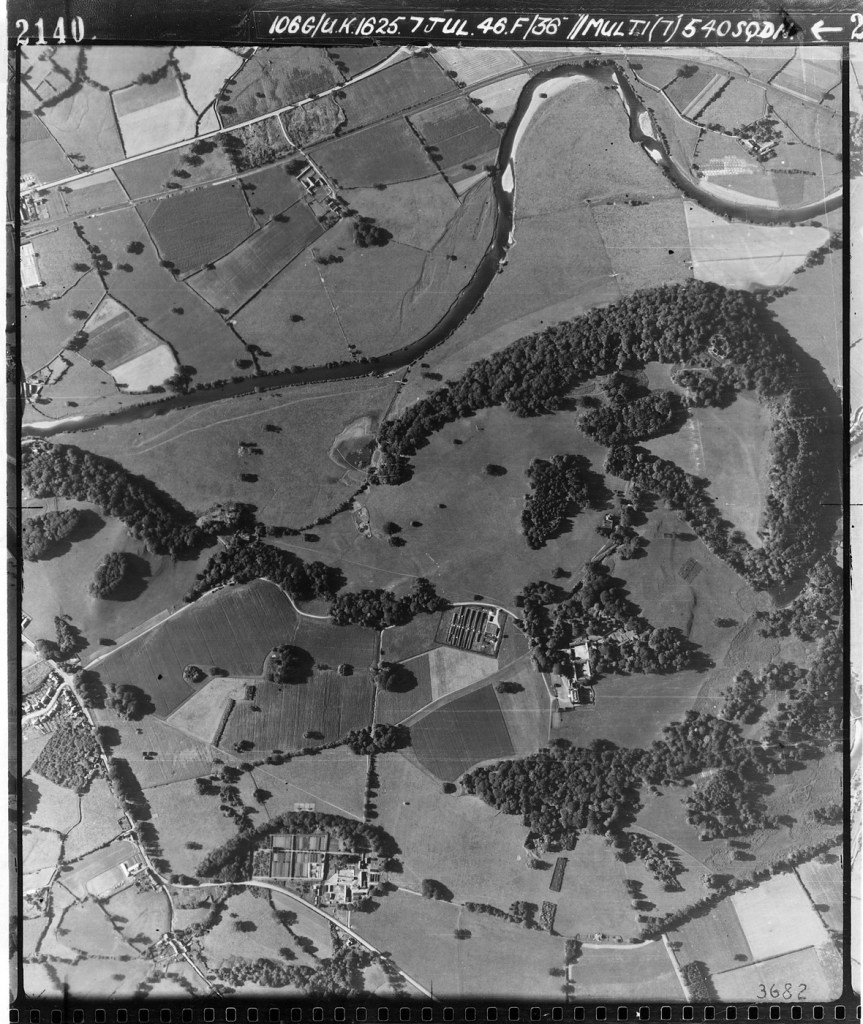
Eighty years on, the same rows are back, this time as scorch lines in the turf.
The new images were captured by the Royal Commission on the Ancient and Historical Monuments of Wales as part of its aerial reconnaissance programme, and by National Trust photographer Paul Harris.
A summer that keeps turning things up
Parch marks appear in dry summers, and this has been the driest in generations. Wales has been in drought since the end of July, after the driest July in 190 years delivered just 8% of the country’s average rainfall.
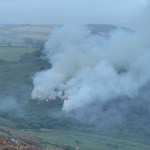
The same conditions have fed the wildfires burning across Carmarthenshire this week.
It is the second National Trust Cymru find in the region this year. In June, marks inside a cave on the Gower coast, dismissed for a century as natural staining, were confirmed as the oldest cave art in Britain at 17,100 years old. David Thomas was the trust’s archaeologist on that one too.
Related stories from Swansea Bay News
DROUGHT: All of Wales now in drought as July heads for driest in 190 years
The NRW declaration and the driest July since records began.
GOWER: Cave art found on the Gower coast confirmed as the oldest in Britain
Marks in Bacon Hole dated to 17,100 years ago.
PENDINE: Hills above tourist seaside village still burning 15 hours after firefighters were called
Nine fire stations sent to the wildfire above Morfa Bychan.

Discover more from Swansea Bay News
Subscribe to get the latest posts sent to your email.