

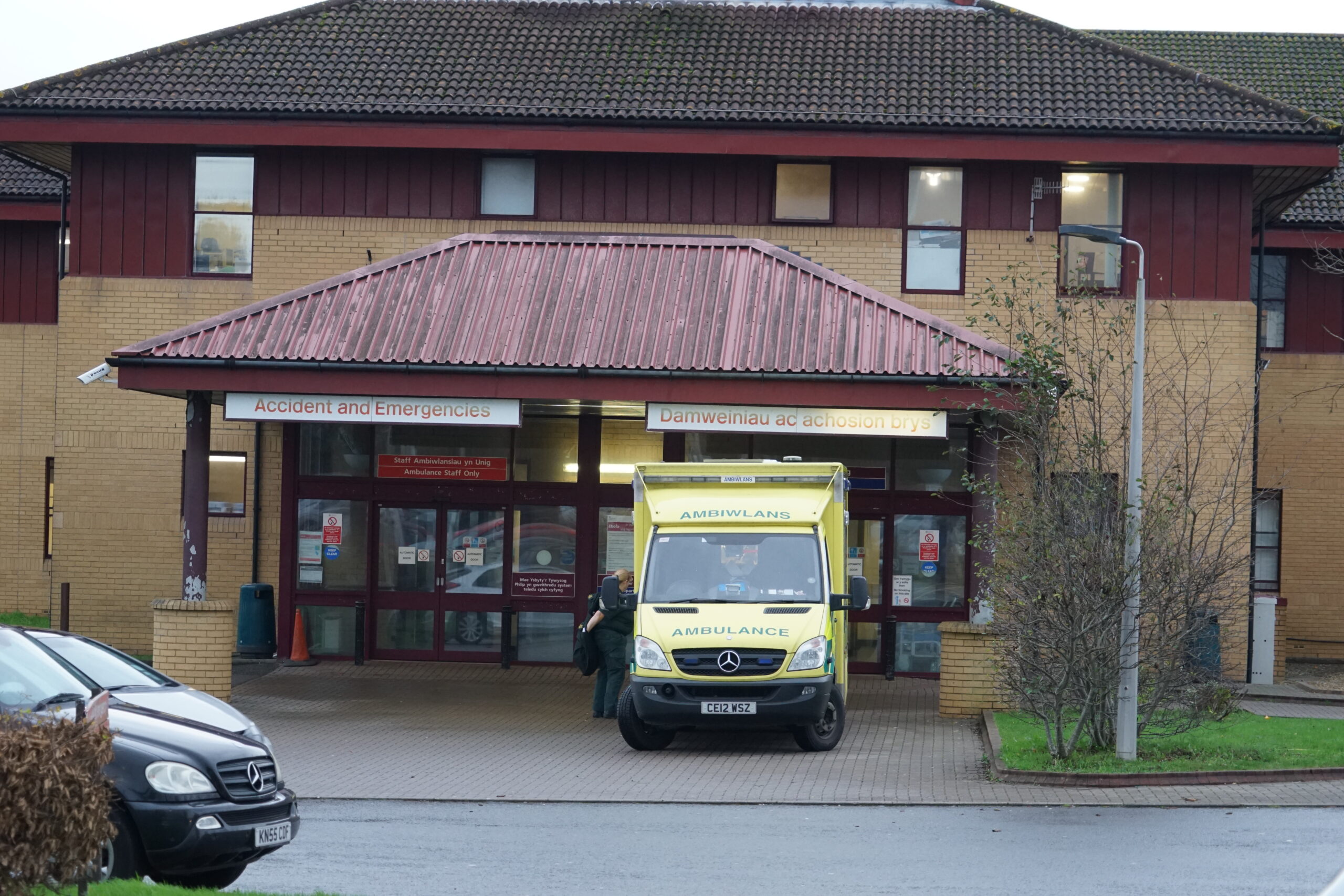
Visiting at Prince Philip Hospital in Llanelli has been restricted after an outbreak of scabies closed a number of wards.
The restrictions came in on Sunday 27 September, and Hywel Dda University Health Board says they are being reviewed regularly.
The hospital’s Minor Injury Unit is not affected.
Patients whose planned appointments may be hit will be contacted “as soon as possible”, the health board says.
Wards closed at Prince Philip as cases are managed across Hywel Dda
Sharon Daniel, the health board’s executive director of nursing, quality and patient experience, said the decision was taken to limit the spread “on our site and in our community”.
“A number of wards are currently closed due to infection, and we need the support and understanding of our communities to limit further spread,” she said.
Patients, staff and their contacts are being treated, and wards are being deep cleaned in line with infection control procedures.
“Scabies is highly contagious and difficult to eradicate, and we are grateful to everyone for their continued support,” Ms Daniel added.
The health board says a number of cases are being managed in hospitals and community settings across the Hywel Dda area, but that the risk to the wider public remains low.
It is the second time since July that scabies has closed wards at one of the health board’s hospitals, after Steffan Ward at Glangwili in Carmarthen was shut by an outbreak of crusted scabies.
Scabies symptoms, and what to do if you’re itching
Scabies is a common skin condition caused by microscopic mites that burrow into the skin. It can be treated, and is not usually linked to serious illness.
The health board stresses it has nothing to do with poor personal hygiene, and anyone can catch it.
It spreads mainly through prolonged skin-to-skin contact with partners and people in the same household. Shared bedding and clothing are a much less common route.
The telltale sign is intense itching, worse at night, with a rash of small red spots, often between the fingers, on the wrists and around the waist. Older people, people with dementia and young children can get the rash in less typical places, including the head, neck, palms and soles.
Treatment is available from pharmacies and GPs. It is applied twice, seven days apart, and everyone in a household and any close contacts should be treated at the same time, even if they have no symptoms.
The health board advises washing clothes, towels and bedding at 50C or higher after the first treatment, and sealing anything that cannot be washed in a bag for three days.
Anyone who thinks they have scabies should speak to a pharmacist or their GP, or contact NHS 111 Wales. The health board’s full scabies guidance is on its website.
The outbreak comes as the hospital waits on the health board’s decision on its stroke beds, due on 26 November.

Discover more from Swansea Bay News
Subscribe to get the latest posts sent to your email.