The Government has set out emergency plans to protect summer holidays from last-minute flight cancellations, as concerns grow over jet fuel supplies following the closure of the Strait of Hormuz.
Ministers are launching a consultation with airlines and airports to relax rules around take-off and landing slots, which would allow carriers to consolidate and adjust schedules earlier – rather than cancelling flights at the last minute and leaving passengers stranded at the airport.
Transport Secretary Heidi Alexander said the Government had been monitoring jet fuel supplies daily since the Strait of Hormuz closed. “There are no immediate supply issues, but we’re preparing now to give families long-term certainty and avoid unnecessary disruption at the departure gate this summer,” she said. “This legislation will give airlines the tools to adjust flights in good time if they need to, which helps protect passengers and businesses.”
The move centres on a mechanism known as “slot hand-backs” – where airlines can voluntarily return a proportion of their allocated take-off and landing slots without losing the right to operate them next season. The change would allow airlines to act on early information about potential fuel shortages, consolidating routes and moving passengers onto alternative flights well in advance rather than waiting for a crisis to develop.
The Government confirmed it had already held a roundtable with senior figures from Heathrow, Gatwick, British Airways, Virgin Atlantic and easyJet on 30 April to discuss the plans. A formal consultation is due to launch on Tuesday 5 May.
UK airlines were quick to reassure passengers that there are currently no supply problems. Tim Alderslade, CEO of Airlines UK, said: “UK airlines continue to operate normally and are not experiencing issues with jet fuel supply. We are planning to take our customers on their well-earned holidays this summer and will always look after them in line with our obligations.”
Rob Bishton, Chief Executive of the Civil Aviation Authority, said passengers in the UK were well protected. “Airlines have a duty to look after their passengers when they face disruption, and should offer a choice between a refund or alternative travel arrangements, including with another airline, if a flight is cancelled,” he said. “Relaxing the rules around slots at airports will allow airlines more flexibility and so we expect them to give passengers as much notice as possible of cancellations during this period.”
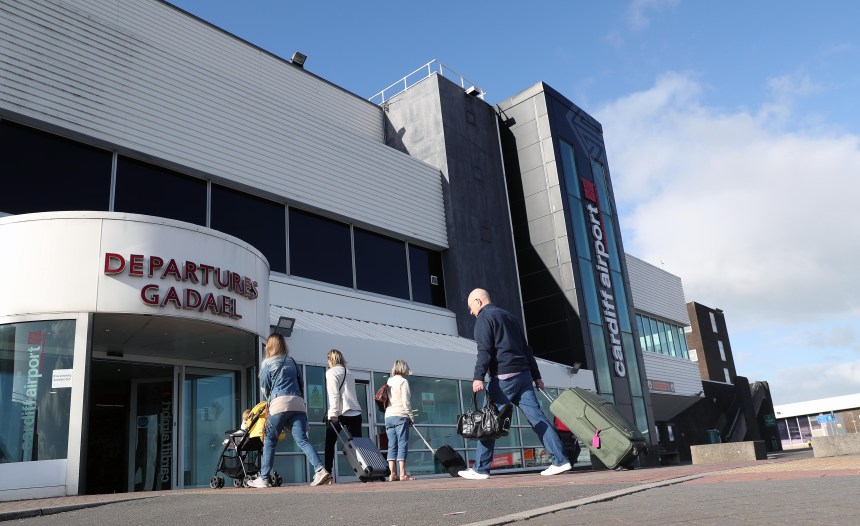
The slot changes would apply to flights operating out of the UK’s coordinated airports – Heathrow, Gatwick, Stansted, Manchester, Luton, London City, Birmingham, Bristol and Leeds-Bradford. Cardiff Airport, which is not a coordinated airport, would not be directly affected by the slot changes, though passengers flying from Cardiff to connecting hubs may still be affected by wider disruption.
For passengers, the existing rights framework remains in place regardless of what happens with fuel supplies. If your flight is cancelled by the airline, you are legally entitled to a choice between being re-routed on an alternative flight or receiving a full refund. Passengers facing significant delays – at least two hours for short-haul, three hours for medium-haul and four hours for long-haul – are also entitled to food, drink and overnight accommodation where necessary.
Alexander said the UK was drawing on fuel supplies from a range of countries not reliant on the Strait of Hormuz, including the United States. Domestic jet fuel production has also increased as part of the Government’s contingency planning.
A formal consultation on the slot hand-back provision will launch on Tuesday 5 May, seeking industry views on the measure for the summer 2026 and winter 2026 seasons. Airport Coordination Limited, the independent body responsible for allocating slots at UK coordinated airports, updated its guidance in April to classify jet fuel shortages as a valid reason for airlines to cancel flights without losing future slots.
Anyone whose flight is affected is advised to contact their airline, travel agent or tour operator in the first instance. Further information on passenger rights is available in the Air Passenger Travel Guide at gov.uk.