

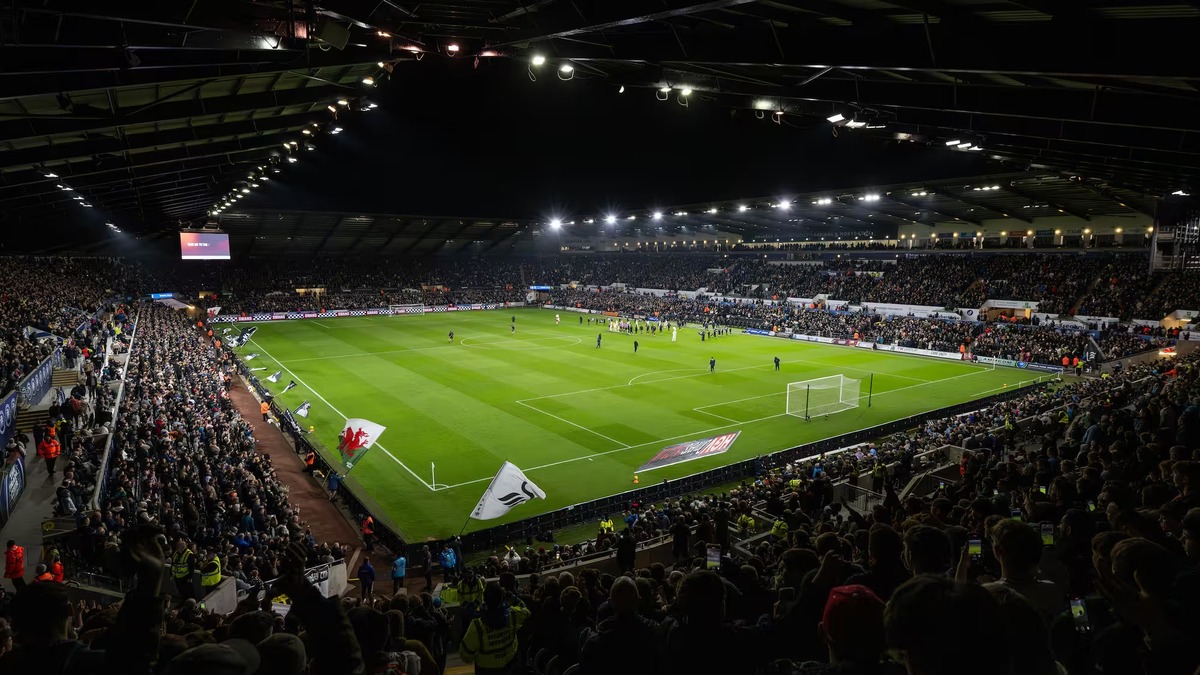
Swansea City are to own their own ground.
Swansea Council‘s cabinet agreed unanimously on Thursday to sell the freehold of the Swansea.com Stadium to the club — a deal the Swans say will safeguard their future.
What the council is getting for it is still not public.
When the cabinet papers were published last week, we reported that the price would be discussed behind closed doors. On Thursday, the council explained why.
Chief legal officer Lucy Moore told the meeting that legal advice had been given because the deal has not been finalised — negotiations are still in place, so any figures are “at this moment in time commercially sensitive”.
Council leader Rob Stewart said the council had approached the sale on the basis of getting a fair open-market valuation for the stadium — “we’ve achieved a sale price which is in excess of that, and I think that’s important for to be understood in the public domain.”
There are “other elements linked to the deal that could bring further sums of money to the taxpayer if certain factors come to pass”, he added — the cabinet report tied additional payments to promotion.
‘Manchester City play in a stadium owned by Manchester Council’
Opposition leader Cllr Chris Holley used question time to press for an explanation of how buying the ground actually helps the Swans on the pitch.
“One of the most successful teams in Europe is Manchester City,” he said, “and Manchester City play in a stadium that is owned by Manchester Council.”
He had more examples: Hull City Council built a stadium that hosts both a football club and a rugby league club on long leases, and he pointed to QPR and Oxford. Paris Saint-Germain, he noted, play in a ground built by the Paris council.
“If they want to invest in the team, that’s fair enough,” Holley said. “If they want to buy the asset, you know, there is always speculation that the asset is going to be used as a bargaining chip to borrow against.”
“This is a substantial asset belonging to the council, belonging to the people of Swansea, and I think we need an explanation.”
Once it is sold, he warned, “we lose all control over it, and then it becomes part and parcel of city football club.”
‘I don’t profess to be an expert’
Stewart said the whole world of sport had changed significantly since the days when the stadium was conceived, back in 2003.
Control of the asset would let the Swans invest in and around it in a way they would “probably be more reluctant to do if they were under a lease” — where, he said, they would be “only meeting their obligations, not doing anything further”.
It would also give the club’s investors “the confidence to invest in the club itself… with the knowledge that they also own the asset”.
Clubs have moved on from wanting “just… a really good experience for the 90 minutes of the game” to something offering a fan experience over a much longer period, the leader said — pointing to Wrexham’s Netflix-driven rise as an example of how differently clubs now chase sponsors and money.
But pressed on how ownership improves what happens on the field, Stewart deferred: “I don’t profess to be an expert in… all the machinations of how the Swans, the football and the premiership and all of the structures work.”
The Swans, he suggested, could “give you a much better answer” — and would be happy to discuss it with Holley directly.
What the council keeps — and what it needs
The authority would keep planning control over whatever the Swans bring forward for the site, Stewart said.
He also linked the capital receipt to the council’s own finances — pointing to risks its chief finance officer had set out earlier in the same meeting, where a £13m provision for equal pay claims left the general reserve below its legally certified minimum. “Ensuring that we have as much ability and flexibility within our finances is really important,” Stewart said.
He reminded the meeting that the arrangement which ran for years after the stadium opened “didn’t deliver the people of Swansea any revenue back” — until the lease was changed, the Swans became lead tenant and the Ospreys a sub-tenant, and a steady income stream began for the first time.
Stewart said Swansea benefited by at least around £60m a year when the Swans were in the Premier League, and that the sum would be significantly higher now if they returned.
“We don’t like giving up assets if we don’t have to,” he said. “But I think there is an opportunity here and we should probably entertain that opportunity today.”
Seconding, Cllr David Hopkins said that from his experience of working with American investors, “they like the asset, they like the ownership” — and that the sale should not be seen as the loss of an asset but as one “going to be expanded by investment”, alongside the Skyline and Hafod-Morfa Copperworks developments taking shape nearby.
The recommendation was carried unanimously. The commercial detail was then taken in closed session, with the public and press excluded.
What the club says
Chief executive Tom Gorringe, speaking before the decision, called it “a highly significant moment” for the club after more than two decades at the ground.
“Owning the Swansea.com Stadium is of major strategic benefit to the football club, and we look forward to completing the purchase in due course.”
The club has said it “makes sense operationally and financially” to hold the asset in its own right — a move that “will safeguard the future of the club”.
Built by the council for £27m and opened as the Liberty Stadium in 2005, the ground has been the Swans’ alone since the Ospreys left for a rebuilt St Helen’s.
The decision comes days before the Swans open their Championship season at Stoke — a campaign in which promotion would now pay the council a bonus too.

Discover more from Swansea Bay News
Subscribe to get the latest posts sent to your email.




Chris Holley asks a very salient question about Man City not owning their stadium. That they lose about £120M a year might have something to do with it, they can’t afford to buy the stadium built for the Commonwealth Games in 2022.