


South Wales has been told, again and again, that it could be one of the powerhouses of Britain’s clean-energy future.
Off its coast lies some of the best wind and tidal potential in Europe. Above Port Talbot, plans have been drawn for solar farms big enough to power tens of thousands of homes. And in Swansea Bay, the long-held dream of a tidal lagoon has been edging back to life.
Yet many families across the region are still choosing between heating and eating, in homes that leak warmth and on bills that have stayed stubbornly high.
That gap — between the promise and the reality — was at the heart of a gathering of energy chiefs in Swansea this week.
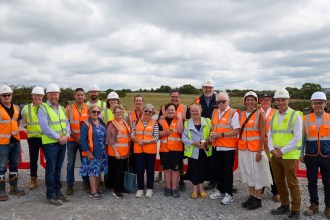
The National Energy System Operator (NESO), the publicly owned body now responsible for planning Britain’s electricity network, held a forum at the Swansea.com Stadium, one of just two it is holding in Wales.

(Image: NESO)
The job NESO has been handed is enormous: to plan the biggest upgrade of the energy grid in generations, deciding what gets built, where, and when.
And for South Wales, the stakes could hardly be higher — because the region’s clean-energy ambitions keep running into the same wall.
The power is there to be harvested. The problem is getting it to where it is needed.
NESO’s Head of Wales, Aled Rowlands, told the forum that while Wales had “a rich energy and industrial heritage”, it faced real obstacles — “uneven connectivity, grid constraints and fuel poverty”.
In plain terms, the grid — the network of cables, substations and pylons that moves electricity around — was largely built for a different age, and cannot yet carry all the new power the region could produce, or deliver all the power that industry now needs.
There is no clearer example than just down the road in Port Talbot.
Tata Steel is building a £1.25bn electric arc furnace to make greener steel — but the furnace needs a vast new electricity connection to run, and that connection has been caught up in delays that could push the project back to 2028.
The setback has triggered cross-party alarm at the Senedd, with politicians pressing Tata and National Grid for answers, and warning of fresh uncertainty for the town’s steelworkers.
If even a flagship national project like green steel can be left waiting for the grid to catch up, it shows the scale of the problem the region faces.
That bottleneck has real consequences. When the network is full or upgrades run late, new projects — and the jobs and investment that come with them — can be delayed for years, or sent elsewhere.
It is why developers say what happens next matters so much. Ben Burggraaf, chief executive of Net Zero Industry Wales, told the Swansea forum that Wales had the chance to become “a leading clean energy transition hub” — but only if the investment in grid infrastructure actually followed.
The clean-energy promise is real, and already taking shape. Plans for a £64m floating wind hub at Port Talbot could create up to 5,000 jobs, while the area’s ports sit at the centre of a multi-billion-pound offshore wind push.

It is the kind of future many hope can replace what was lost when Port Talbot’s blast furnaces closed.
But building the grid to carry all that power comes at a cost that is increasingly visible in the landscape — and increasingly contested.
Across Carmarthenshire, communities have fought back against a wave of pylon and energy-park plans, warning of the “industrialisation” of the countryside and accusing developers of “greed energy, not green energy”.
Those tensions — clean power on one side, the pylons and cables needed to move it on the other — are exactly the choices NESO’s planning is meant to navigate.
For ordinary households, the question is simpler: when does any of this start bringing bills down?
Wales has long had some of the leakiest housing stock in Britain, with most Welsh homes losing money through poor insulation — a problem that pushes up bills regardless of how much clean power is generated nearby.
NESO says a more joined-up plan should, in time, strengthen the network, support cleaner power and deliver “the best possible value for bill payers”.
Whether that promise is felt in people’s pockets — and whether the jobs and investment land in South Wales rather than somewhere else — is the test that matters.
For now, the region sits on an awkward paradox: rich in the energy of the future, but not yet able to plug it all in.

Discover more from Swansea Bay News
Subscribe to get the latest posts sent to your email.