

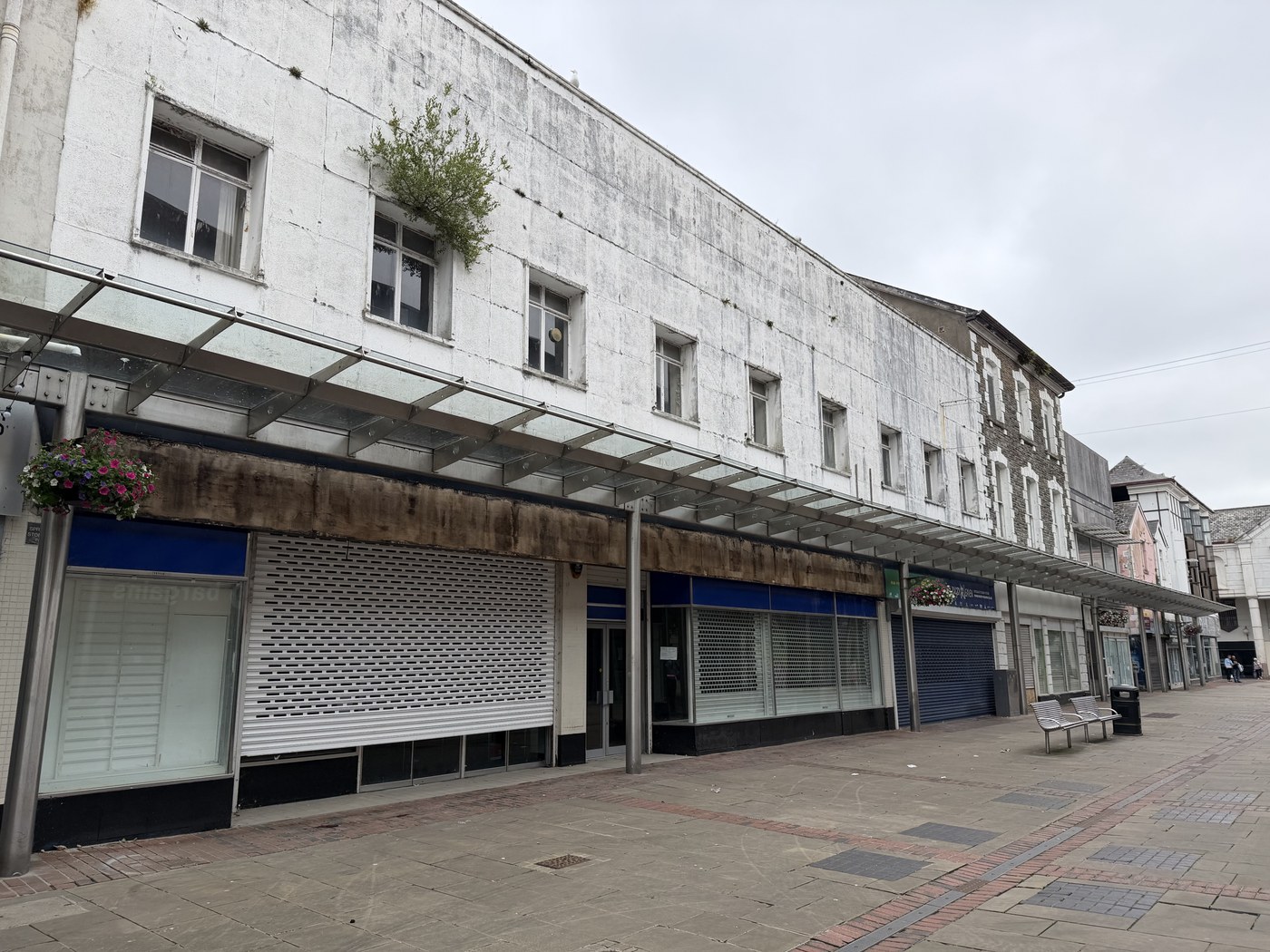
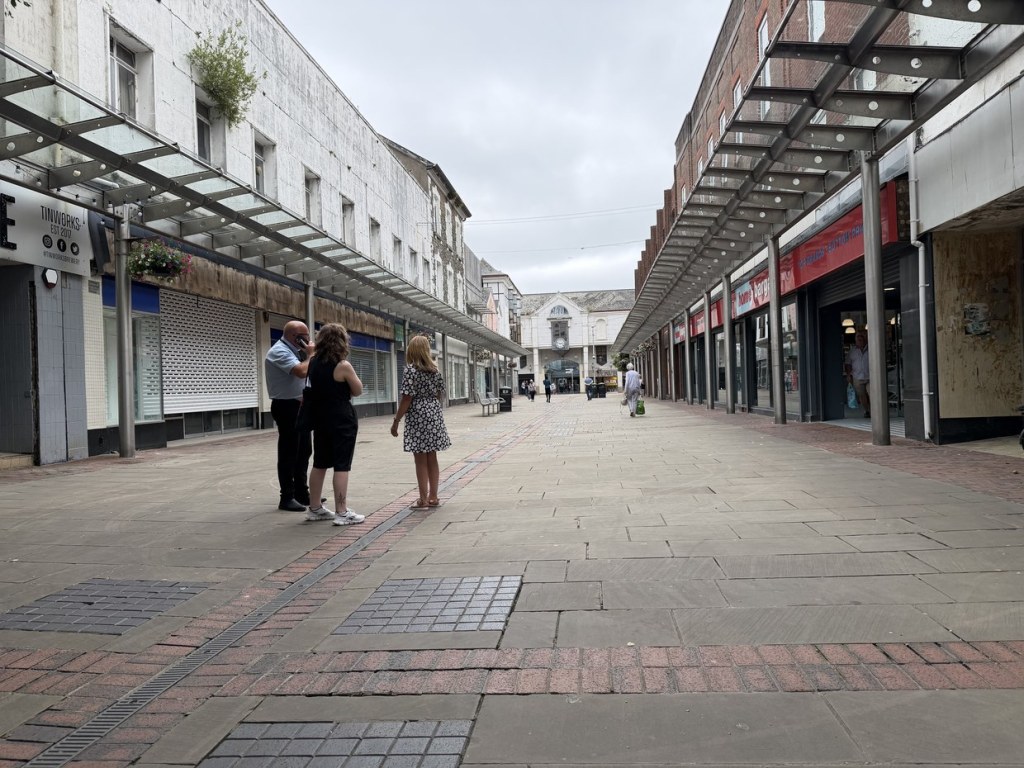
The former Woolworths store and the Tinhouse pub on Vaughan Street are to be demolished from January, clearing the site for Llanelli’s new indoor market hall.
Carmarthenshire Council has given formal notice of its intention to demolish 8 to 14 Vaughan Street, with the application form giving a start date of 11 January 2027 and completion a month later, on 11 February.
The buildings are the two-storey former Woolworths, more recently a Bargain Buys, an empty shop unit beside it and the three-storey Tinhouse at number 14, the taproom Tinworks Brewery sold to the council to enlarge the site. The brewery closed in February after ten years when the sale went through, and all three buildings are described in the papers as empty.
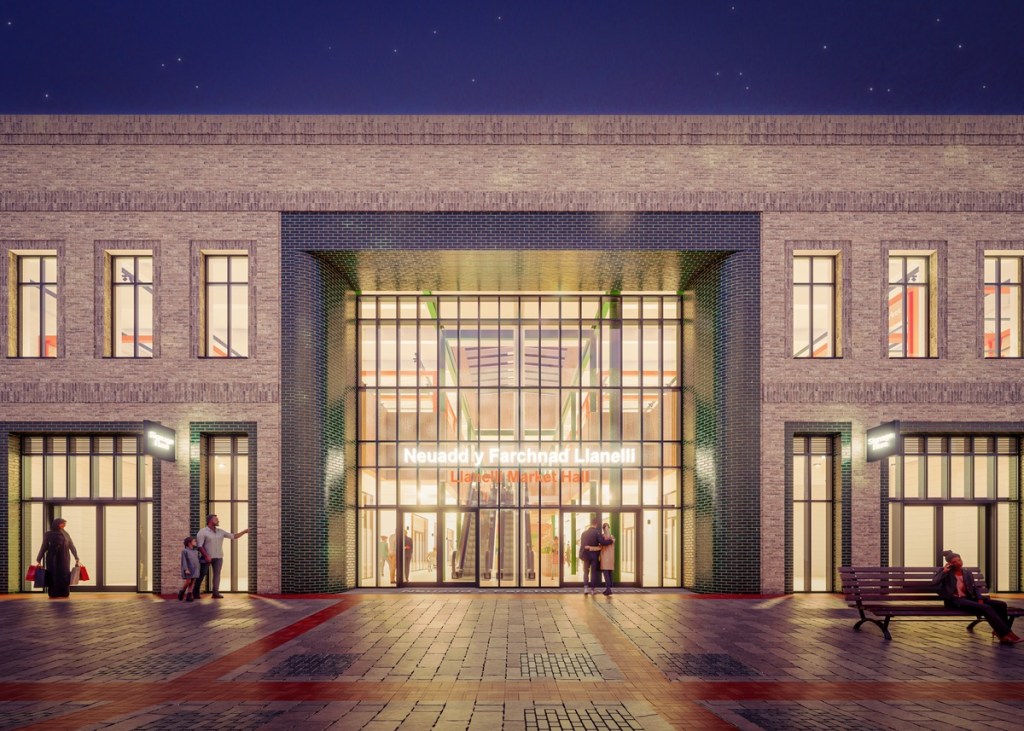
Their replacement is the two-storey market hall with 14 shops, a first-floor café and escalators that went out to consultation in July, built to rehouse traders from the RAAC-hit indoor market under the Murray Street multi-storey car park, which has to be emptied by 2028.
Bats in the roof tiles mean a licence before a brick moves
Ecologists surveying the roof at dusk between June and August watched common pipistrelle bats emerging from hanging tiles on a plant room on top of the old store, the papers say.
Daytime inspections had found no sign of them, but the discovery means the council’s contractor needs a European protected species licence from Natural Resources Wales before any work starts.
Three bat boxes will go up on the council’s Market Street North site nearby to make up for the lost roost, and bird and bat boxes are to be built into the wider scheme.
The roof is also home to nesting herring gulls and lesser black-backed gulls, with a jackdaw found nesting in the pub’s loft, so the demolition has been timed for outside the nesting season.
The listed Barclays next door comes apart by hand
Number 16 Vaughan Street, the Grade II listed former Barclays bank built around 1870, shares a party wall with the pub, and its roof timbers were found to be built straight into the bank’s stonework.
Everything touching the bank will be cut free by hand from scaffolding, with no machinery allowed near the wall, and the exposed face wrapped in heavy polythene on timber battens until the new hall is built against it.
The bank, which has been empty for some time and could not be inspected inside, will have crack monitors fitted, with vibration, noise and dust sensors set to stop work automatically if they trip.
The same hand-demolition rules apply where the old store meets number 6 Vaughan Street on the other side, which was also empty when engineers visited in June.
A plan for the hole if the market hall never comes
Among the papers are two short method statements headed “Permanent Reinstatement Should New Scheme Not Proceed”, setting out how the exposed walls of numbers 6 and 16 would be rendered and painted to match their neighbours if the hall is not built.
The contractor, Port Talbot-based Andrew Scott, describes them as contingency documents for the party wall surveyors, but they are a reminder that the hall itself does not yet have planning permission: the full application is still to be submitted, and the pre-application consultation drew a challenge from traders over stalls going upstairs.
The demolition will run in two stages, with the old store and the empty unit at 8 to 12 coming down first and the pub following only once separate listed building consent has been granted for the works next to the bank.
Road closures on Mincing Lane, and what gets recycled
The site compound will sit off Mincing Lane, with partial closures of Mincing Lane and the lane behind Bridge Street while the work is on, and the pedestrianised Vaughan Street frontage screened by scaffolding.
Working hours would be 8am to 5pm on weekdays, with Saturday mornings only by prior approval and no Sunday working.
Asbestos found in a survey of the old store in February will be stripped out by licensed specialists first, along with pigeon droppings and an oil tank in the basement, before a high-reach demolition rig takes the main structure down from the top, working from Mincing Lane towards Vaughan Street.
The contractor says 95 to 98 per cent of the rubble will be recycled, with hardcore crushed and kept on site to fill the basements, and the Vaughan Street canopy taken down and set aside for reuse.
Demolition funding was set aside in the county’s £146.7m five-year capital plan in January, with the hall itself relying on UK Government Levelling Up money that has to be spent by spring 2028.
Related stories from Swansea Bay News
LLANELLI: First look at the town’s new market hall – 14 shops, a first-floor café and a green-tiled Vaughan Street frontage.
LLANELLI: First look inside the new market hall – 70 orange-framed stalls, a balcony over the central void and terrazzo floors.
LLANELLI: Market traders push back on upstairs stalls – The letter that said every trader asked would say no.
Llanelli faces twin loss as council moves to demolish market and multi-storey car park – Where the move began, in July 2025.

Discover more from Swansea Bay News
Subscribe to get the latest posts sent to your email.





Pretty sure that the Tinhouse was there for more like 10 months than 10 years …