

The trial will aim to determine the most effective breathing support for infants hospitalised with bronchiolitis.
Swansea Bay University Health Board say this is a common chest infection affecting babies and children aged under two years. Although usually mild, it can be serious, leading to thousands of children requiring hospitalisation every year.
A range of treatments is available, and most babies recover well. But it is not clear which treatment is the most effective for moderate and severe cases, leading to variations in practice around the UK.
Researchers believe that finding the most effective breathing support could lead to babies recovering more quickly, with less discomfort and shorter stays in hospital.
This is particularly important during winter months when pressures on NHS services significantly increase.
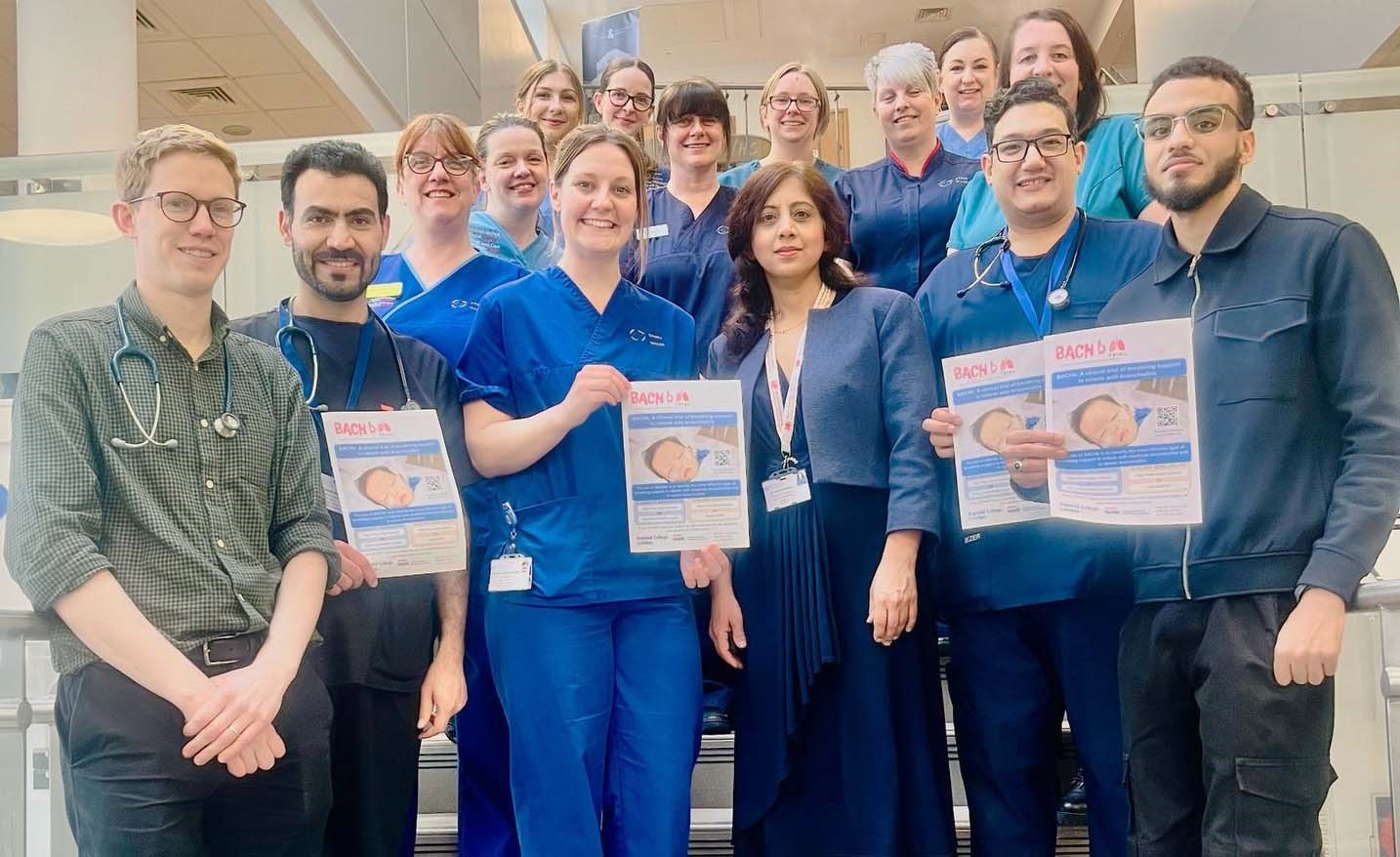
Now a £1.7 million trial known as BACHb will recruit more than 1,500 infants over 30 months from children’s emergency departments and wards in 50 hospitals across the UK. Morriston Hospital is the first in Wales to recruit.
Morriston-based consultant paediatrician and respiratory lead Dr Huma Mazhar is principal investigator for the trial within Swansea Bay University Health Board.
Dr Mazhar said the paediatric team, including the nursing staff and doctors, was dedicated to advancing research and improving patient outcomes.
“Taking part in these trials benefits not only patients but also junior doctors, providing them with valuable opportunities to develop essential research skills,” she said.
“Research is fundamental to healthcare advancement, enabling treatments to be guided by the latest evidence.”
Consultant paediatrician Dr Carwyn Dafydd is co-principal investigator. He said he was excited to help bring another paediatric research project to Swansea Bay.
“My previous involvement in a research trial for patients with bronchiolitis encouraged me to support the BACHb trial,” he added.
“I hope that having trainees involved will inspire them to participate in further research projects throughout their careers.”
One of those trainees, Dr Emily Ball, is an associate principal investigator for the trial. She said: “I am looking forward to the opportunities and learning provided and am grateful for the team’s support.”
Funded by the National Institute for Health Research and the Health Technology Assessment Programme, the trial is led by researchers at Imperial College in London.
It will compare various breathing support options, including high-flow oxygen therapy, CPAP, and humidified standard oxygen, in children under 12 months of age with bronchiolitis.
Researchers will conduct two clinical trials simultaneously to determine the effectiveness of each treatment.
Parents whose babies are in hospital will be asked for consent to take part. Infants will then be randomly allocated to start one of the three oxygen treatments, depending on the severity of their condition.
All other treatment decisions will be left to the clinical team. The babies will be quickly switched to an alternative treatment if the one they start with is not found to be effective, so as not to affect their recovery.
Dr Mazhar said there had been vital support from Health and Care Research Wales, and from Morriston’s Research and Development department – with special recognition for research nurse Gemma Smith for her key role in ensuring a smooth setup for the trial.
Gemma said: “As a part of the R&D delivery team, it’s been a pleasure to facilitate the set-up and ongoing research nurse support for this trial.
“We look forward to this being the first of many successful collaborations between the R&D delivery and clinical teams.”
(Lead image: Swansea Bay University Health Board)
Discover more from Swansea Bay News
Subscribe to get the latest posts sent to your email.