Plaid Cymru’s win in Swansea’s new Gŵyr Abertawe constituency has handed the party three of the constituency’s six seats — and responsibility for what the city gets in return.
So what should Swansea expect? Gwyn Williams, the consultant ophthalmologist elected first on the Plaid Cymru list, says his priorities are the NHS, the economy and childcare — the issues he argues matter most to local households.
“We need to fix the NHS, fix the way it works, make it efficient so that we can work in house to fix things,” he told Swansea Bay News. He called his election “a grave responsibility” shared by all three Plaid MSs, adding: “We look forward to working hard for the people of Swansea.”
With three of Swansea’s six Members of the Senedd, expectations on Plaid run higher than opposition from the sidelines. Voters placed a major trust deposit in Williams and his party after a bruising election for Labour in Wales — and with campaigning over, they can measure his answers against what he does in Cardiff Bay.
Plaid topped the poll in Gŵyr Abertawe with 25,076 votes under Wales’ new closed-list system, in which people voted for a party or independent candidate rather than directly for individual candidates. Williams was elected first on the list, his wife, Safa Elhassan, second, and John Davies, third.
Francesca O’Brien and Steven Rodaway were elected for Reform UK, and Mike Hedges for Welsh Labour.
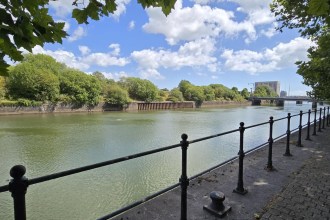
Williams has already begun building a public Senedd record that voters can track. His written questions cover re-exploration of the Swansea Tidal Lagoon, eyecare services, Sketty Mosque, Technocamps, electoral reform and the controversial Skyline Swansea zipline project.
Asked about the economy and cost of living at a Swansea hustings event, Williams said: “The economy is the most important thing because for Wales to be standing on its own feet, we need an economy to do so.”
He pointed to what is known as the Preston Model, arguing Wales should buy locally, invest in its own communities and build supply chains closer to home.
The hustings, hosted by Swansea City of Sanctuary with Climate Cymru and Hope for the Future, let residents question candidates before polling day. Under the new system, candidates leaned on party manifestos rather than personal pledges, but Williams still signalled his priorities.
On migration, Williams was more cautious when asked whether he would support the right to work for asylum seekers waiting more than six months for a decision. “Immigration isn’t a devolved thing, but the question segues on nicely to the fact that the Senedd should be able to gain these powers,” he said.
He stood by the idea of Swansea as a place of sanctuary, but argued public debate was being distorted by misinformation. The policy was “not about attracting asylum seekers from abroad, but about helping people who’ve come here under the worst of circumstances by getting them on their feet,” he said.
Immigration and asylum are reserved matters, so the Senedd cannot change core UK immigration law, although Welsh institutions can act around devolved areas such as support, integration and public services.
On climate, Williams tied Plaid’s ambitions to a practical problem. “We’re blessed here, we have a windy Wales, wet Wales, and a big number of natural resources, but we have an inability to move the energy through,” he said.
“I’m particularly interested in hydrogen. You take energy, hydrolyse water, and nothing gets burned. You don’t have all these fossil fuels,” he added.
Williams closed on Plaid’s childcare offer, and challenged Reform’s absence from the hustings, to which all parties were invited.
He also criticised the new electoral system for appearing proportional while, in his view, falling short — a position that reflects Plaid Cymru’s manifesto seeking change to a more representative Single Transferable Vote (STV) system.
The issue has also been raised by Labour MS Mike Hedges, who has called for an open public discussion on the Senedd voting system. He says the new system “does not work”, while noting he does not personally favour STV.
With Plaid holding half of Swansea’s six seats, the test is whether Williams presses for local investment, turns climate ambition into practical Swansea action, and pushes for sanctuary and further devolved powers.

Discover more from Swansea Bay News
Subscribe to get the latest posts sent to your email.